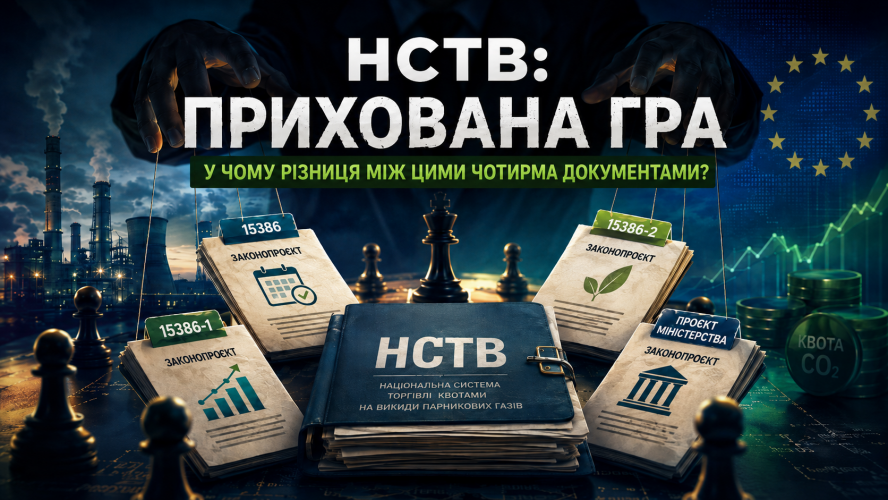
Senior Ukrainian officials have finally begun working intensively on the creation of the National Greenhouse Gas Emissions Trading System (NGETS). And it seems they have decided to make up for years of delay with no fewer than four legislative initiatives.
All of them promise emissions reductions, industrial modernisation and future accession to the European Union Emissions Trading Scheme (EU ETS). But the approaches to achieving these goals are fundamentally different.
What are the differences between the ministry’s draft bill and the three NETS bills proposed by MPs? What risks do they harbour, and what is the reason behind this sudden surge in legislative activity among our elected representatives? Let’s try to get to the bottom of it.
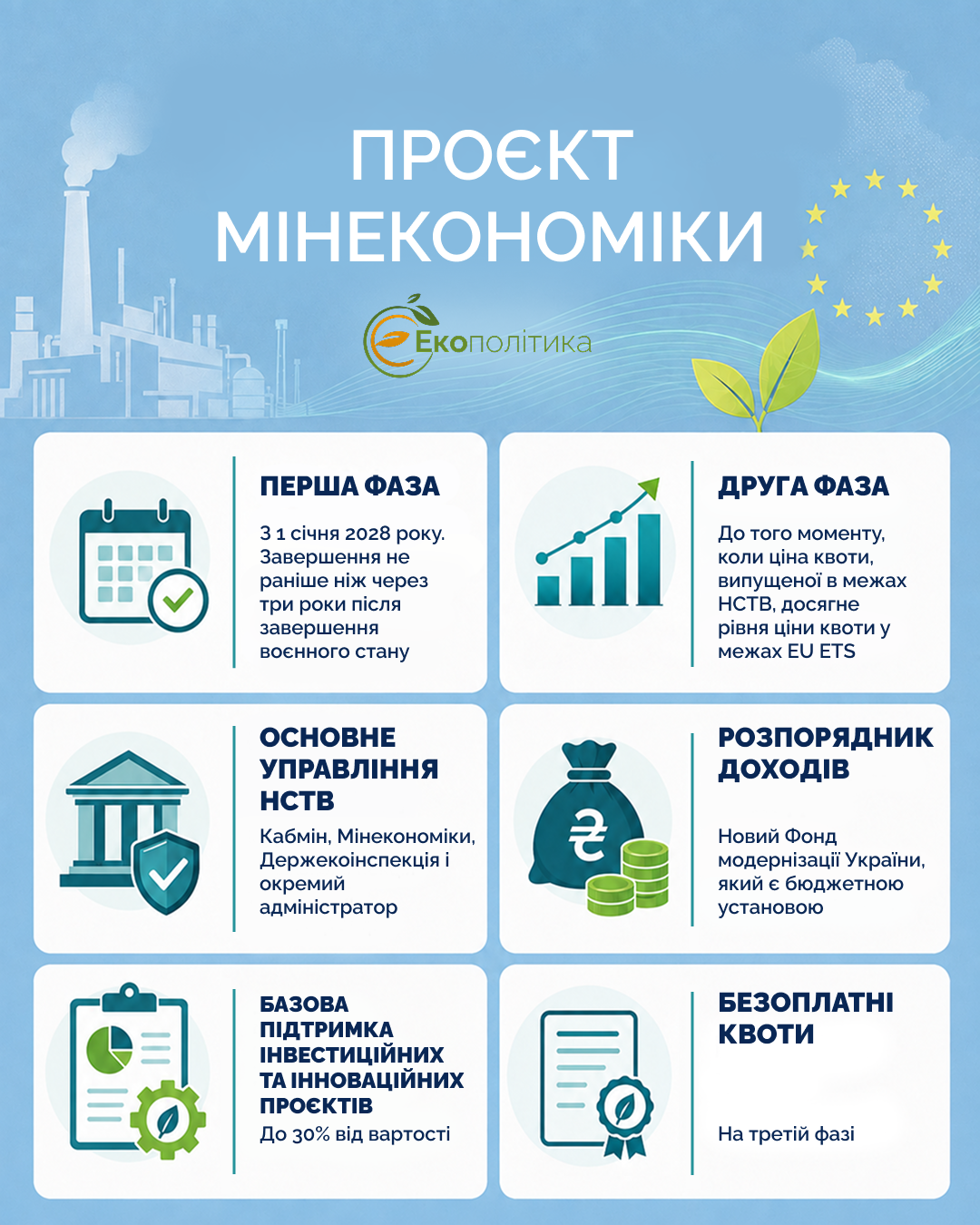
NGETS Version No. 1
The first draft law, following numerous consultations with stakeholders, was presented by the Ministry of Economy, Environment, and Agriculture on May 15. The draft underwent public discussion, during which business associations and experts submitted their proposals. The document was also reviewed by the European Commission. Yet, on July 30, this legal act and its supporting documents disappeared from the ministry's website without any explanation.
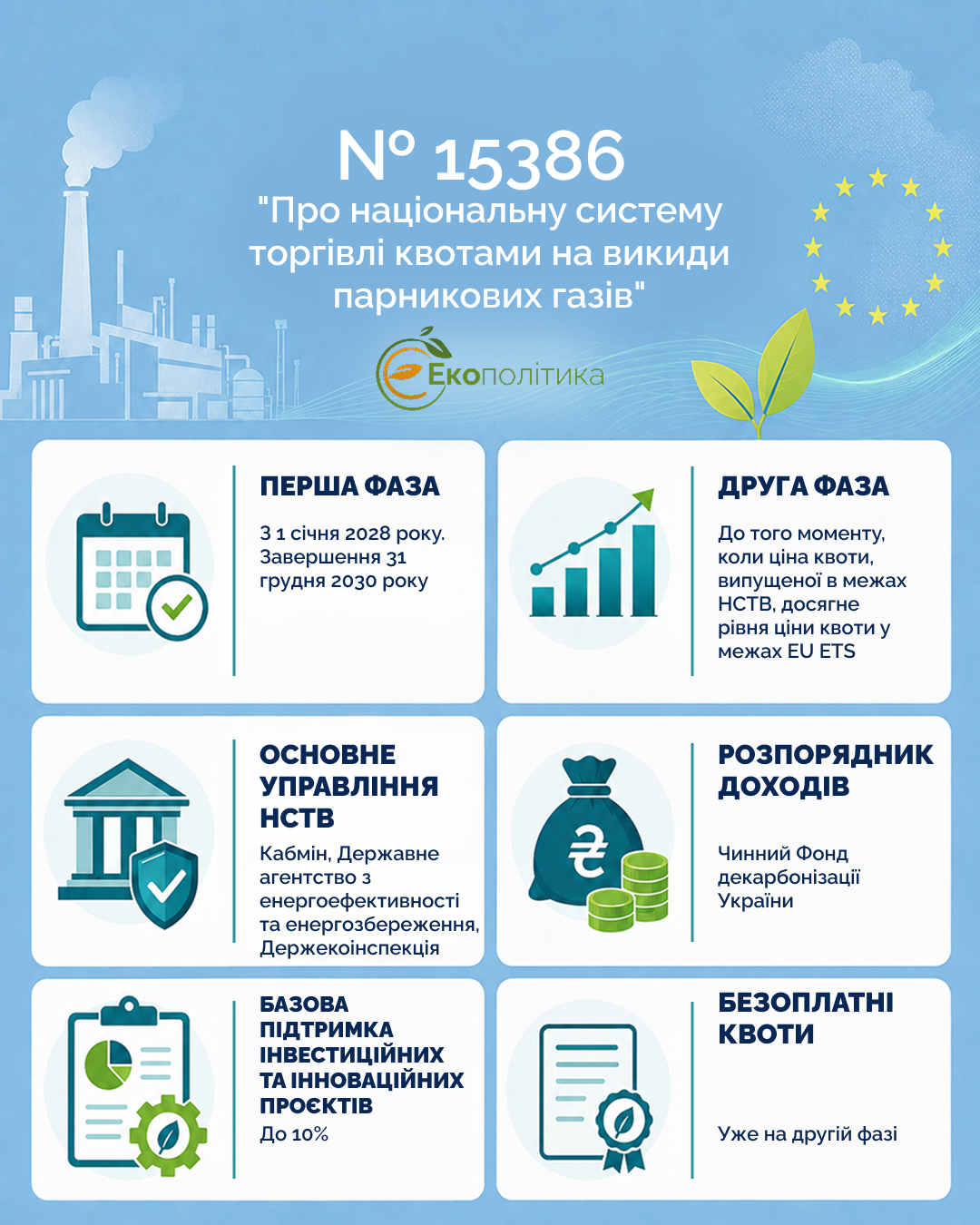
NGETS Version No. 2
On July 7, the Verkhovna Rada unexpectedly registered draft law No. 15386 authored by Andriy Motovylovets, Oleh Bondarenko, and other deputies. The professional community only learned about its existence after registration, and the text itself, along with the accompanying documents, appeared on the parliament's website just three days later.
This draft law was not a revised version of the ministerial document, as it proposed a fundamentally different concept for NGGETS.
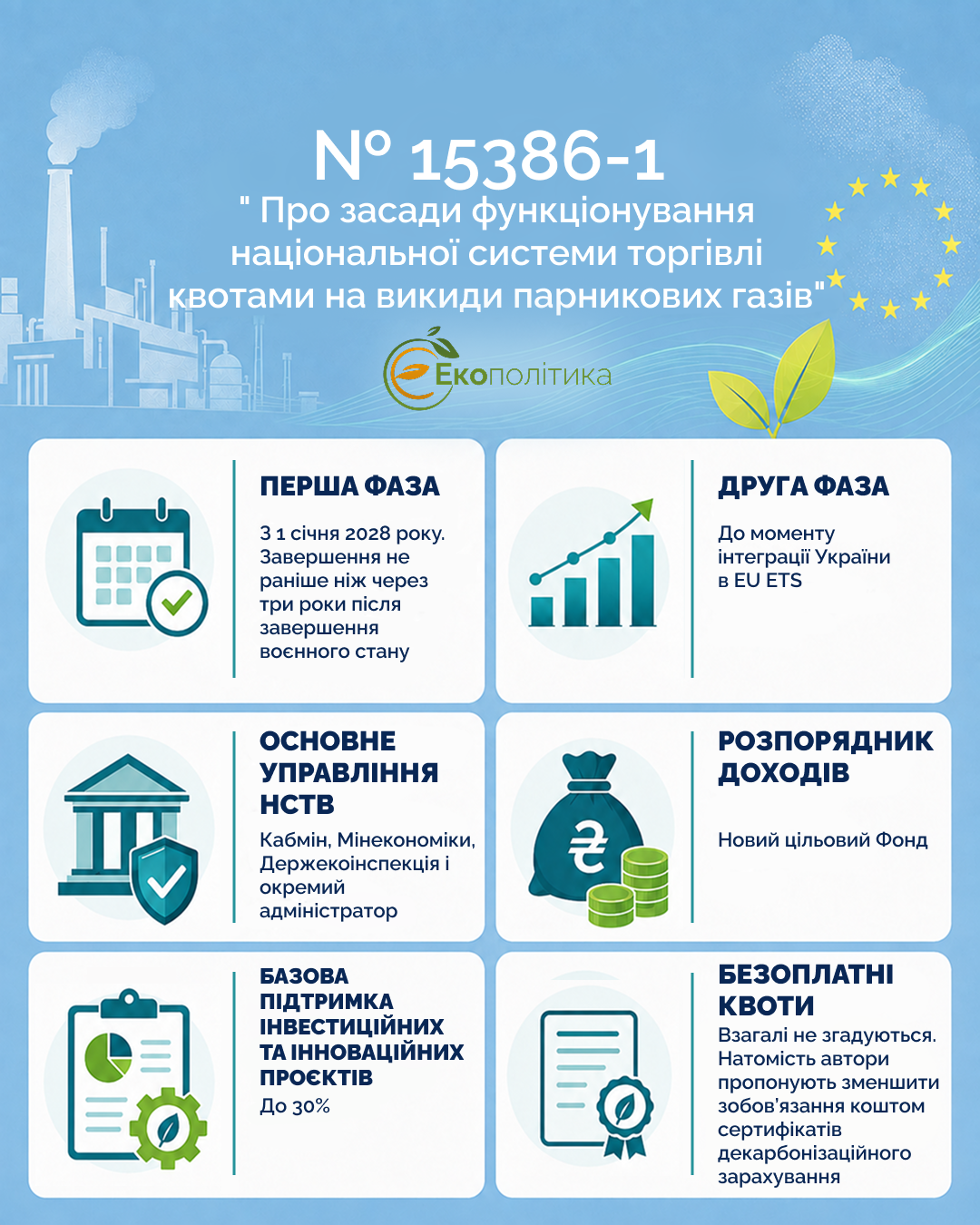
NGETS Version No. 3
Only two weeks had passed since experts and stakeholders, to their surprise, learned that Members of Parliament had their own alternative vision for the national ETS-distinct from the ministerial one-when, on July 21, another surprise awaited: deputies Olena Kryvoruchkina, Eduard Proshchuk, Serhii Mahera, and Serhii Mandzii registered another draft law-No. 15386-1. It is based on the Ministry of Economy’s proposals but does not literally repeat the May text. A significant part of the provisions on the third phase, free quotas, and the Modernization Fund were excluded.
NGETS Version No. 4
But even this legislative marathon did not end there. Two days later, on July 23, Oleg Bondarenko, Chairman of the Verkhovna Rada of Ukraine Committee on Environmental Policy and Nature Management, registered his own draft Law on the National Emissions Trading System (NETS) – No. 15386-2 in Parliament.
It is particularly noteworthy that this document, incognito, has already begun its journey through parliamentary procedures, even though the draft law is still officially under consideration by the relevant committee. Why incognito? On July 29, at a meeting of the Verkhovna Rada Committee on the Organization of State Power, representatives of the State Agency on Energy Efficiency and Energy Saving presented the NETS draft. The slides included references to article numbers of the draft law, but its official number was never mentioned.
Based on the increasing obligations, the fixed date for the end of the second phase, and the correspondence of the articles, we can unequivocally conclude that MPs were shown the configuration of the emissions trading system authored by Mr. Bondarenko, No. 15386-2. Just like that: no committee opinion, no discussion with stakeholders.
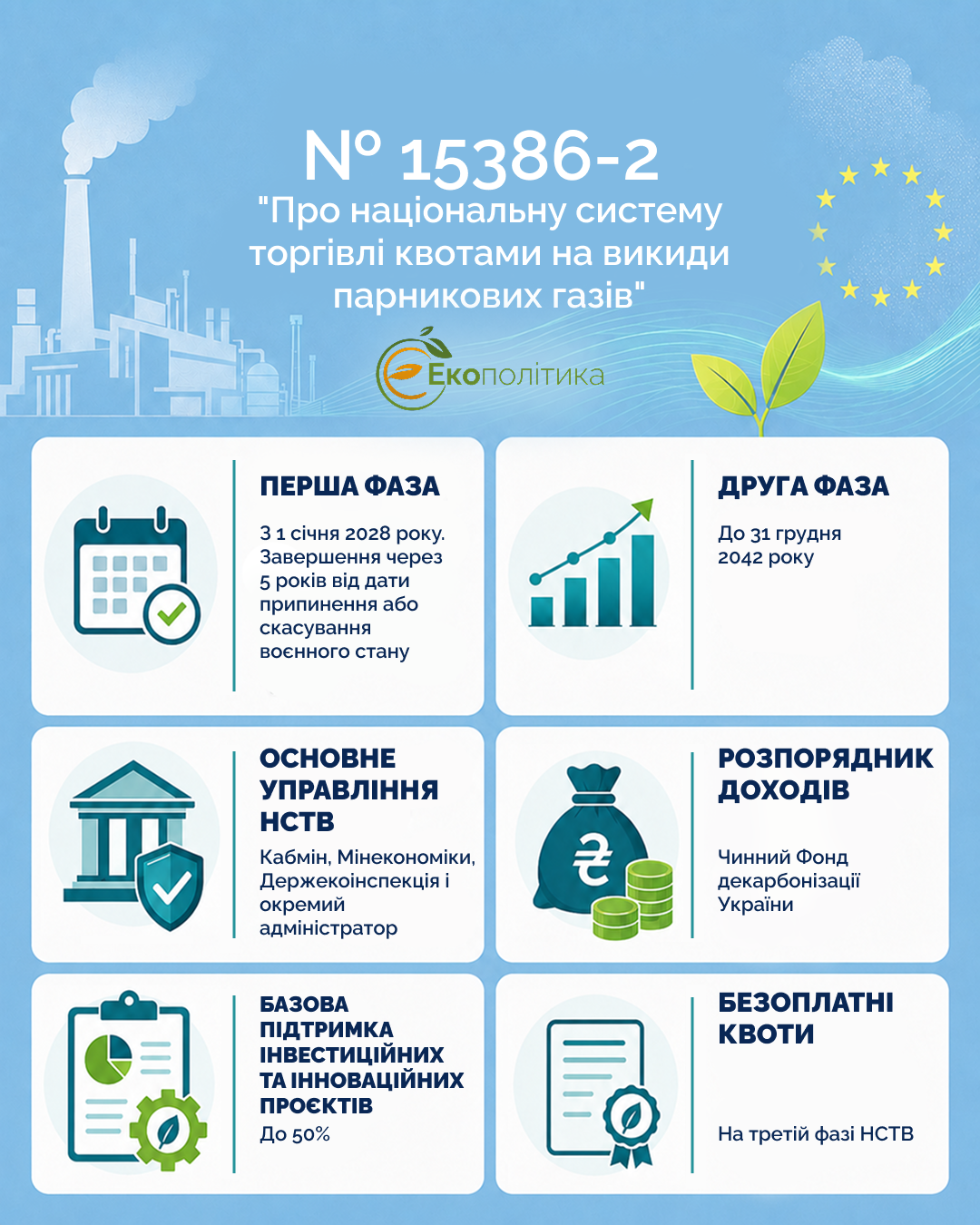
Thus, Ukraine now faces not a shortage of legislative ideas regarding the NETS, but, more likely, a problem of their excess. Four different system designs, different timelines, management bodies, approaches to free allocations, and uses of future proceeds – this is no longer a technical discussion of details. This is a battle for who, when, and under what rules will gain control over the multibillion emissions trading market.
However, amid the sprint of draft laws in Parliament, it is important not to lose sight of the main goal: to create an effective system that facilitates the modernization of the Ukrainian economy and its integration with the EU, rather than becoming another financial burden for domestic industries.