Ukraine has every reason to expect the European Union to exempt it from the CBAM and to defer the introduction of the carbon levy. According to the business community, the full-scale war constitutes such an insurmountable circumstance, as it prevents the eco-modernisation of assets.
This was reported by RBC-Ukraine, citing a statement by Ruslan Illichov, Director-General of the Federation of Employers of Ukraine.
War constitutes a force majeure event
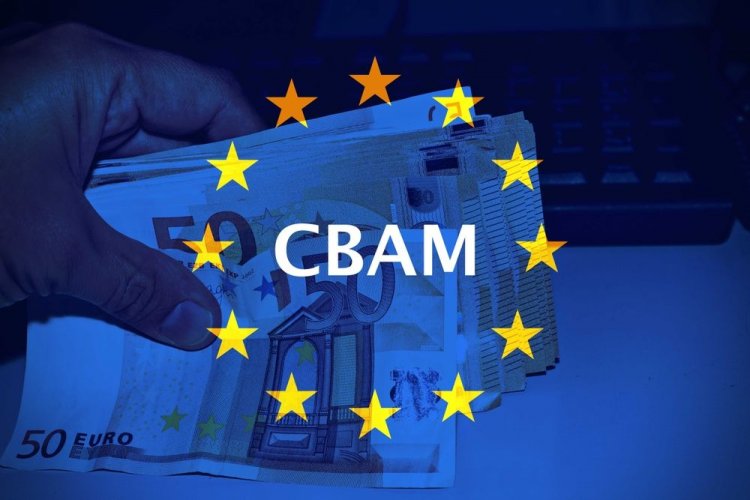
Under the Carbon Border Adjustment Mechanism (CBAM), the European Union requires importing countries to pay for embedded carbon emissions. For Ukrainian businesses, this pressure is insurmountable.
"We believe there are sufficient grounds for a force majeure to enable us to defer this payment," said Illichov during the United by Mining forum.
In his view, the full-scale war is preventing Ukrainian industry from meeting the European Union’s environmental requirements. These relate to reducing emissions in the production of metals and cement, and in the extraction of minerals.
In addition to the challenging military situation, steelmakers and cement producers will face further financial pressure following the introduction of the Carbon Border Adjustment Mechanism (CBAM) on 1 January 2026, due to the need to pay a carbon duty when exporting their products to the EU.
What should I do?
The CEO of the FSU maintains that the Ukrainian government must now take proactive action. The task is to conduct productive negotiations with the European Commission.
A separate issue is that of default emission values. Where it is not possible to verify actual greenhouse gas emission levels, the EU applies default values to importers. According to Ruslan Illichov, these are too high for Ukrainian companies.
As a reminder, to verify emissions accreditors within the framework of the CBAM, Ukraine has agreed to receive assistance from the Swedish accreditation body SWEDAC.
In his first major interview, the new head of government mentioned that negotiations with the European Union regarding the CBAM for Ukraine are ongoing. The European Parliament has provisionally agreed to the possibility of applying special measures.
The European Parliament recently supported the extension of the scope of the CBAM to cover derivative goods manufactured from the main products, including fastenings and household items.