There are many different ways to harm the environment. And a systematic analysis of reports from law enforcement agencies and environmental inspectors shows that in Ukraine, no method is off-limits. The mass destruction of forests, unauthorised extraction of minerals, poaching, and the manipulation of the law to seize protected lands – these occur so frequently that they have become the norm.
EcoPolitic details the most common and widespread environmental crimes in Ukraine.
Forest cases
According to the data of the State Forest Resources Agency, the forest fund covers about 10.4 million hectares. In total, Ukraine's forest coverage is 15.9%. Such a vast resource constantly tempts those who seek illegal profit, so violations related to illegal logging appear in law enforcement summaries perhaps more frequently than any others.
It is unfortunate that the main figures in “forest” cases are often those who are supposed to protect these forests. Directors of forestry enterprises and local forest offices of the SE “Forests of Ukraine”, chief foresters, and other sector officials, including representatives of local forestry enterprises, cause environmental damage worth hundreds of millions due to abuse of power ranging in scale and audacity. During 2025, officials in the forestry sector were personally responsible for environmental losses exceeding UAH 546 million.
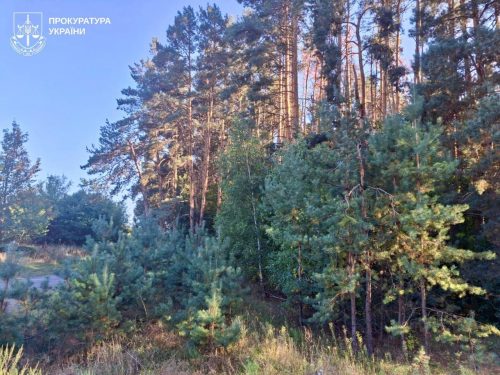
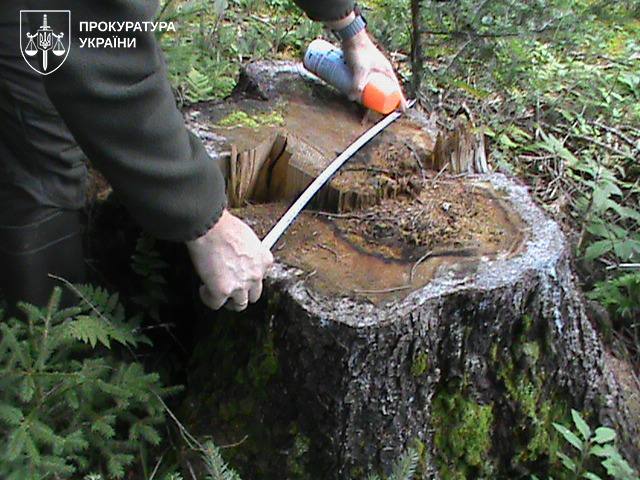
Among the most high-profile recent incidents are the logging of more than 13,500 trees in the “Hutsulshchyna” national park, which resulted in losses of over UAH 731 million, and “sparse forest logging” totaling UAH 103 million in one of the forest enterprises of Lviv region. It should also be noted that foresters frequently exploit the war for personal gain. In Kherson region, for example, while citing damage from hostilities, they conducted pseudo-sanitary cuttings. As a result, more than 2,000 trees were destroyed, causing damage of nearly UAH 8 million.
Source: Office of the Prosecutor General
If SE “Forests of Ukraine” officials are not directly involved in the destruction of forests, then this happens due to their negligence. A rather common type of case is when prosecutors demand through court that the state enterprise compensate for damages caused by insufficient protection of forest areas, which enables “black loggers” to harm the forests. For instance, in Zakarpattia, “Forests of Ukraine” must compensate UAH 1.2 million for cuttings in the Hrunyky forestry, and in Dnipropetrovsk region, the state enterprise has already paid UAH 2 million for cuttings in the “Dnipro Meadows” landscape park. The court also obliged “Forests of Ukraine” to compensate the staggering sum of UAH 83 million for cuttings in the “Hutsulshchyna” national park. EcoPolitics has prepared a separate article about systemic neglect of forests and regular damages paid due to the negligence of sector officials.
Сontent warning: The following translation includes terminology and real-life events related to crime and environmental harm, as found in the original source.
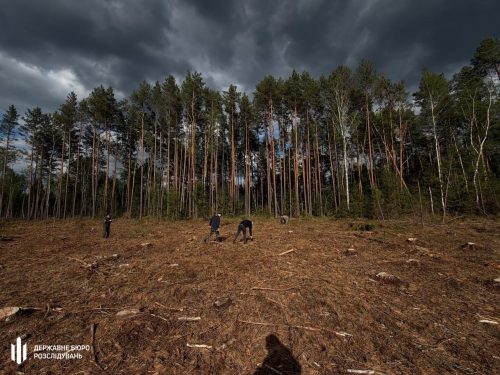
The ‘illegal loggers’ themselves are also causing damage to Ukraine’s forests. Protective forest belts are also being targeted. In the Dnipropetrovsk region, an organised criminal gang felled over 1,000 trees, causing damage amounting to more than 14 million hryvnias, whilst in the Mykolaiv region, similar damage totalling nearly 2.7 million hryvnias was inflicted. Incidentally, EcoPolitics has a separate article on the causes and consequences of afforestation.
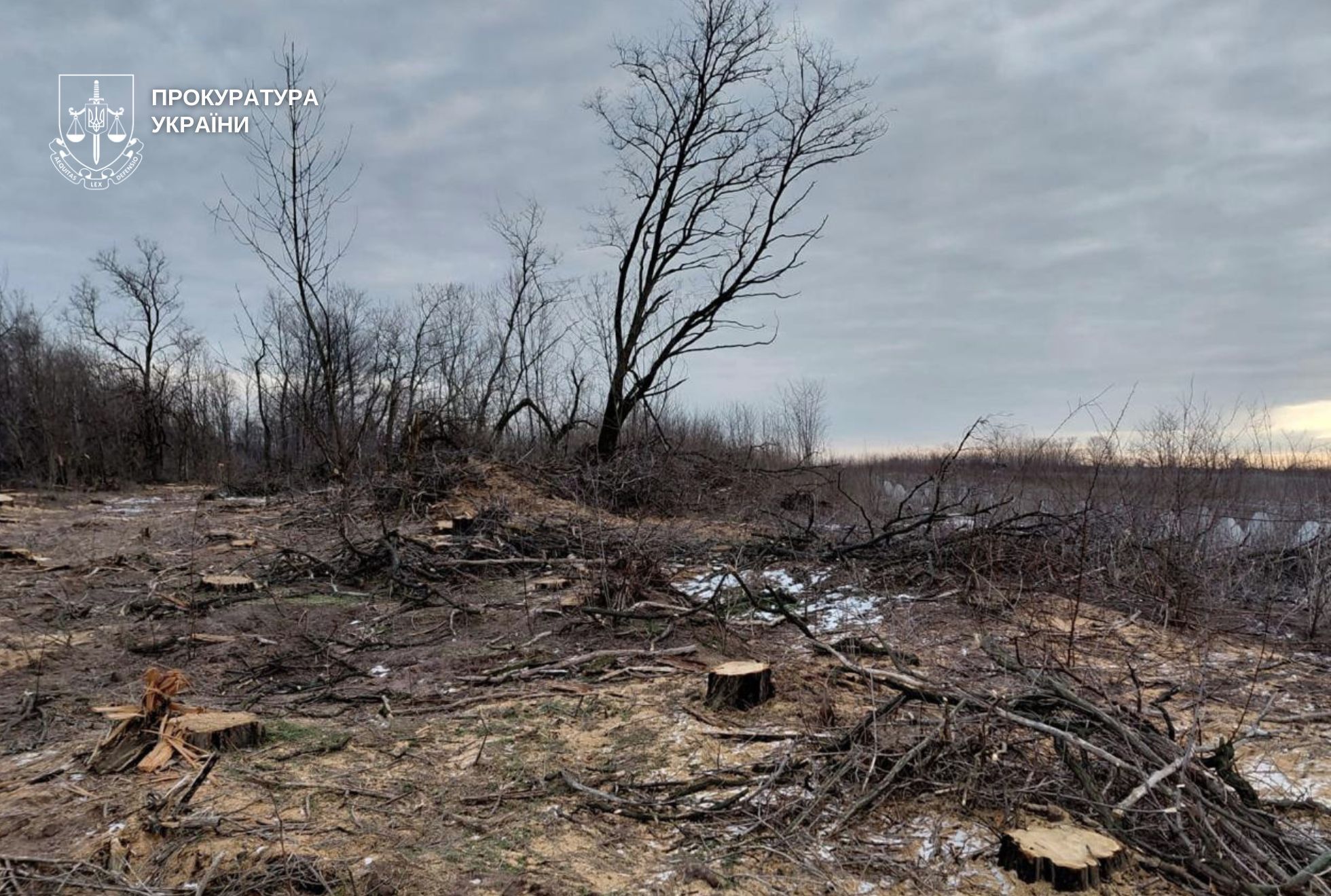
Source: Dnipropetrovsk Regional Prosecutor's Office
Illegal Use of Subsoil Resources
This type of crime is not as common in terms of frequency, but it unquestionably remains a leader in terms of financial damage. Offenders do not simply rob the state by illegally extracting minerals-they also damage the natural landscape, dump waste, and emit pollutants without any controls, permits, or payments. Here are some of the most costly cases.
In Zhytomyr region, a company illegally extracted sand for years, causing losses to the state amounting to 2.5 billion UAH. This involved more than 113,000 cubic meters of minerals excavated from outside the officially designated mining area and without the special permit for subsoil use.
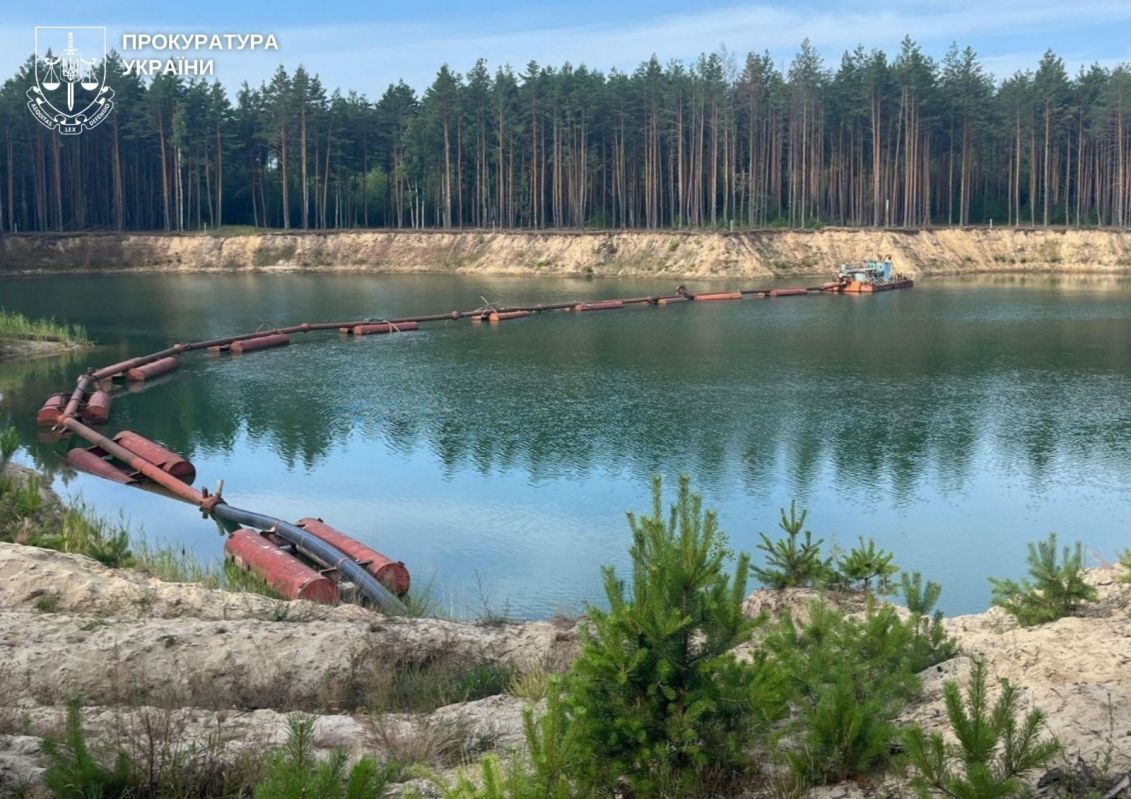
Source: Office of the Prosecutor General
Another 1.2 billion UAH in damages was caused by illegal granite extraction in the Kirovohrad region. Instead of closing down the business, the insolvency administrator organized the commercial-scale mining of rock even after the special permit for subsoil use had expired.
In April, in Cherkasy region, a scheme was exposed of illegal sand extraction directly from the Dnipro riverbank. The perpetrators used a dredger and other specialized equipment for the illegal mining. The raw material was sold immediately after extraction. Losses to the state exceeded 750 million UAH.
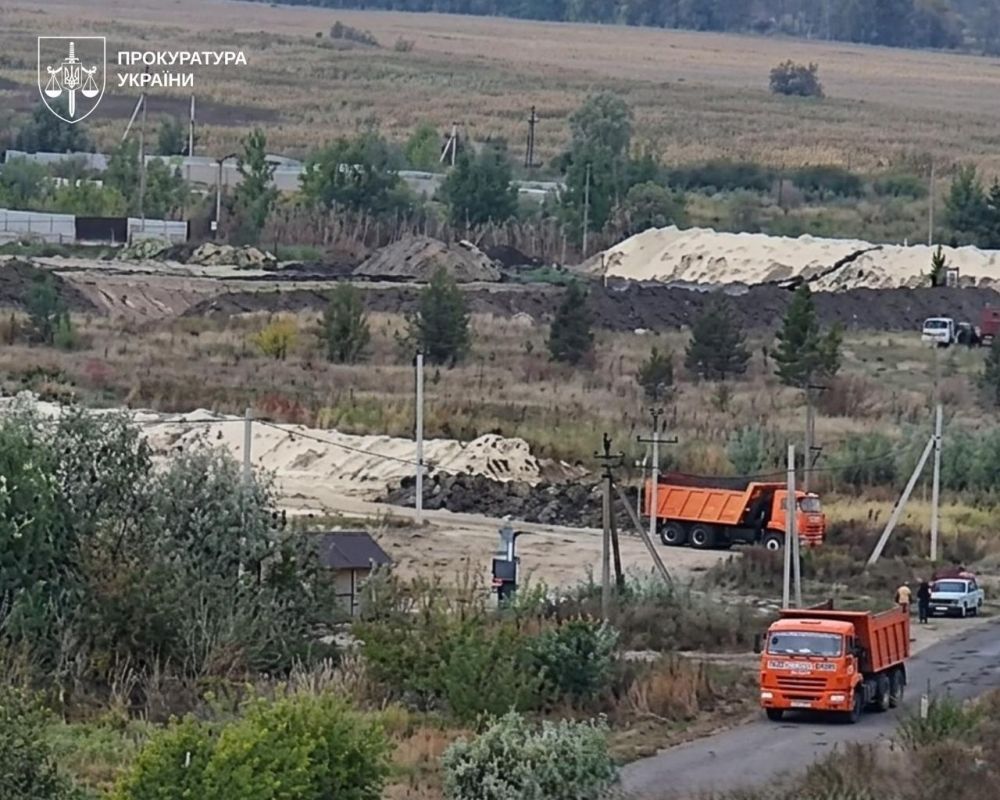
Source: Office of the Prosecutor General
The Struggle for Valuable Land
Seize a forest plot and plow it for agricultural crops? Pressure officials and take a picturesque reserve plot to build a hotel or your private residence? Unfortunately, such cases are not uncommon.
The prosecutor's office continues to investigate how 226 hectares of state forest became the 'Medvedchuk residence.' Another suspect is the former director of the branch “Svaliava State Forestry Enterprise” of the State Enterprise “Forests of Ukraine,” who is now a deputy of the Svaliava City Council.
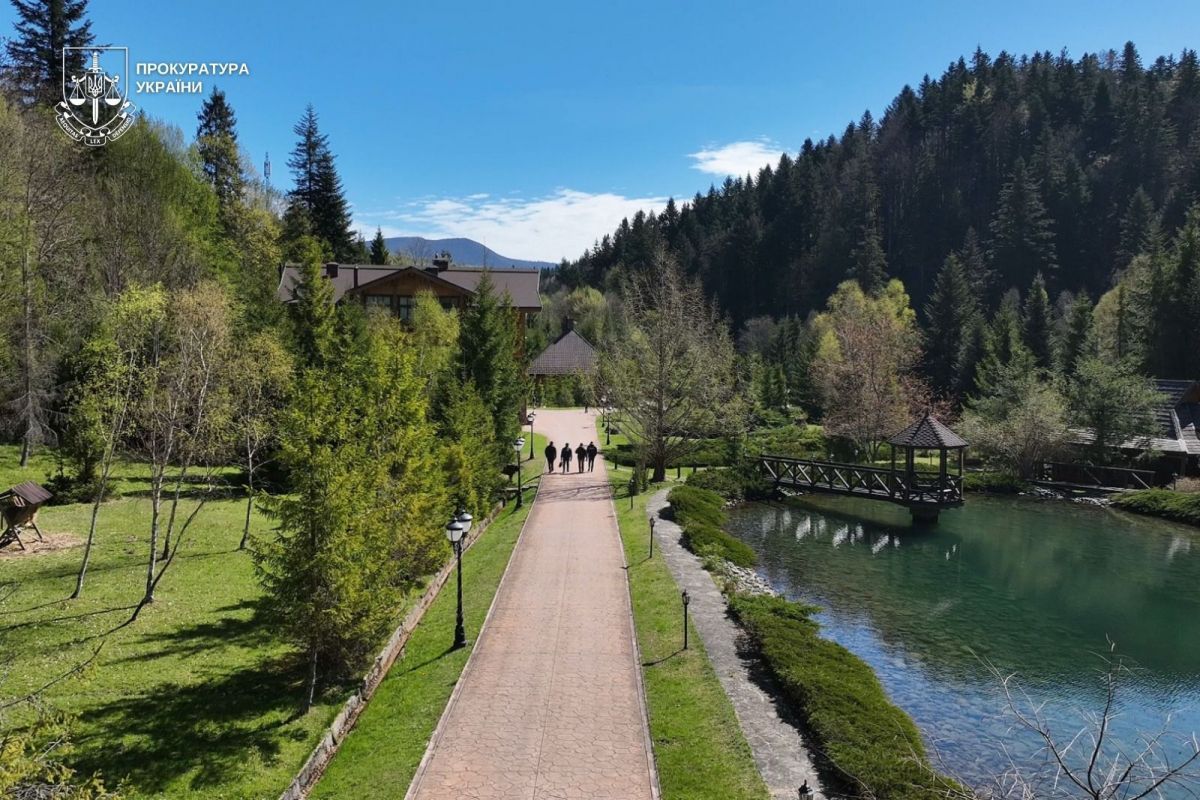
Source: Office of the Prosecutor General
Supreme Court has finally put an end to the dispute regarding the fate of Protasiv Yar in Kyiv. The court closed the proceedings in which the developer sought to contest the creation of a landscape park on this territory.
In reality, the problem often lies in improper registration of land plots. The prosecutor's office seeks to act preventively, urging land users through the courts to formalize the necessary documentation for nature conservation areas. Thus, in the Ivano-Frankivsk region, prosecutors demand the establishment of boundaries for the “Grofa” landscape reserve covering 2,500 ha, while in the Khmelnytskyi region, for the “Ivankovetskyi” reserve covering more than 1,000 ha.
Pollution and Contamination of Nature
This is also a fairly typical crime. Enterprises frequently ignore the lack of special permits for emissions or faulty equipment, and communities simply do not notice massive illegal dumps on their territories. As a result, the atmosphere, water, and soil are poisoned by toxic chemicals; fish and vegetation die, and the perpetrators stand trial.
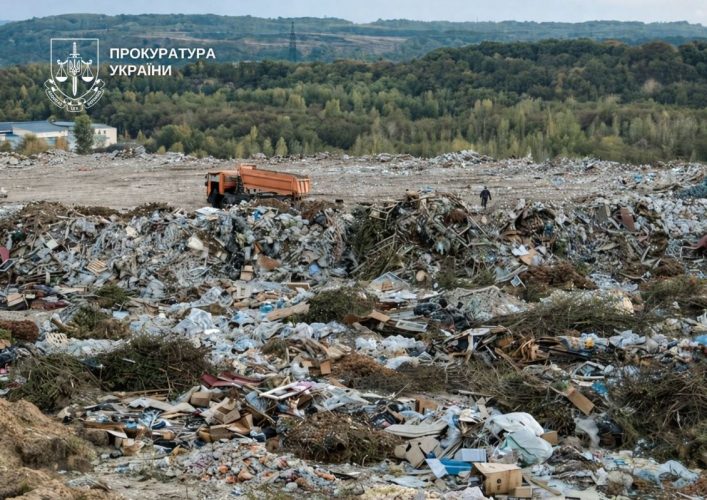
Probably the costliest crime in this group is the pollution of the area near the landfill in Holosiivsky district of Kyiv. The environmental damage here is estimated at over UAH 1.3 billion. For nearly five years, PJSC "Kyivspetstrans" illegally deposited waste near the official landfill.
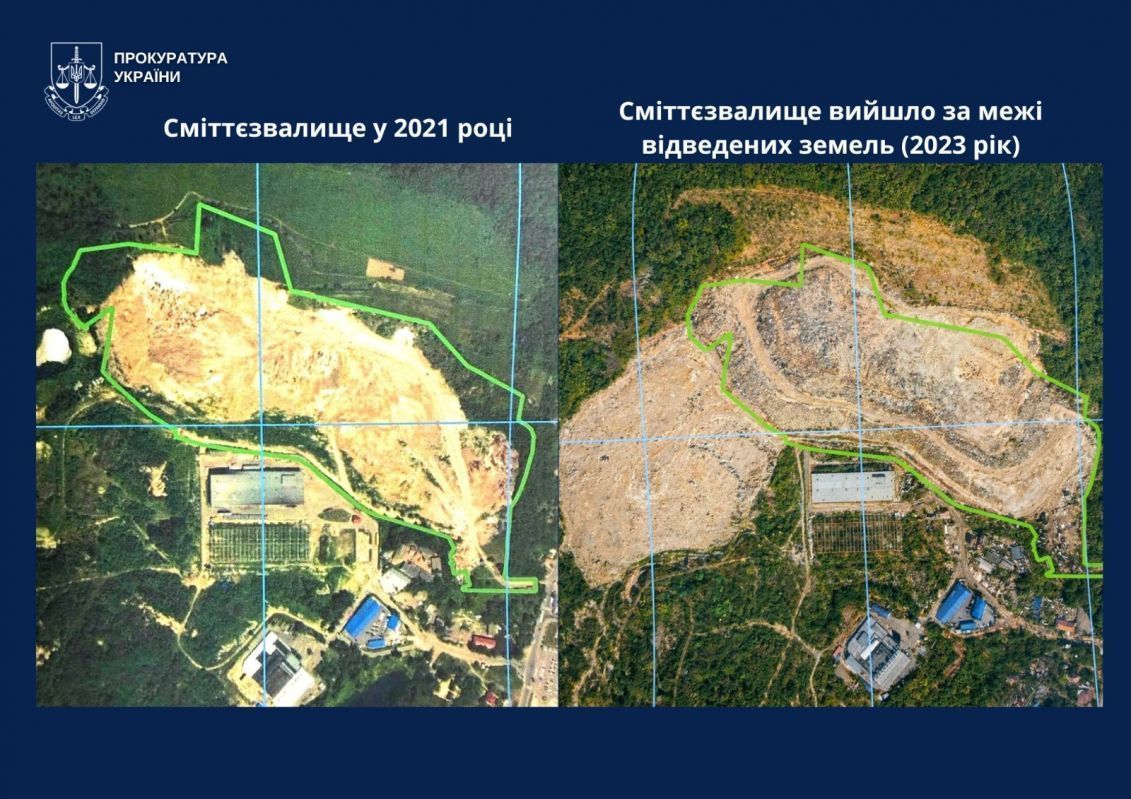
Source: Office of the Prosecutor General
A similar crime occurred in Lviv region. The former deputy head of the Lviv LKP “Zbyranka” is accused of official negligence. More than 12,000 m2 of land near the landfill were contaminated with lead, copper, cadmium, chlorides, and other environmentally hazardous elements.
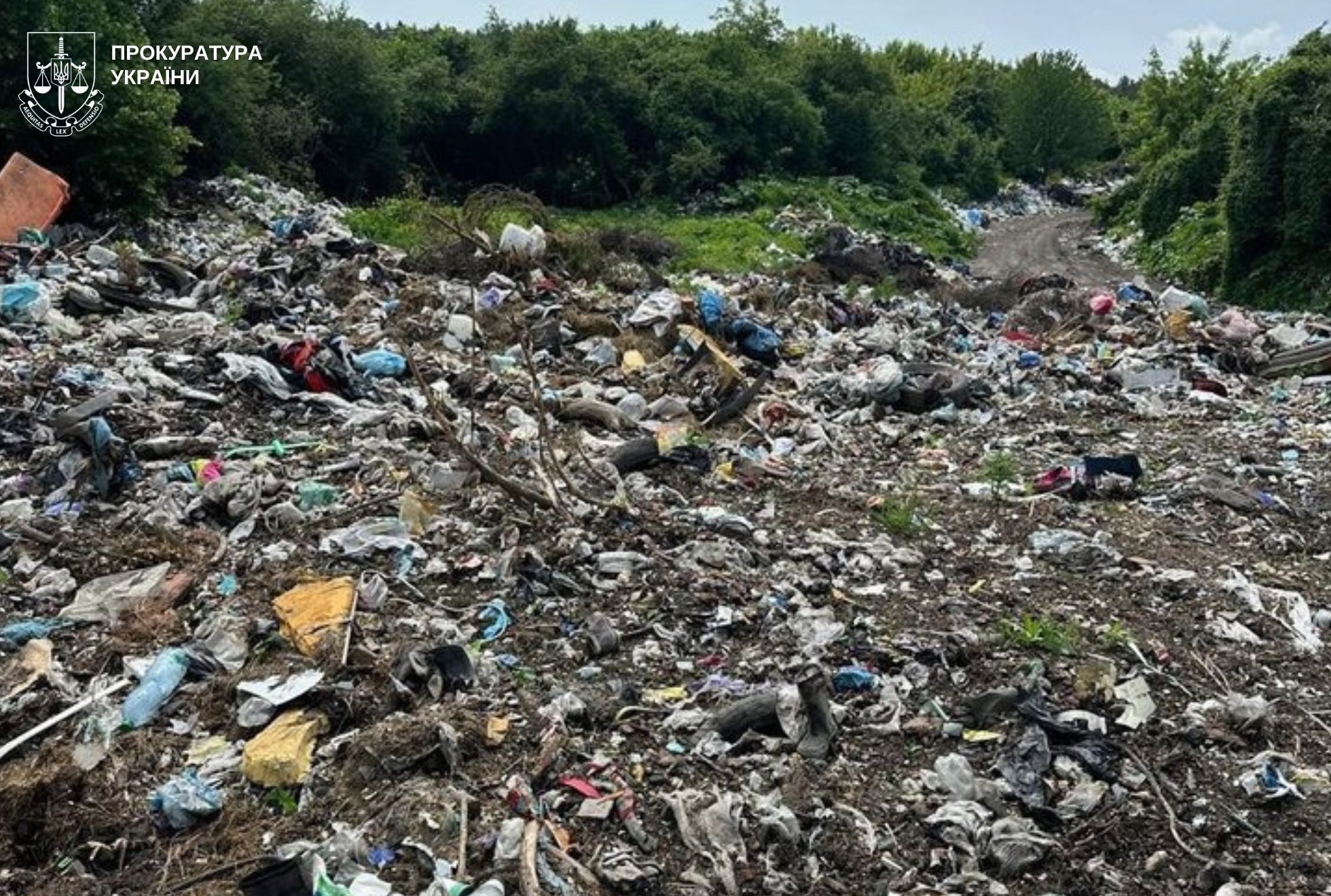
Source: Lviv Regional Prosecutor's Office
Also, in the Kyiv region, the owner of two plots is suspected of creating an illegal landfill. Environmental damages exceeded UAH 15 million.
Because of an unauthorized landfill on the land of "Ukrzaliznytsia," the former head and deputy head of one of the departments at the "Kharkiv-Pasazhyrskyi" railway station received suspicions. The damage to the environment amounted to almost UAH 86 million.
In Dnipro, the production director of a company specializing in the manufacturing of steel pipes and metal products was served with a notice of suspicion. The business received an order to halt operations because it did not have a permit for atmospheric emissions. However, work continued, and pollutants kept entering the air. The environmental damage exceeded UAH 8.7 million.
Two draft laws were recently registered in the Verkhovna Rada aimed at strengthening liability for ecocide and the pollution of water resources. These envisage significant prison sentences, up to life imprisonment.
It is also worth mentioning crimes against wildlife. In fact, prosecutors rarely report them, most often focusing on illegal fishing. Occasionally, there are reports on cases relating to animal cruelty. For example, in Kyiv, a man faces three years in prison for locking a French Bulldog on a balcony, which resulted in the animal's death. However, such cases are more of an exception.
If you want to keep up with crimes against Ukraine’s environment, follow the weekly digest from EcoPolitics.