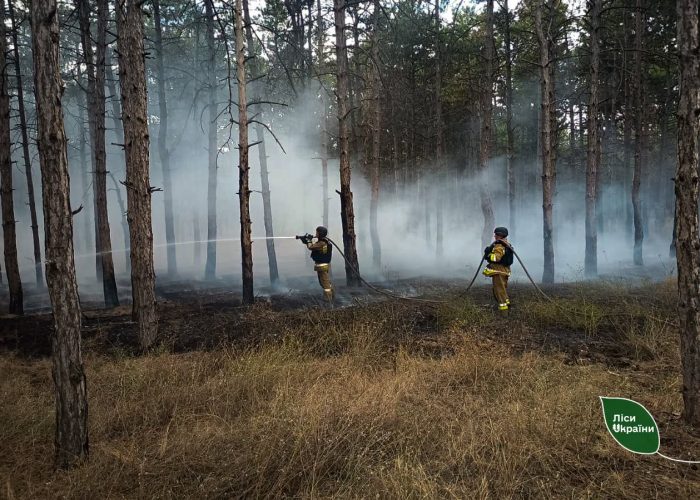
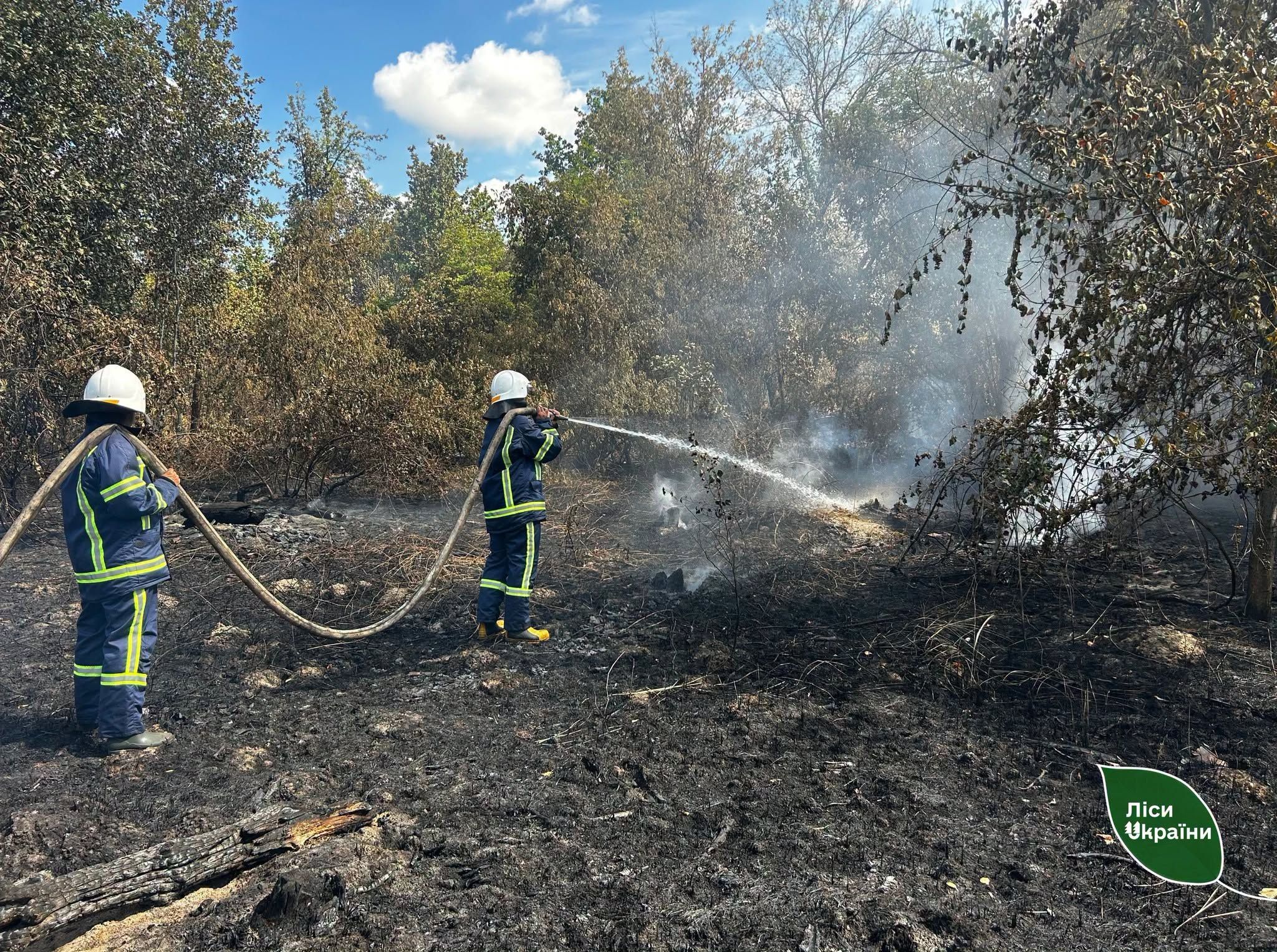
In 2026, foresters of the state enterprise "Forests of Ukraine" extinguished 1,200 fires, which is 0.7% more than in the previous year, 2025. However, the area affected by fire turned out to be much smaller.
This was reported by SE "Forests of Ukraine".
According to the results of the fire season, the fire covered about 2,200 hectares of Ukrainian forests managed by the enterprise. This is 60% less than last year.
Almost 53% of all fires occurred in just three regions:
- Kharkiv Oblast – 506.9 ha;
- Chernihiv Oblast – 357.7 ha;
- Zhytomyr Oblast – 295.6 ha.
Source: SE "Forests of Ukraine"
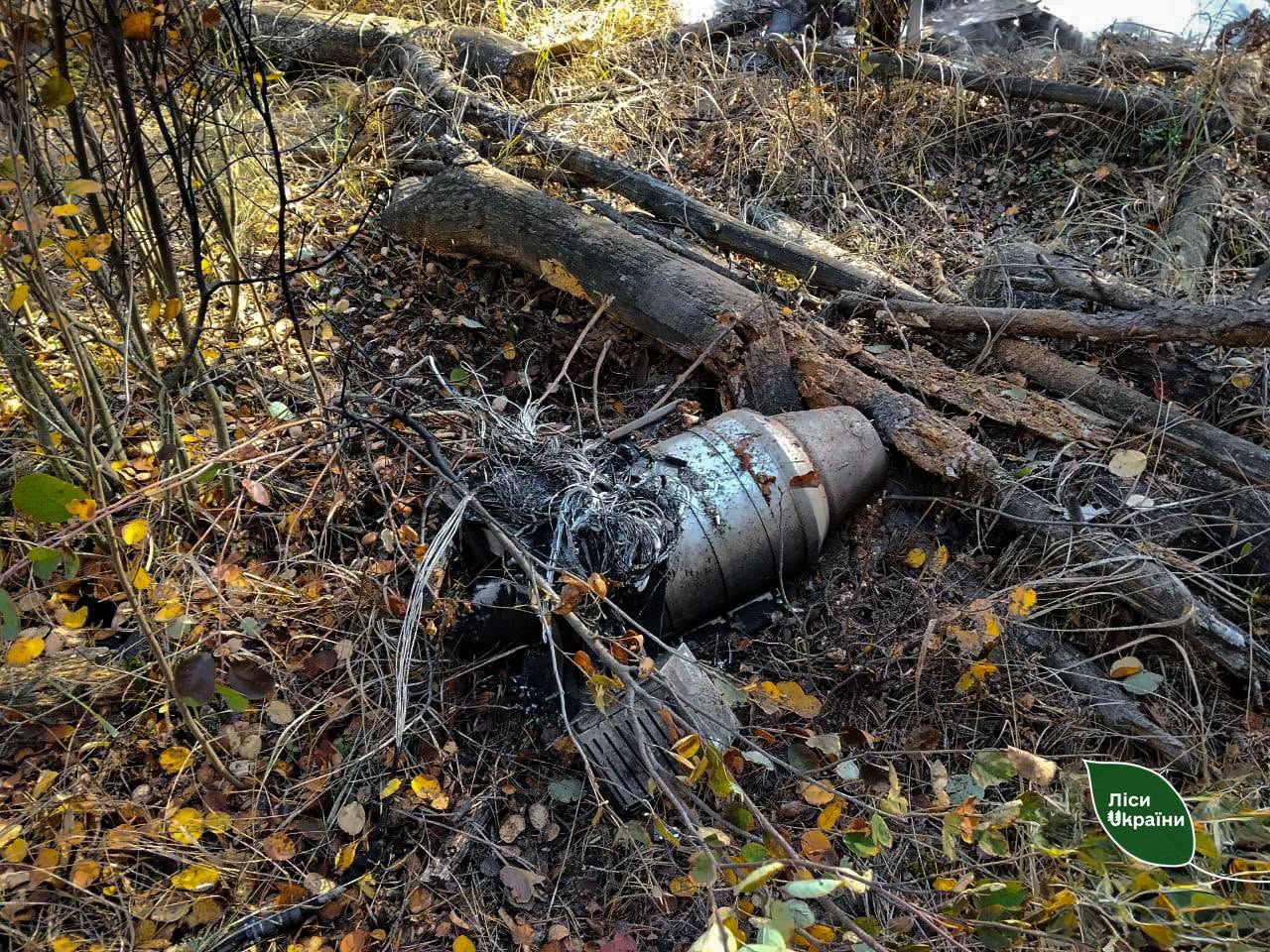
The foresters said that 3 out of 4 fires in Ukrainian forests were caused by hostilities. These include the consequences of shelling, as well as falling debris from drones, guided aerial bombs and missiles.
Source: SE "Forests of Ukraine"
The human factor was the second most significant cause. Careless handling of fire caused 23% of fires.
Other factors accounted for only isolated cases. These include deliberate arson, lightning strikes and fire spreading from neighbouring territories.
Prevention and control
The state enterprise also shared details of its fire prevention work. Over the year, it created 34,500 km of new mineralised fire breaks and renewed 170,000 km of existing ones.
In addition, forestries received more than 3,700 units of special equipment and gear. These include a wide range of items – motor pumps, firefighting modules, protective gear, observation towers and video cameras for monitoring the situation.
As for control, during the fire season the forest guard conducted almost 4,400 raids together with the State Emergency Service and the National Police. This made it possible to identify violators and draw up 431 reports totalling UAH 685,000.
As a reminder, here are some of the largest fires this year. In May, a fire engulfed 75 ha of forest in Zakarpattia. Some 250 rescuers, foresters and local residents had to be involved to put it out. In the same month, shelling caused a fire in Chernihiv Oblast that engulfed thousands of hectares of forest. Firefighting was hampered by constant enemy attacks, so the foresters had to work under the cover of electronic warfare systems.