
London-based startup Brilliant Planet has developed a technology to capture and store carbon with algae, where the price per ton of carbon will range from $ 50 to $ 100.
The technology, which is based on algae blooms, has the potential to scale up to billions of tons per year with low energy needs, according to New Atlas.
Growing algae will also help deoxidize seawater, which will help more efficiently absorb carbon from the ocean. Algae will be grown in large open, low-density reservoirs filled with seawater.
Brilliant Planet CEO Adam Taylor explained that algae is essentially a more efficient biological carbon capture machine than trees or other plants because their entire surface is capable of photosynthesis and they do not spend resources on creating trunks, roots or branches. They also grow and multiply very quickly under the right conditions.
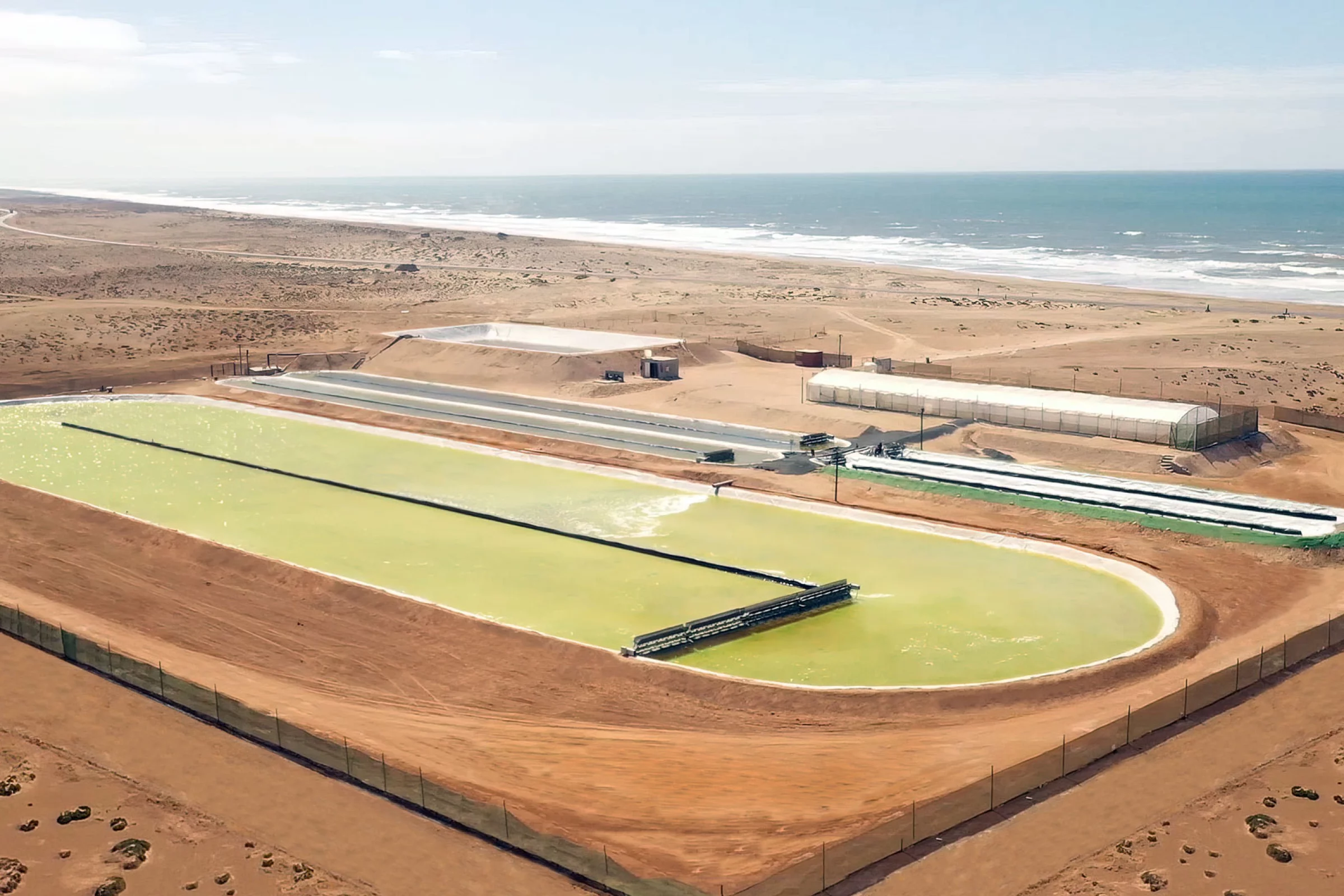
The company uses lowland coastal deserts and local strains of algae that are well adapted to local climate and conditions. The next step is to install a series of pumps that pump cold, nutrient-rich water from the seabed into a series of containers and ponds. Pumps account for most of the energy required by this system, but they can run on solar panels.
One glass of "inoculant" algae in the first stage multiplies rapidly under the right conditions to fill four reservoirs with an area of 12,000 square meters.
Optimal conditions are maintained through proprietary sensor technology, daily satellite imagery, publicly available weather information, and patented software based on modeling cell-level biology and rising ocean currents. Algae blooms are supported by inexpensive, abundant supplements, and the use of artificial intelligence will help increase yields.
After ripening, the algae are collected from the largest bodies of water with the help of fine sieves and dried in the open air of the desert. This dried, saline, carbon-rich biomass is then sent to a shallow desert grave, to a depth of about 1-4 m, where it remains virtually retained for thousands of years.
Deoxidized seawater without nutrients is returned to the ocean and has a positive effect on corals, mollusks and more.
"For every unit of water that passes through the system, we deoxidize the equivalent of 5.1 units to the pre-industrial pH level," Taylor said.
Brilliant Planet has identified about half a million square kilometers of relevant coastal desert for the potential development of technology that will capture about two billion tons of carbon per year. This could reduce more than 5.5% of humanity's annual global emissions, offsetting about half of the total emissions of the modern road transport sector.
The company has successfully tested its approach in Oman, South Africa and for three years at its current 3-hectare facility in Morocco. The first commercial area of 1,000 hectares will be able to capture about 40,000 tons of CO2 per year.
We will remind, experts told how cannabis can solve cheaply environmental problems.
As reported EcoPolitics earlier, Australia will spend $ 50 million for capture centers and carbon storage.