A year ago, the government abolished the Ministry of Environmental Protection and Natural Resources. Its responsibilities were transferred to a new mega-ministry — the Ministry of Economy, Environment and Agriculture. At the time, the authorities argued that this would not undermine environmental policy; on the contrary, it would make it an integral part of economic development, reconstruction and European integration.
In August 2025, the head of the merged ministry, Oleksiy Sobolev, presented the new structure’s key environmental priorities to MPs. A year has passed. EcoPolitic decided to check what the ministry had managed to achieve during this time.
What plans did officials announce?
At a meeting of the Verkhovna Rada Committee on Environmental Policy and Nature Management, the minister and his team outlined the main areas on which the merged Ministry of Economy planned to focus in the environmental sphere. Sometimes they specified deadlines, sometimes they did not.
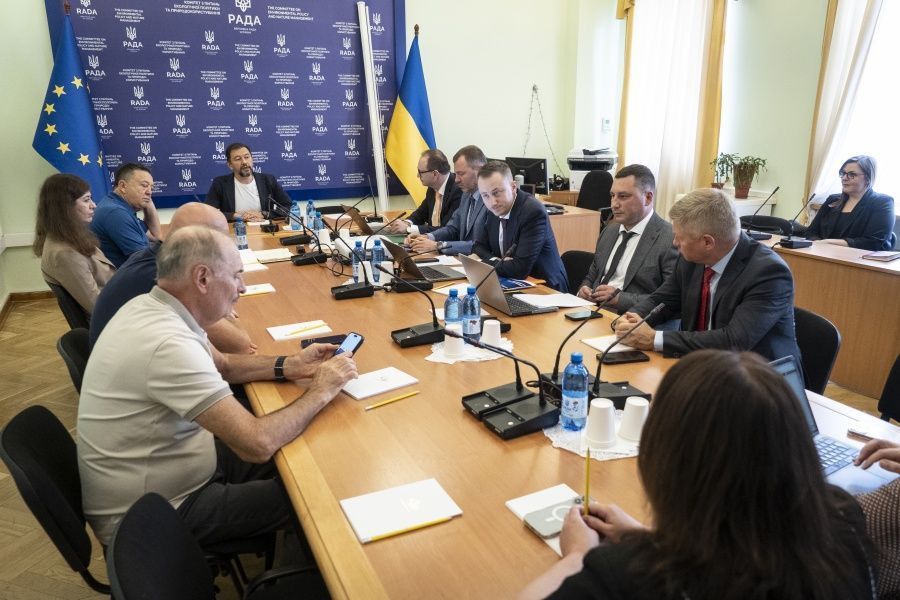
Unfortunately, the transcript of this event is not available on the committee's website, so we rely only on the general statements published after the meeting on both the Verkhovna Rada website and the committee's site.
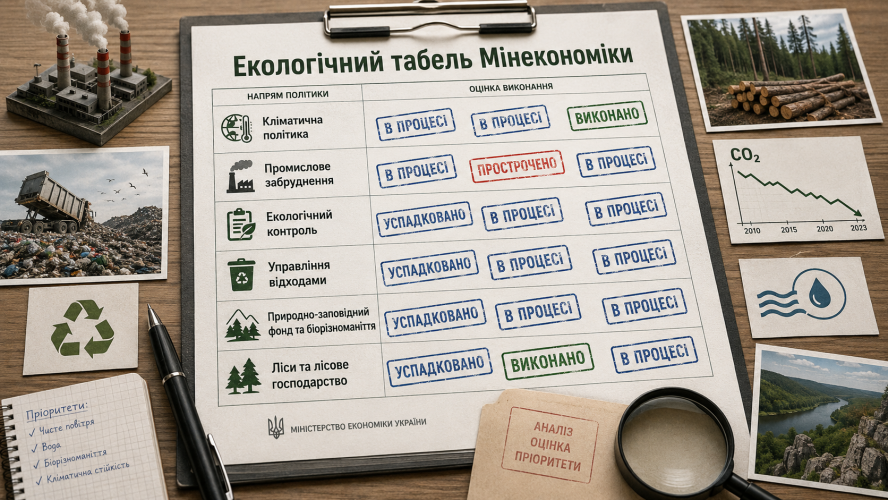
Each of the positions planned by the ministry received one or more of the following assessments from us:
- completed – the decision has been made or the declared mechanism is already functioning;
- overdue – the government-set deadline has passed, but there is still no result;
- inherited – the main work was carried out by the former Ministry of Environment, and the new ministry only finalized it;
- in progress – there is a draft, consultations, a working group, or an intention, but no final result yet.
An important nuance: a single measure may sometimes have two designations. For example, the Low Carbon Development Strategy is both “completed” and, to a large extent, “inherited.” This is not a contradiction but a more accurate assessment of the current ministry's contribution.
Climate policy: strategies approved, economic mechanisms still in the pipeline
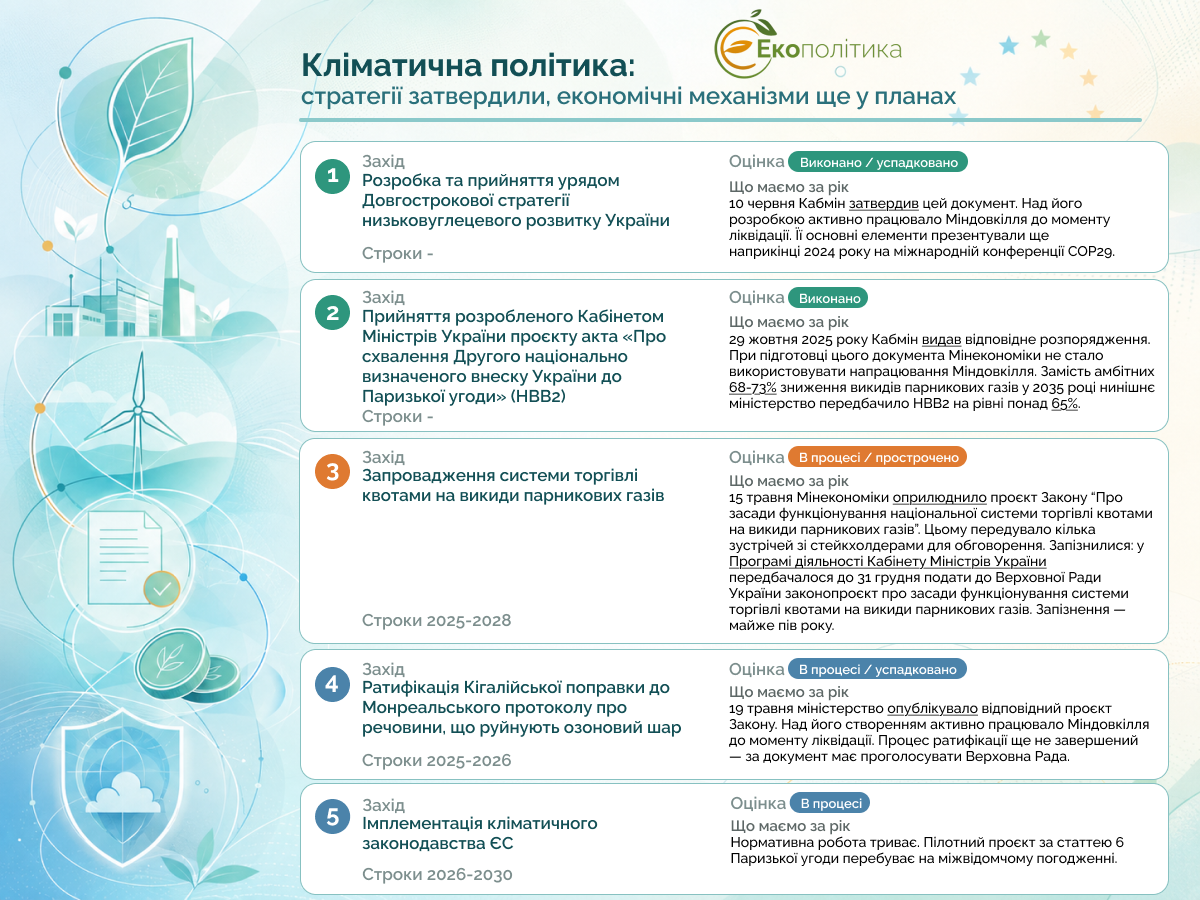 The climate block is one of the few where the Ministry of Economy can showcase several finalized documents. However, much of these achievements are the result of work previously done by the dissolved Ministry of Environment. The new ministry brought them to government decisions, yet this is more a successful relay finish than its own accomplishment. Moreover, in the case of NDC2, formal compliance was accompanied by diminished climate ambitions.
Progress on mechanisms aimed at changing not only regulatory documents but also economic processes is considerably slower. The launch of the quota trading system is already behind the government’s schedule. While the Ministry of Economy is holding consultations and requesting the EU to take into account Ukraine’s wartime conditions when implementing the Carbon Border Adjustment Mechanism (CBAM), Ukrainian businesses have yet to receive state support to prepare for the new carbon reality.
As a result, the climate policy of the Ministry of Economy appears most convincing at the level of strategies and international commitments. However, when it comes to implementing complex economic instruments, progress slows dramatically. Decarbonization documents already exist, but the process itself is moving extremely slowly and relies solely on the efforts of businesses or funding from international institutions.
Industrial pollution: the number of documents increases, but cleaner air is still absent
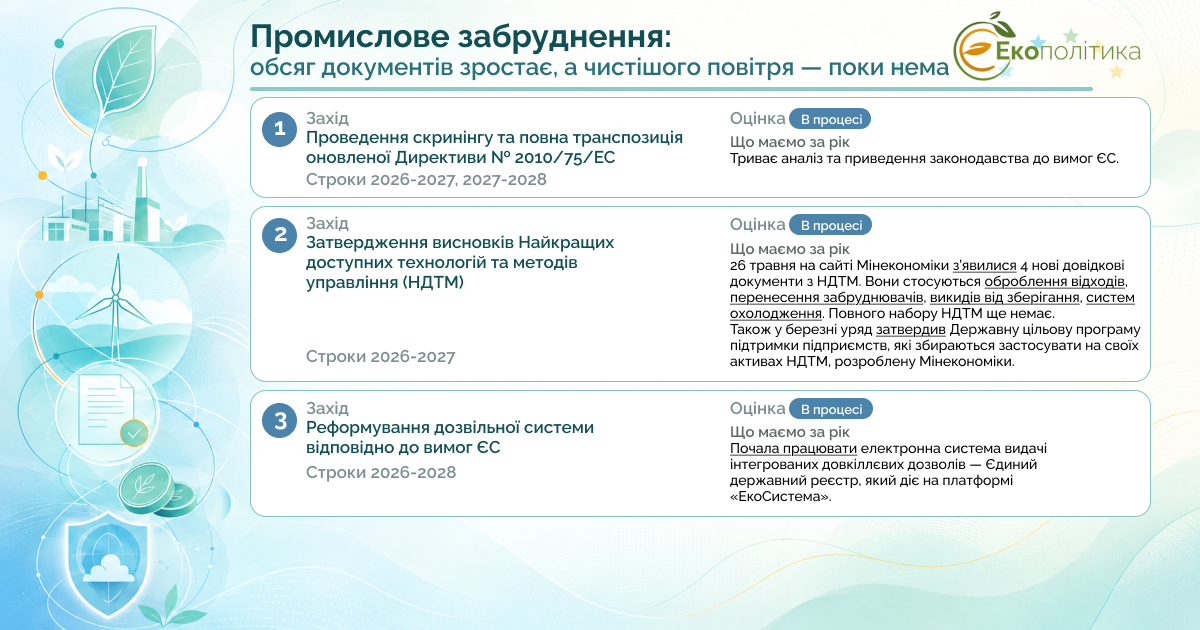
Over the past year, regulatory work has not stopped. The Ministry continued screening Directive 2010/75/EU, preparing for its full transposition, and developing the documents necessary for the implementation of BAT.
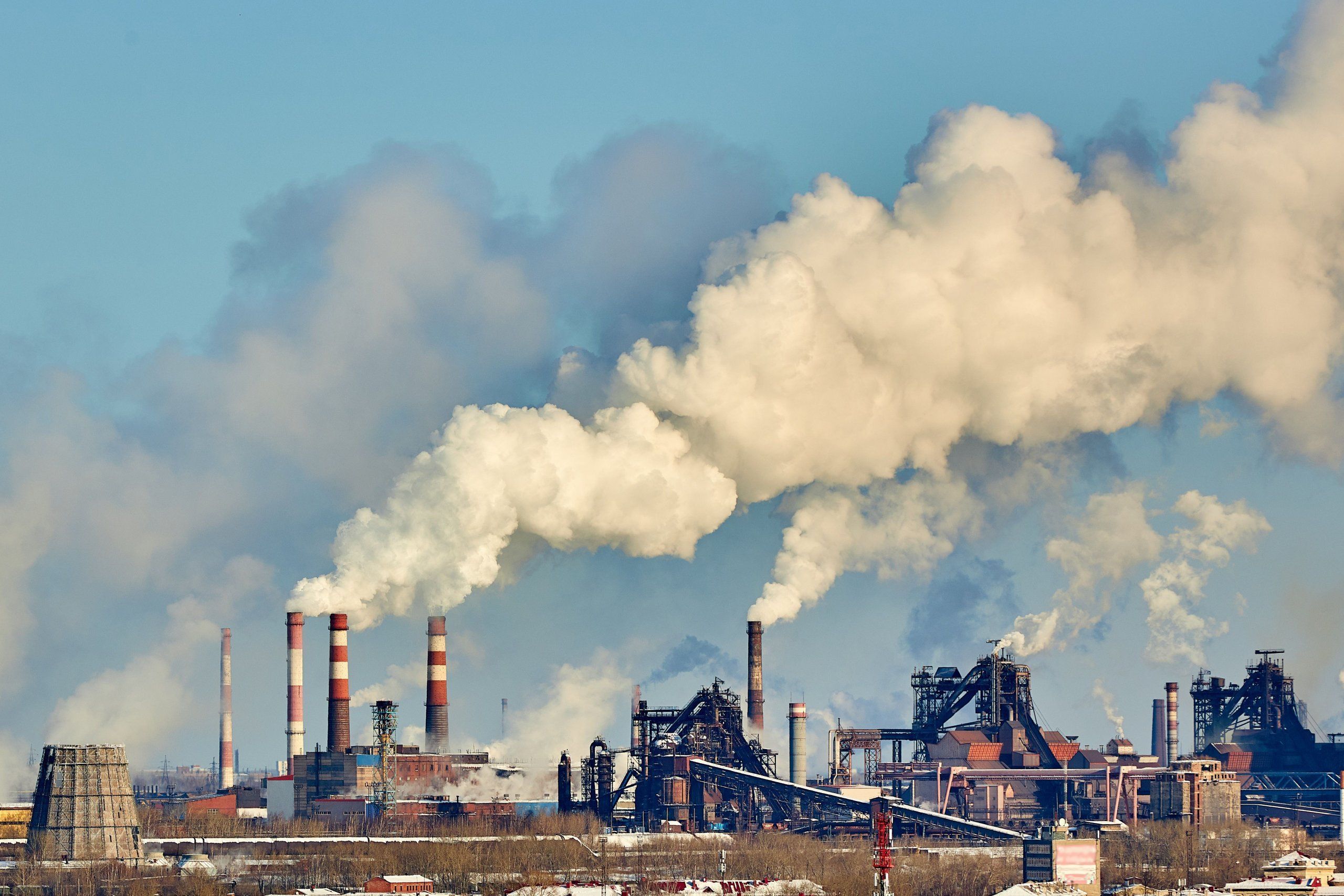
However, a full-fledged launch of the system requires the approval of sectoral conclusions, adoption of by-laws, start of registries, training of officials, and the establishment of a control mechanism able to check not only the correctness of application forms but also the actual performance indicators of enterprises.
Until this is achieved, industrial reform exists mostly in the regulatory realm. Although there are already directives, roadmaps, screenings, and transposition plans, actual eco-modernization is practically absent.
State environmental control: fines are gradually being updated, but systemic issues persist
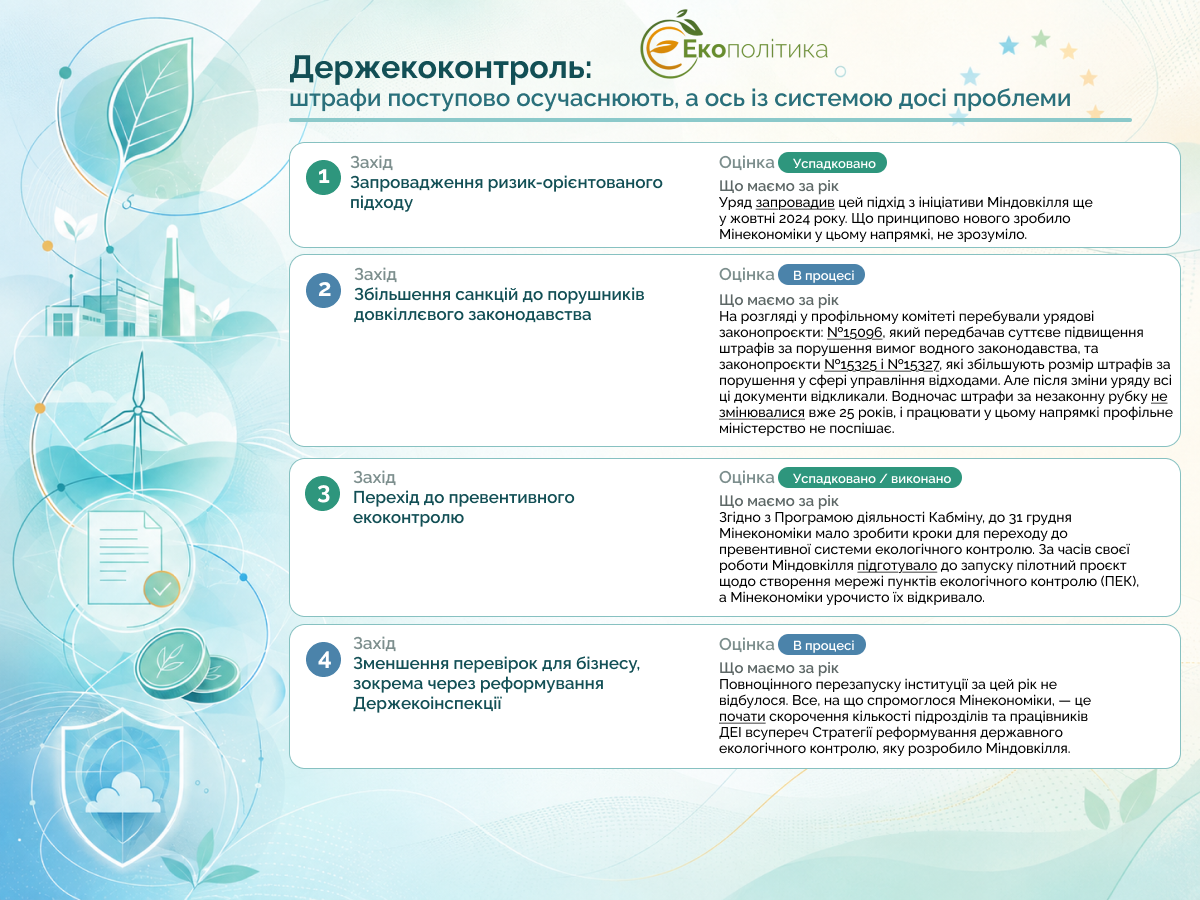
In the field of environmental control, there have been no fundamental changes during the year of work by the unified Ministry of Economy. The experimental project on the fuel and energy sector, inherited from the Ministry of Environment, was continued, but to what extent it fulfills its preventive function is currently hard to determine. The State Environmental Inspectorate still more often records harm after it has occurred rather than preventing it.
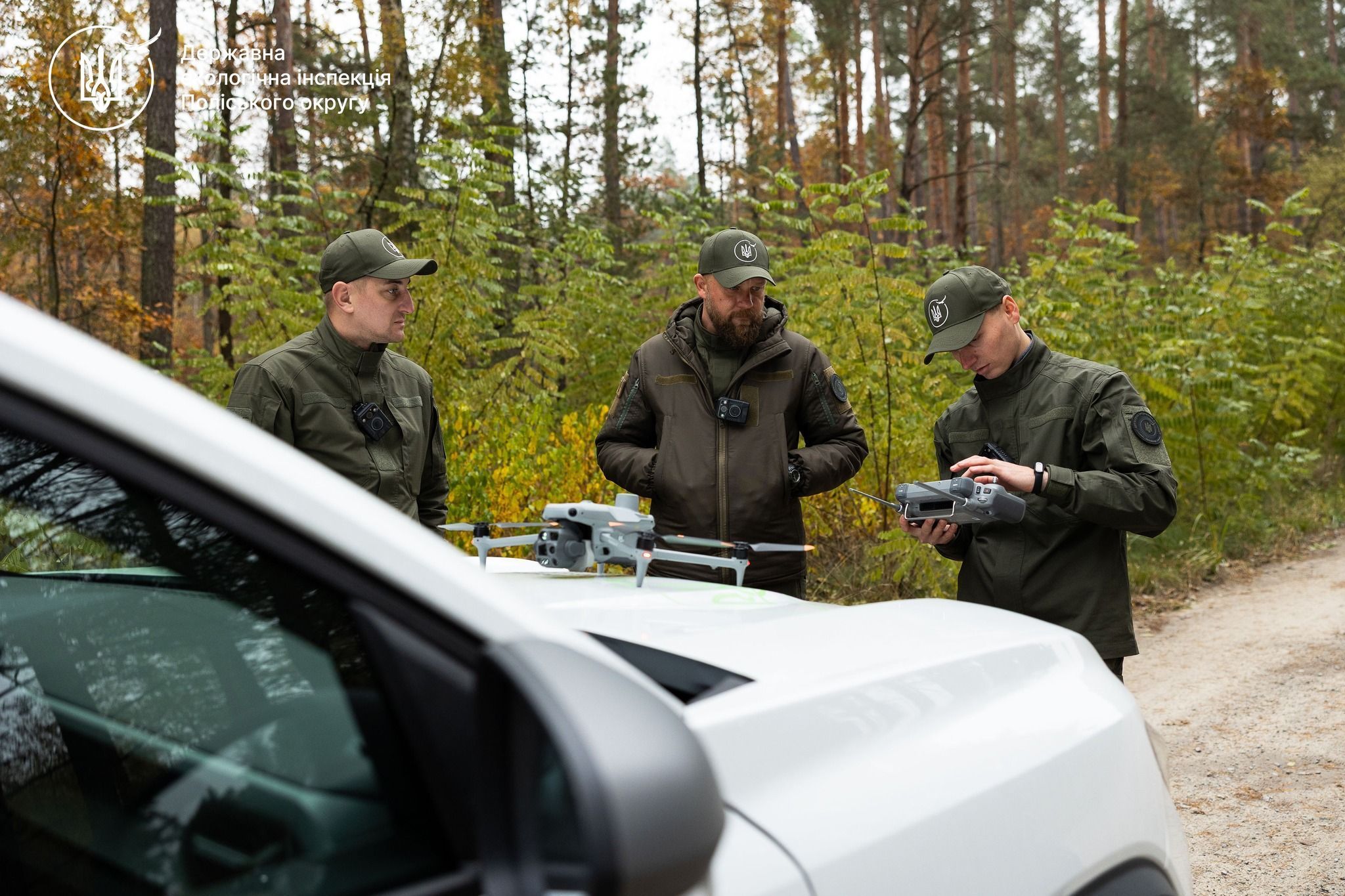
Photo: dei.gov.ua
The situation with business inspections is quite complex: scheduled inspections have still not resumed, and the ministry frequently delays granting permissions for unscheduled inspections, allowing violating enterprises to damage the environment for months.
The increase in fines for environmental violations has once again been postponed due to the government's resignation. Moreover, such sanctions are unlikely to save a system that is not always able to promptly detect violations, properly record damage, or ensure that responsible parties are actually penalized.
Waste management: reform moves at the speed of three licenses in five months
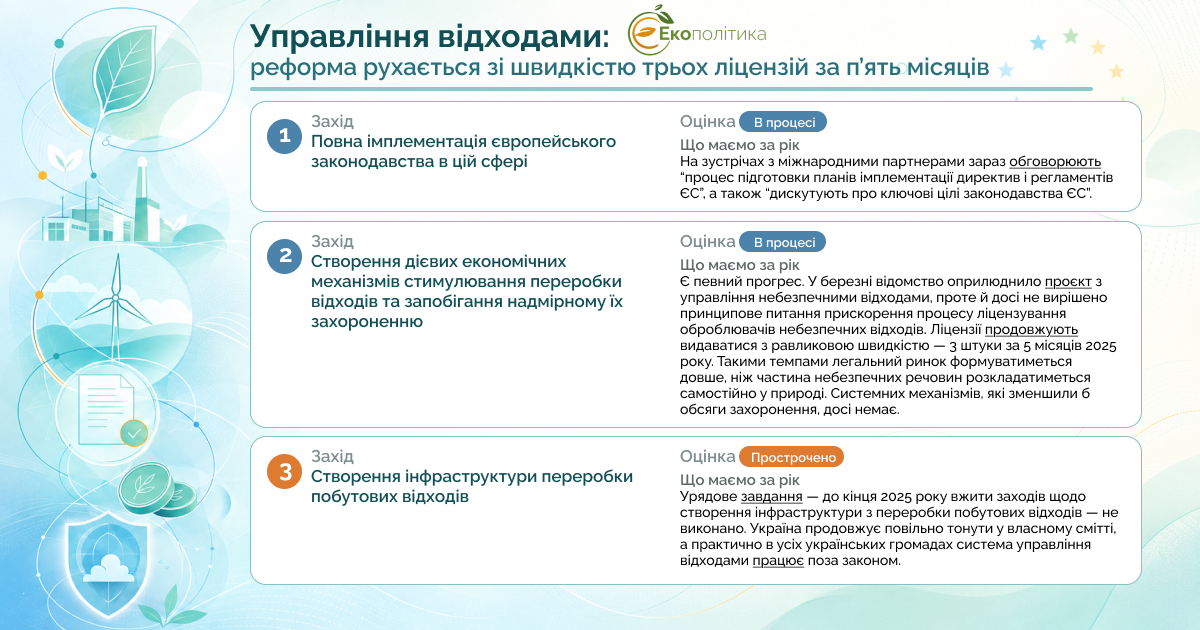
The waste management reform best illustrates the difference between document flow and waste flow: documents actively travel between ministries, working groups, and international partners.
Meanwhile, waste is making its way to modern sorting and recycling facilities much more slowly. Most often, its route, as before, ends at a landfill.
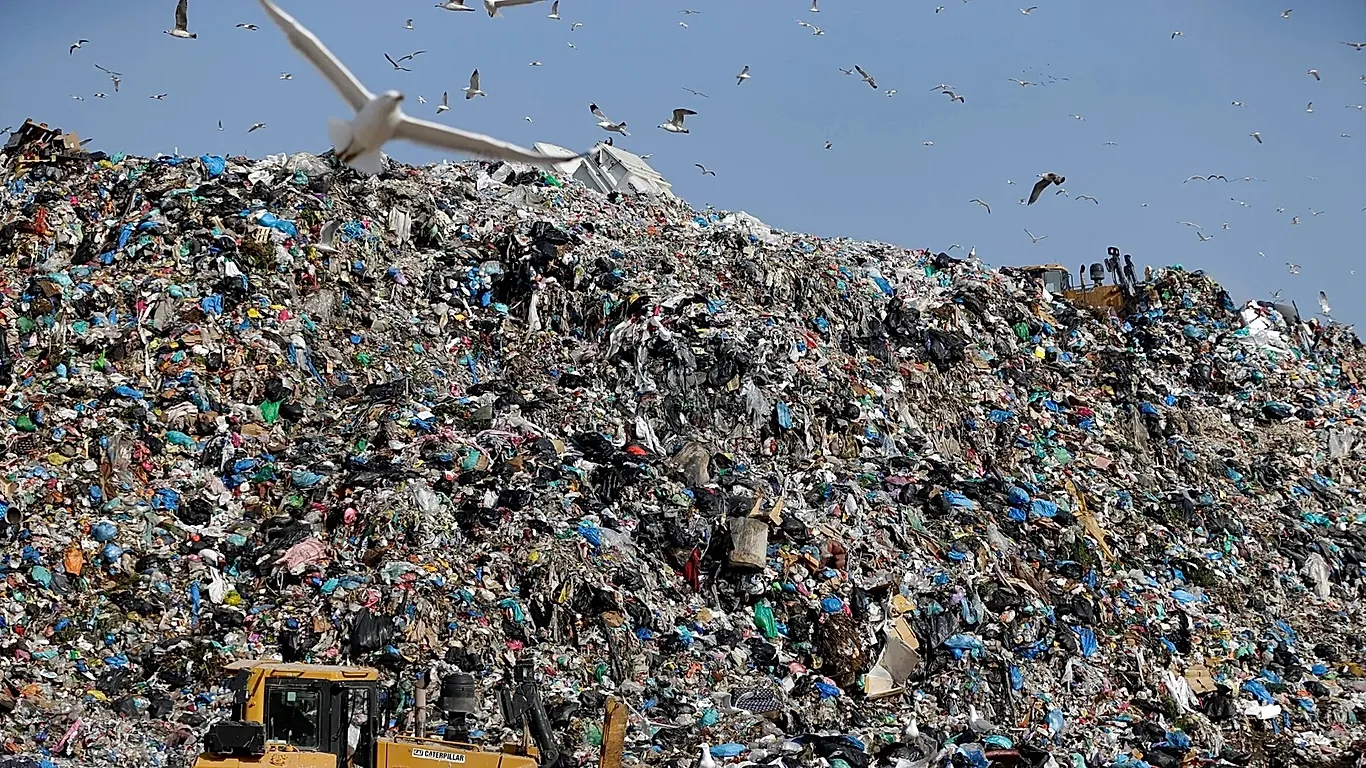
Photo: AP
However, both the Ministry for Communities and Territories Development and the relevant Ministry of Economy continue to “overlook” the complete disregard by communities of the requirements of the Law “On Waste Management” since only Cherkasy has established an administrator for household waste management services.
Among the most pressing unresolved issues is the continued lack of clear regulations for the safe handling of potentially hazardous demolition waste, the volume of which is increasing daily.
Reform of the Nature Reserve Fund (NRF) Management System: there is a strategy, but its implementation has been postponed indefinitely
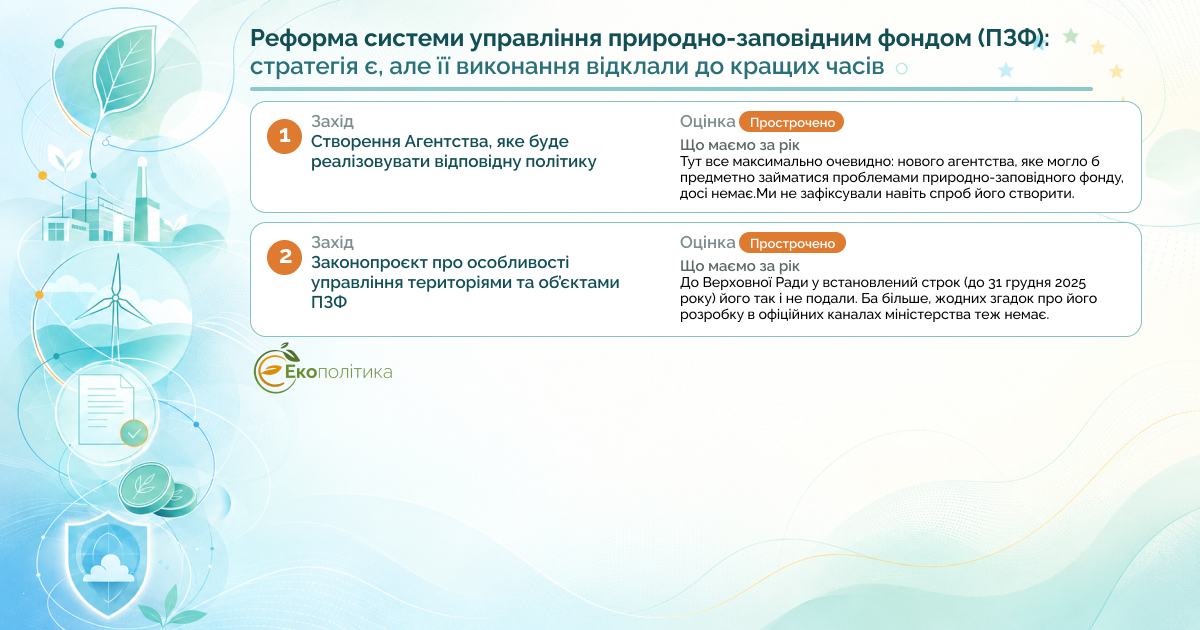
Biodiversity has become one of the few areas where, during the year, a major strategic document appeared – in June, the government finally approved the Biodiversity Conservation Strategy until 2035, which was first presented by the Ministry of Environmental Protection and Natural Resources back in March of the previous year, as well as the operational plan for its implementation in 2026–2028.
However, without a dedicated institution with clear powers, a budget, personnel, and responsibility for the state of protected areas, these documents will remain nothing more than well-written papers. A vivid example: the expansion of the nature reserve network currently takes place solely thanks to the enthusiasm of scientists and eco-activists.
Instead, among the ministry's initiatives are the introduction of electronic tickets for national nature parks. Yet, given that some park administrations still cannot obtain suitable premises, which are unused and could be transferred by the State Forest Resources Agency of Ukraine, the electronic ticket resembles installing a new cashier’s desk in an institution that does not even have space to place it.
On a residual basis
It is telling that during the presentation of priorities by the newly merged Ministry of Economy at the meeting of the Eco-Committee, issues of biodiversity protection, water resources, and forest management reform were mentioned only in passing – with no specifics or deadlines.
This seems particularly odd for the forestry sector, which is constantly embroiled in scandals, criminal cases, and court proceedings. Given this, it should have been one of the ministry’s primary areas of attention.
In forest policy, the Ministry of Economy quickly identified its priorities: it did not declare corruption, “grey” schemes, illegal logging, or excessive bonuses for top managers as the industry's problems, but instead pointed to environmental restrictions that allegedly hinder increased timber harvesting. As a result, the government set about simplifying access to forest resources instead of restoring order in a system where criminal proceedings against officials have long been the rule rather than the exception.
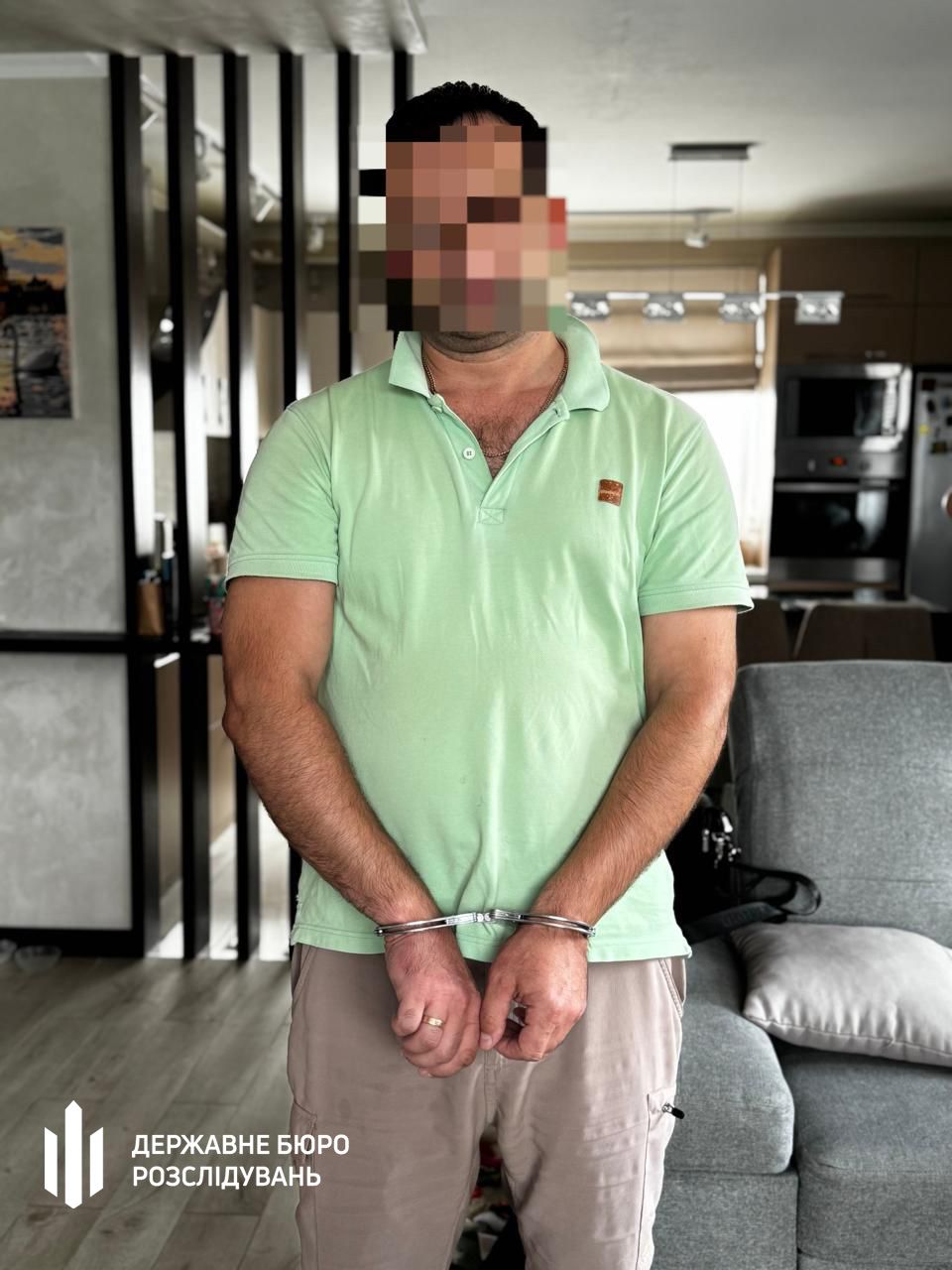
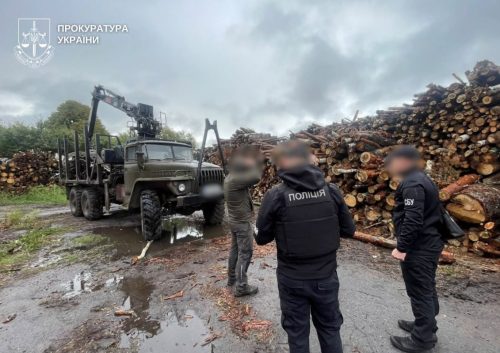
Photo: dbr.gov.ua.
At the same time, it is precisely corruption risks, conflicts of interest, and millions in losses from illegal logging that should be the main targets of reform. However, these are barely visible through the lens of those in power. Instead, what is clearly visible are nature reserves, environmental impact assessment procedures, and other safeguards that they seek to weaken in order to increase logging volumes.
As a result, the forestry reform increasingly resembles not the cleansing of the sector but clearing its path to timber. In this model, the forest is viewed primarily as cubic meters and revenue, with its ecosystem— which the relevant ministry is, in fact, obligated to protect-only an afterthought.
What the Ministry of Economy Can Truly Take Credit For
The ministry's annual environmental scorecard contains not only overdue deadlines and inherited documents.
The Ministry of Economy supported the development of the water cadastre. High-quality and accessible water resource data are needed by communities, industry, agriculture, environmental agencies, and civil protection systems.
The ministry denied a permit for peat extraction at the Berezyna site and supported new rules for the use of land under peat bogs, which environmental activists had been requesting for a very long time.
Through the Cabinet of Ministers, they also passed a draft law aimed at restoring the free flow of rivers, preserving their water levels, and improving the condition of water bodies. It adapts European practices to Ukrainian realities.
Among the positive results are the development of a "green" investment platform, the update of the National Energy and Climate Plan, as well as organizational work in the context of opening an environmental negotiation cluster for Ukraine’s accession to the EU.
However, here too, it is necessary to distinguish between the current team’s own decisions and processes that have been prepared over years by the Ministry of Environmental Protection, other state agencies, public organizations, and international partners.
This does not diminish the Ministry of Economy’s contribution. Sometimes, getting a document to a government decision is indeed no less complicated than developing it. But an honest scorecard should reflect not only who announced the result in a press release but also who carried out the main work.
There Are Checkmarks, But Systemic Change Is Critically Lacking
The results are not catastrophic, but there is also little reason to cut ceremonial ribbons. Environmental processes did not stop after the liquidation of the Ministry of Environmental Protection. Some strategies have been adopted, several draft laws prepared, and a few correct decisions made.
However, the bulk of the Ministry of Economy's results so far can be summed up in three words: "in development," "under review," and "ongoing consultations." And where the ministry can indeed check off "completed," it often has to add a note— "inherited from the Ministry of Environmental Protection."