In Ukraine, thousands of trees continue to be felled, whilst forestry officials either ‘turn a blind eye’ to this or actively assist in the process. At the same time, profiteers are eagerly engaging in the illegal extraction of minerals, causing billions in losses to the state. A high-profile announcement this week was the National Police’s report on Operation ‘PELIGROSOS’, under which cases involving losses of over 60 million hryvnias due to breaches in the management of hazardous waste are already under investigation.
EcoPolitic has, as usual, compiled a round-up of the key environmental crimes that came to light this week – from 26 September to 2 October. The report draws on data from the Office of the Prosecutor General and regional prosecutors’ offices, the State Bureau of Investigations, the State Environmental Inspectorate and the National Police of Ukraine.
Illegal extraction of minerals
A councillor from one of the local councils in the Cherkasy region is suspected of involvement in an illegal sand-mining scheme. The losses resulting from this ‘activity’, in which four other people are also suspected of involvement, amounted to almost 750 million hryvnias. Back in 2022, three individuals illegally extracted 23,000 cubic metres of sand in the Zolotonosha district, causing damage to the state amounting to over 508 million hryvnias. However, the director of one of the enterprises in the Kyiv region subsequently set up an organised group which continued the illegal activity and, in 2024, extracted a further 11,000 cubic metres of minerals, causing losses to the state of nearly 240 million hryvnias. The MP, as an alleged accomplice, has been notified that he is suspected of the large-scale illegal extraction of mineral resources by an organised group.
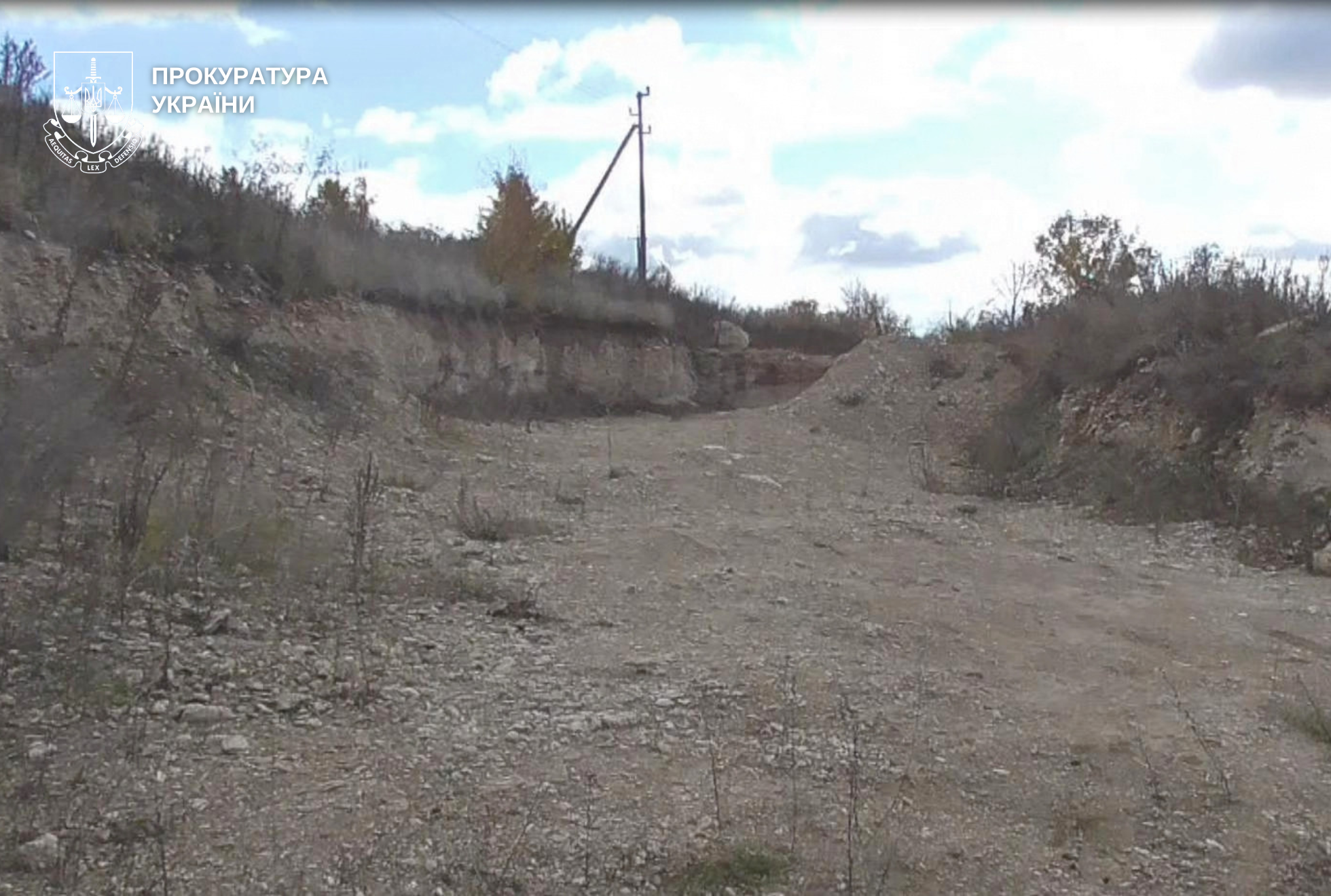
In the Vinnytsia region, environmental prosecutors exposed a village head and a councillor from one of the town councils for facilitating the illegal extraction of limestone. The losses resulting from the offence exceeded 4.1 million hryvnias. The head of the community, having no authority to do so, authorised a farmer to extract minerals through a decision by the village council. According to investigators, the farmer knew he was breaking the law but extracted over 2,100 cubic metres of limestone nonetheless.
Джерело: Вінницька обласна прокуратура
Also, in the Vinnytsia region, the director of a private company that was illegally extracting loam is to stand trial. The findings of the engineering and environmental assessment indicate losses of 5.5 million hryvnias. The director organised the extraction in 2021–2022 without a special permit. The minerals were used for brick production.
Losses of over 1.2 billion hryvnias due to illegal granite quarrying. The notices of suspicion issued to those involved in the scheme were amended in line with their respective roles in the operation. The case file now comprises 80 volumes. The case took place at the Sukhokliivskyi deposit in the Kirovohrad region. Between 2017 and 2021, 12 blasting operations were carried out there and over 375,000 cubic metres of rock were illegally extracted after the special permit had expired. According to the investigation, those involved include the quarry owners, state supervisory officials and the insolvency practitioner responsible for the liquidation of the company.
Forest matters
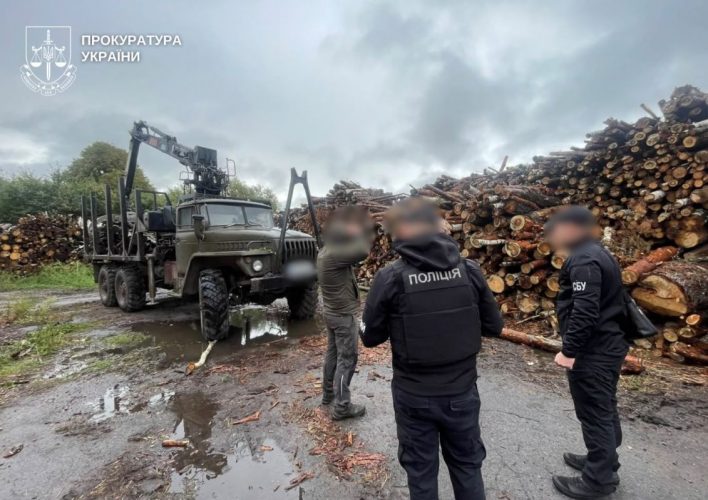
A criminal gang has been exposed that caused over 33 million hryvnias of environmental damage by felling more than 8,800 trees. The director of one of the agricultural enterprises in the Zhytomyr region is believed to be the ringleader. The timber allegedly came from a natural forest growing on land leased by the enterprise. However, in reality, the man had formed several teams which, in 2025–2026, cut down trees in a number of communities across the region.
We would also like to take this opportunity to remind you that even naturally regenerated forests deserve to be preserved. Environmental activists are actively campaigning against the felling of such areas, whilst prosecutors are consistently seeking official recognition of naturally regenerated areas as forests.
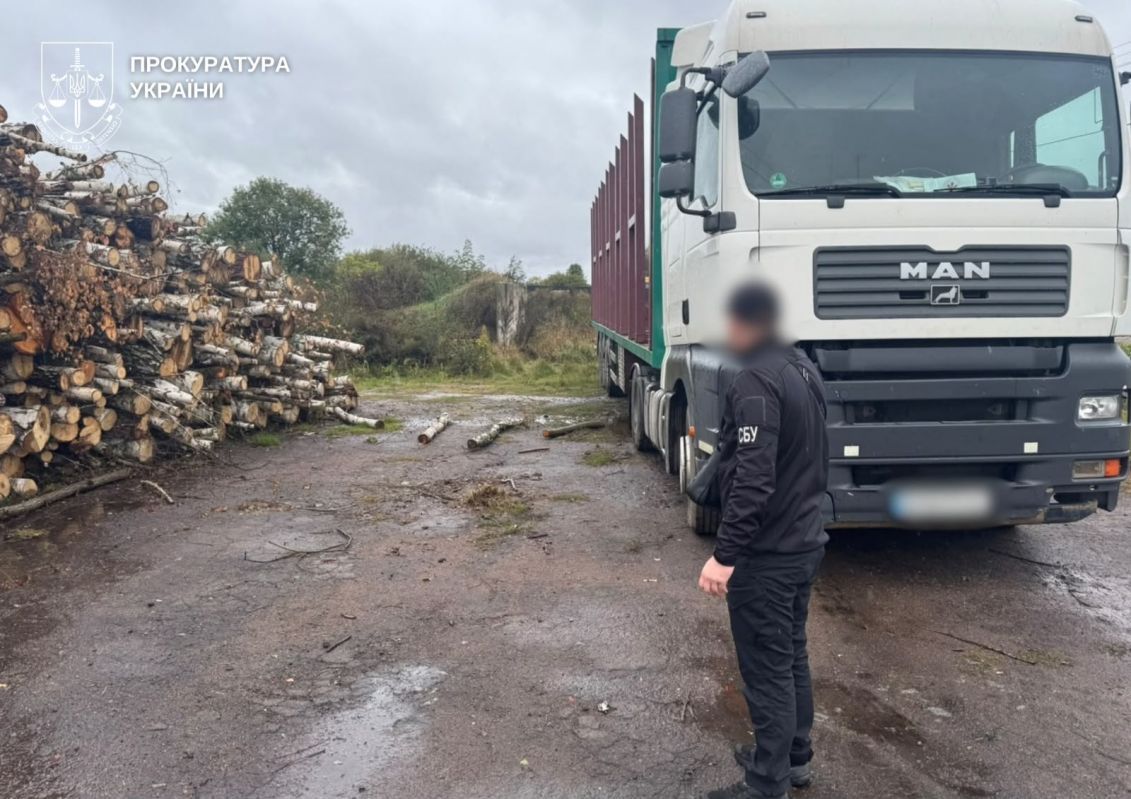
A trial is to be held against foresters who destroyed trees in a nature reserve, causing losses of over 6.1 million UAH. The case concerns an organised group that felled 52 trees in the ‘Medobory’ nature reserve in Ternopil. The ringleader was the head of one of the reserve’s nature conservation units. The trees were felled between November 2025 and March 2026, and were subsequently sold to local businesses as timber. The organisers identified the felling sites and supplied the workers with chainsaws, fuel and transport. To conceal the felling, the stumps were covered with branches and soil.
Two former officials from the Dolishne-Shepit Forestry Division of the State Enterprise ‘Forests of Ukraine’ illegally felled more than 600 trees over a two-year period in the ‘Zubrovytsia’ nature reserve in the Chernivtsi region. They will face trial. The losses amounted to approximately 7.7 million hryvnias. One of the foresters issued felling permits, whilst the other organised the felling itself. During the investigation, over 4 million hryvnias have already been recovered. The officials face up to 10 years’ imprisonment.
"He didn’t notice" that trees were being taken away from the forest by lorries. The forest manager is suspected of professional negligence for failing to take any measures to stop the felling of over 650 trees in the Berestyn district of the Kharkiv region. The damage to the environment exceeded 5.2 million UAH. The offence took place during selective sanitary felling between August 2022 and May 2023. Law enforcement officials cite a lack of proper inspection of the area. However, given that for months there was no significant noise from the felling of hundreds of trees, and no lorries or tracks left on the ground by them were visible, this is a rhetorical question.

Джерело: Харківська обласна прокуратура
Breaches in the field of waste management
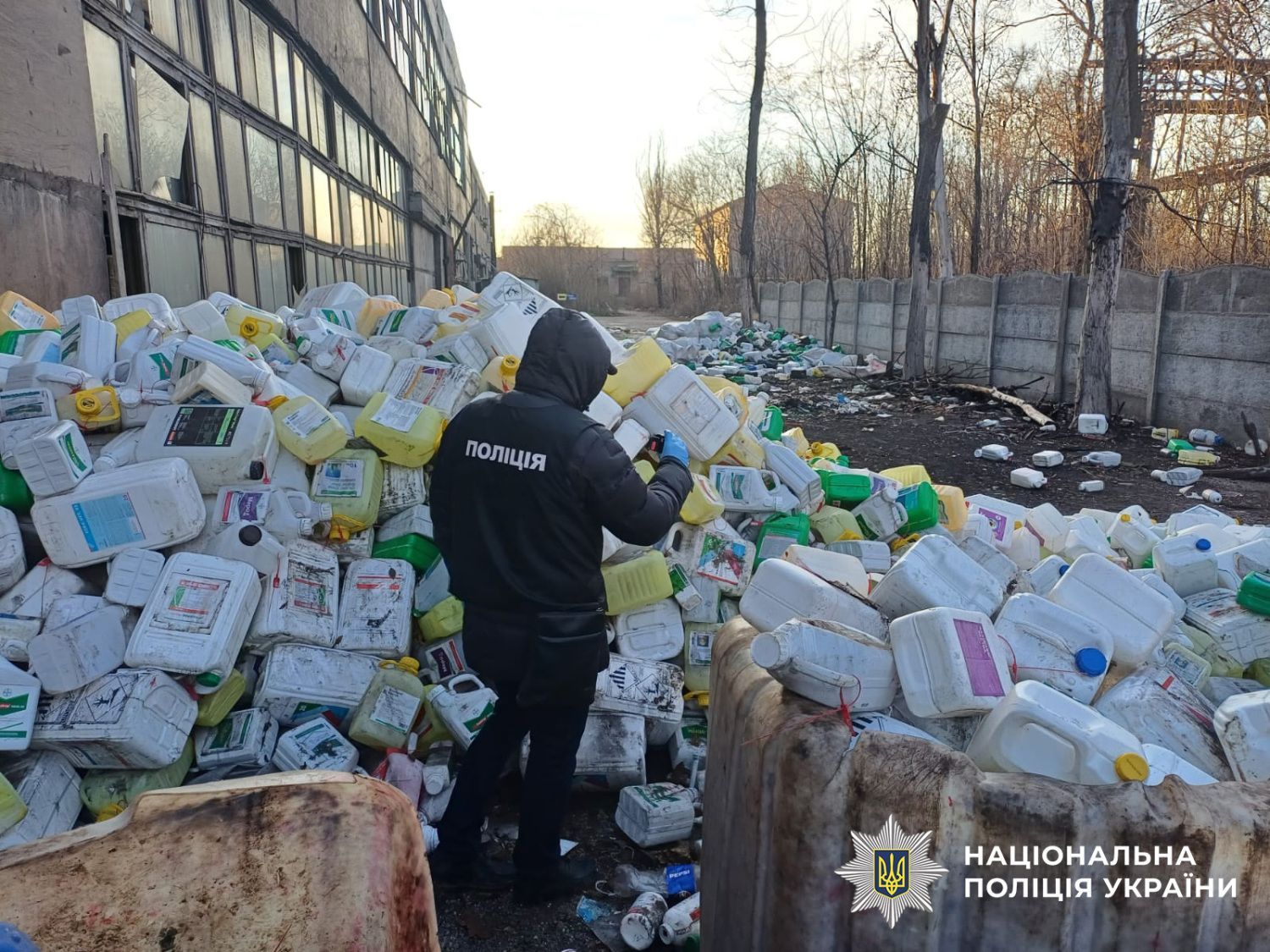
The National Police’s ‘rubbish’ operation – 30 suspects, 60 million hryvnias in losses. Law enforcement officers announced a systematic campaign to combat crimes in the field of hazardous waste management, codenamed ‘PELIGROSOS’. Examples include charges against the director and chief accountant of a commercial organisation that facilitated the creation of an unauthorised landfill site holding 140,000 tonnes in the Dnipropetrovsk region, as well as the dumping of toxic and hazardous waste into the ground instead of proper disposal in the Cherkasy region.
Джерело: Національна поліція України
Laundering of ‘dirty’ money through a front charity and years of land contamination. In the Ivano-Frankivsk region, the head of the department for municipal property, town planning and architecture, housing and communal services, and public amenities at one of the village councils was exposed. The official was found to have committed several offences at once.
Firstly, for four years, payments for a resident’s waste management were made to a charity under the organiser’s control, using the charity’s bank details and without a contract. However, the work was actually carried out by municipal services using public funds. The organiser therefore effectively facilitated the unlawful receipt of over 152,000 UAH for services that were not provided.
Secondly, the dumping of rubbish at an unauthorised landfill site. As a result, over the years, 23 hectares of municipal land have become contaminated with harmful substances. Levels of petroleum products were found to be 13.8 times higher than normal, and sulphates 4.8 times higher. The damage to the environment exceeded 1 million hryvnias.
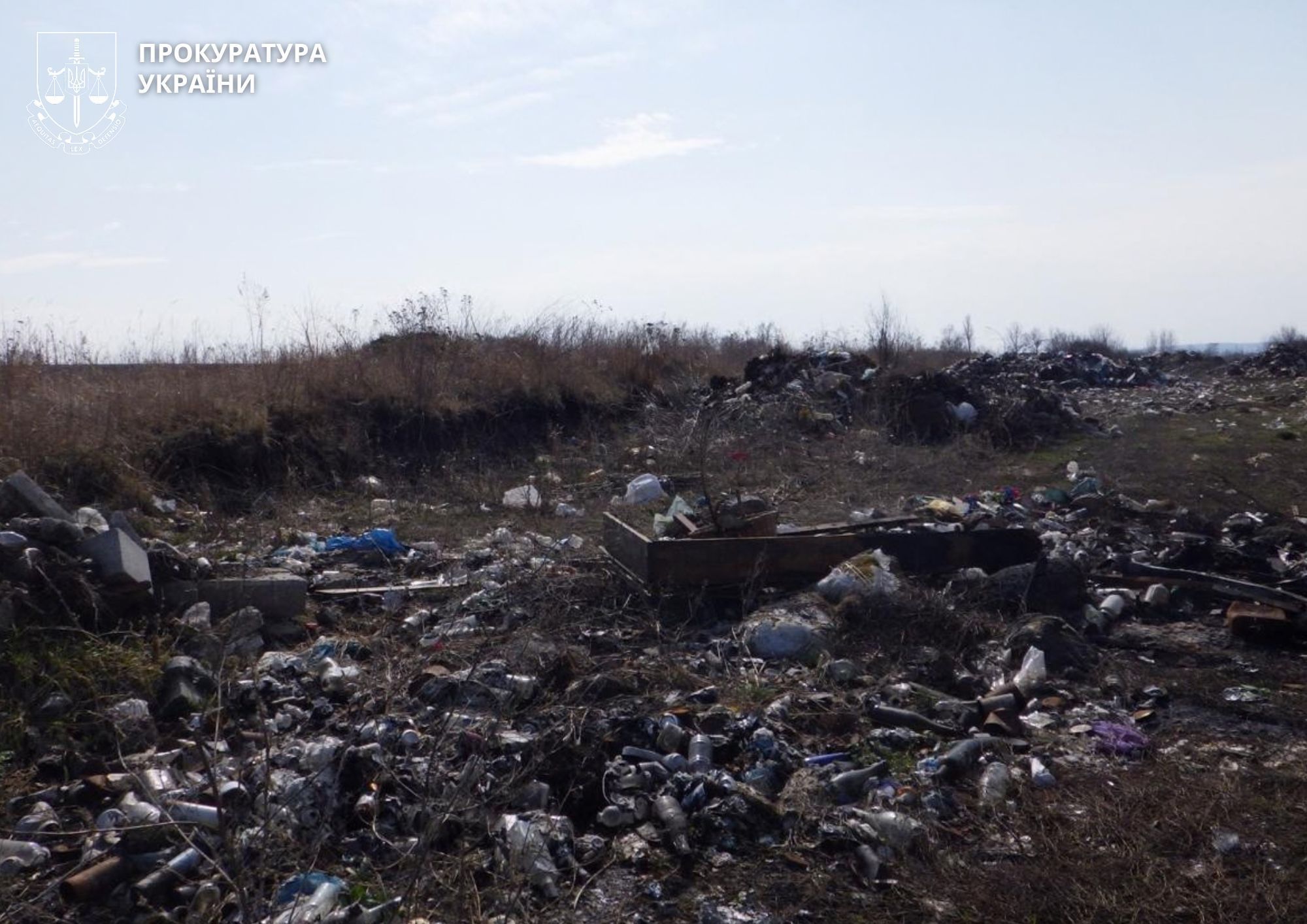
Джерело: Івано-Франківська обласна прокуратура
Poaching
Fish worth over 1.3 million hryvnias were caught in protected waters. In the Poltava region, two residents of the Kobelyaky community are to stand trial. In March 2026, they used gillnets to catch crucian carp, carp, bream and other fish in the Kamyanske Reservoir. They were fishing within the boundaries of the ‘Nizhno-Vorsklyansky’ Landscape Park.
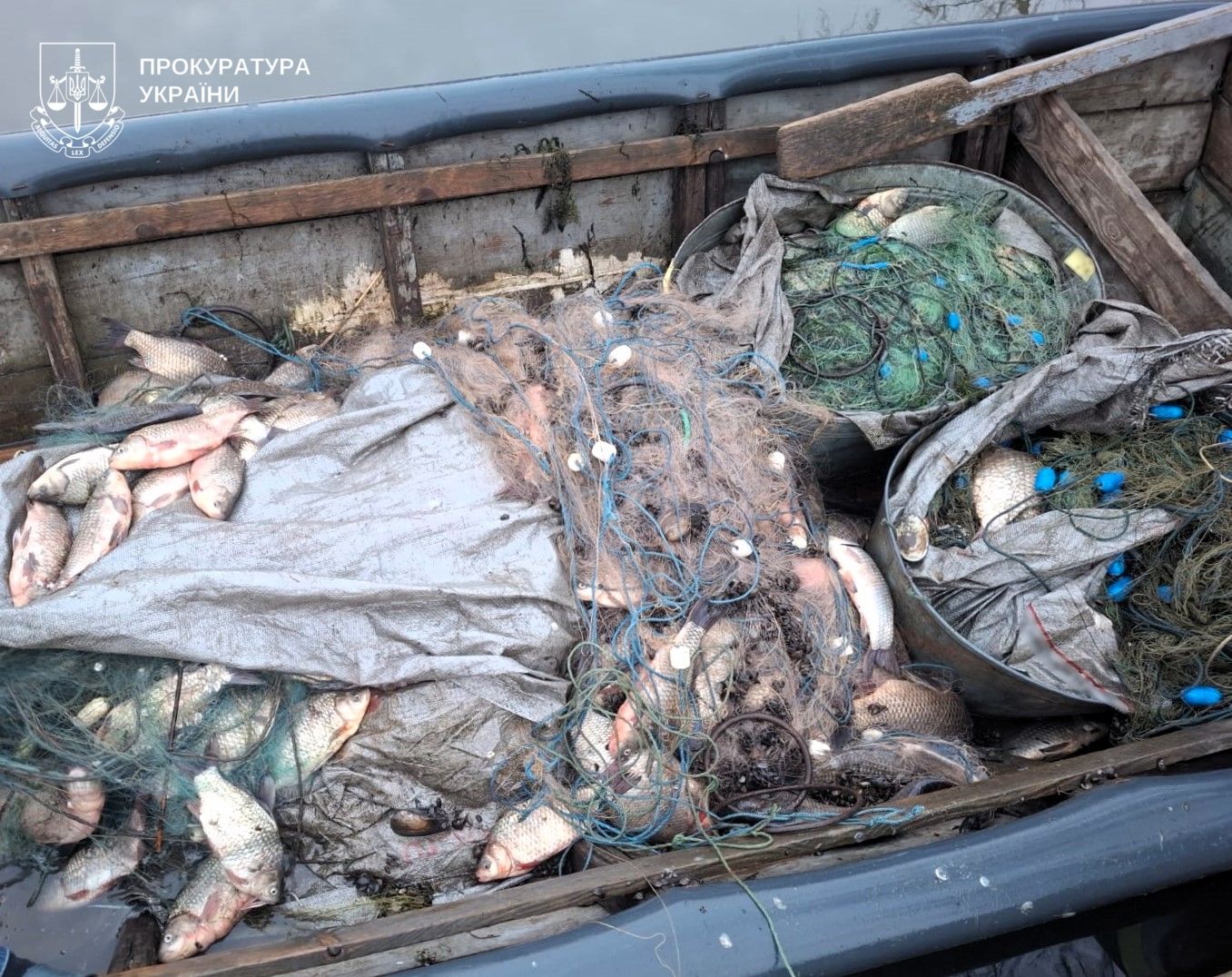
Джерeло: Полтавська обласна прокуратура
A round-up of environmental offences from last week can be found here.