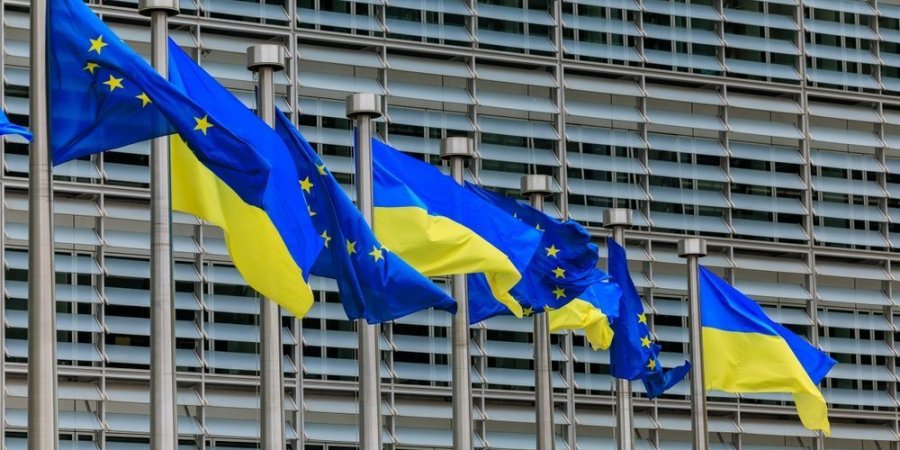
On the path to full EU membership, Ukraine must ‘incorporate’ around 200 EU legal acts relating to climate and environmental protection into its legislation. All of these are mandatory, though some at the Ministry of Economy consider them to be fundamental. At the “Environment for Ukraine” forum, government officials spoke about the key European integration documents currently being worked on by the authorities. It is telling that what unites them is not a mission to preserve nature, but the theme of investment and economic stability. And since the EU takes a strict stance on the environment, Ukraine is forced to hurry with their adoption.
EcoPolitics reports on this, citing speakers’ remarks during the panel discussion “Presentation of European integration legislative acts”.
The Ukrainian emissions trading system
The most important and arguably the most significant is the draft law “On the Principles of Operation of the National Emissions Trading System”. This is a foundational document that lays the groundwork for Ukraine’s emissions trading system.
The ministry recognises that this is what will determine the competitiveness of Ukraine’s economy. Consequently, Yulia Romanenko, acting head of the Climate Change Department at the Ministry of Economy, stated directly that this is not about the environment, but about investment and maintaining access to European markets.
Despite the widespread view that climate policy is “not the right time” during the war, the EU’s requirements do not allow Ukraine to postpone the implementation of the relevant legislation. At the same time, businesses have already felt the pressure from the roll-out of the European Carbon Border Adjustment Mechanism (CBAM).
Therefore, in December 2025, proposals for the document were announced. After processing the information, an updated version was presented on May 15. Comments and feedback are still being collected until the end of this week. At the same time, the draft law is under review by central government bodies. Within the next two or three weeks, the Ministry of Economy promises to address all comments and then submit the document to the Cabinet of Ministers and the Verkhovna Rada.
It is proposed to implement the National Quota Trading System (NQTS) in three phases to avoid a sharp increase in the burden on Ukrainian industry. The first phase is scheduled to start in 2028. It is described as a kind of adaptation period during which businesses should prepare for the new rules. At this stage, the NQTS registry and auction platform will already be introduced, but the auction process itself will be simplified and unused quotas will not be carried over to the next year.
In the second stage, a fully functioning quota market with secondary trading is planned. The third phase of the NQTS includes integrating Ukraine's system into the EU Emissions Trading System (EU ETS) after joining the EU.
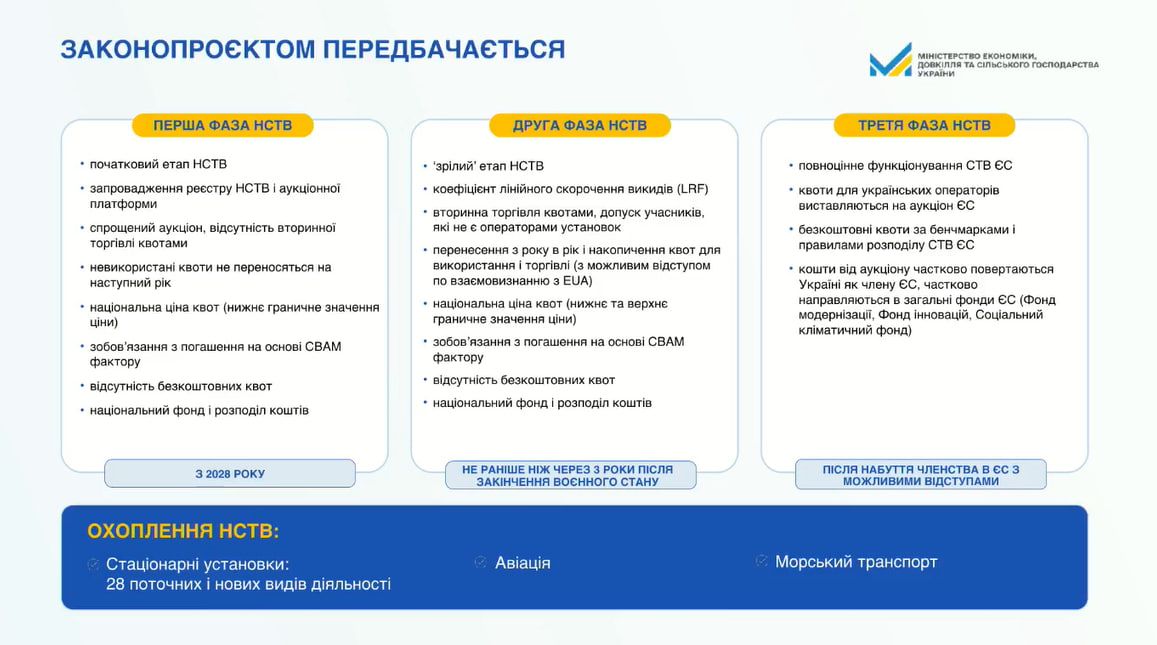
There will be no free quotas. Their price will be set taking into account the impact of the ETS on the EU economy. Preliminary estimates suggest that in 2034, the fee for one tonne of CO2 will reach up to 10 euros.
The revenues from the NQTS are planned to be directed toward the eco-modernisation of enterprises. For this purpose, a "Modernisation Fund of Ukraine" will be established.
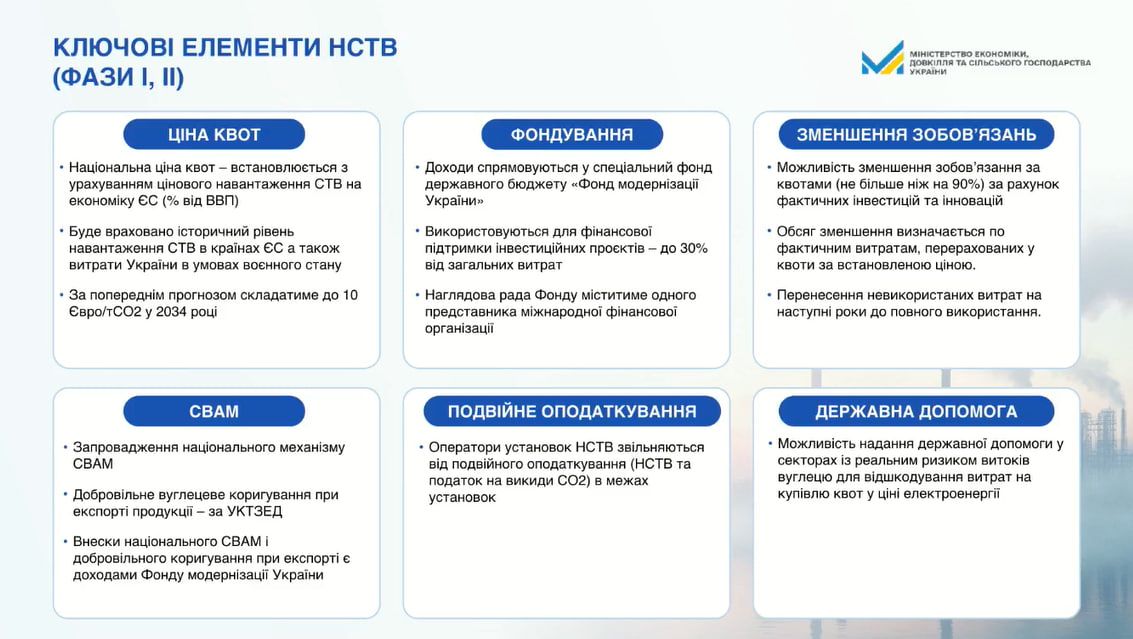
According to Yulia Romanenko, besides fulfilling EU integration obligations, introducing a domestic ETS will allow Ukraine to postpone the burden within the European carbon trading system and protect exporters from excessive pressure at CBAM borders. Moreover, the Ministry of Economy assures that such a system will become a funding source for the environmental modernization of Ukrainian industry.
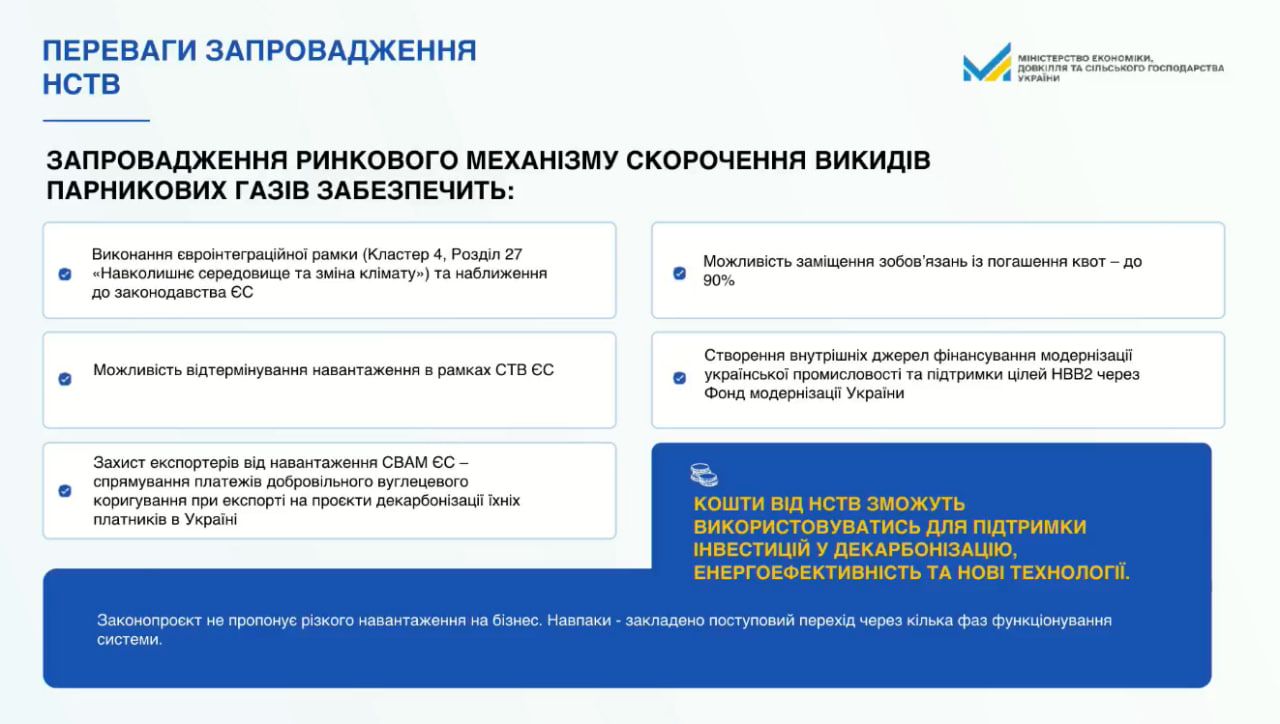
The Cabinet of Ministers, the Ministry of Economy, ETS administrator, quota market operator, the State Environmental Inspectorate, and the National Securities and Stock Market Commission (NSSMC) will each play their roles in the operation of the National Emissions Trading System (ETS).
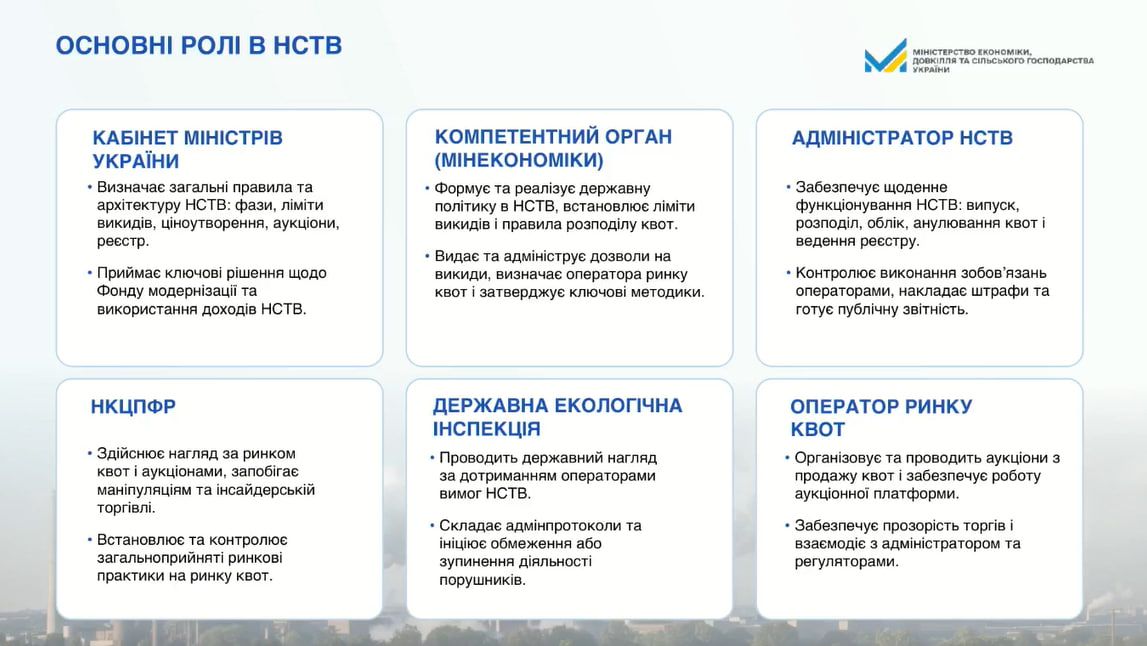
The Ministry of Economy understands that the ETS could face resistance and misunderstanding in its early stages, but points to the example of the greenhouse gas emissions monitoring, reporting, and verification system. At the time, there were also doubts in the government about whether the business sector was ready for this. However, the system is now operational, with 522 installations already registered. Currently, to simplify processes, it is being digitized.
Business “sustainability” criteria
The next document is the draft law “On the Taxonomy of Sustainable Economic Activities and Sustainable Investments,” which aims to implement the European classification system for those types of activities that contribute to achieving climate goals. Preliminary estimates suggest it will cover about 100 economic segments, each connected in some way with emissions, impacts on soils, or biodiversity.
The taxonomy entails clear criteria that are understandable for financial institutions and businesses, and which could become regulatory standards for various jurisdictions. This tool is needed to prioritize investment in sectors that are most important for achieving the goals of the European Green Deal.
For Ukraine, this is particularly important for attracting foreign capital to reconstruction efforts in the future. After all, “sustainability” requirements will clearly be among the main factors determining whether or not to invest in a particular business project.
The taxonomy will establish a list of activities that, under certain conditions, meet sustainability criteria. These criteria consist of six dimensions-two related to climate and four to the environment. At the same time, the “do no significant harm” principle will apply, meaning that a positive impact in one area should not be offset by adverse effects in another.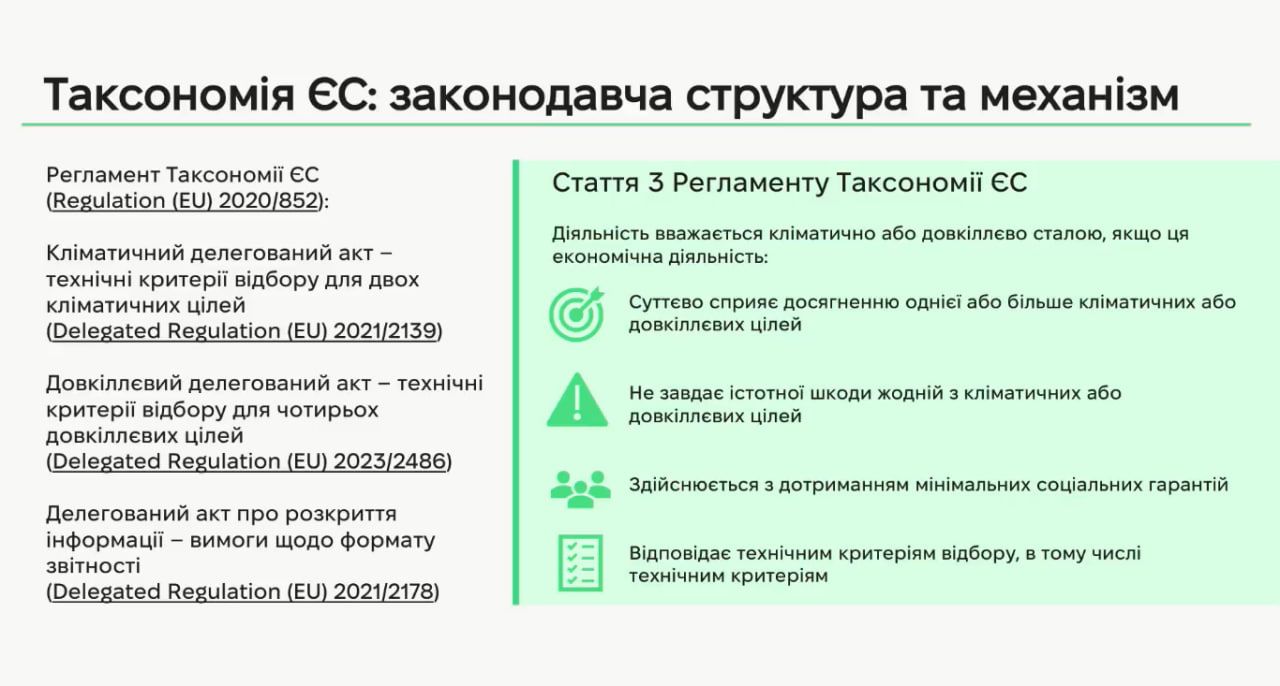
The challenge in drafting this law lies in the constant changes to European regulations. For example, in March, the EU updated its taxonomy rules, so Ukraine is now waiting for their final approval to adjust its own draft regulatory acts.
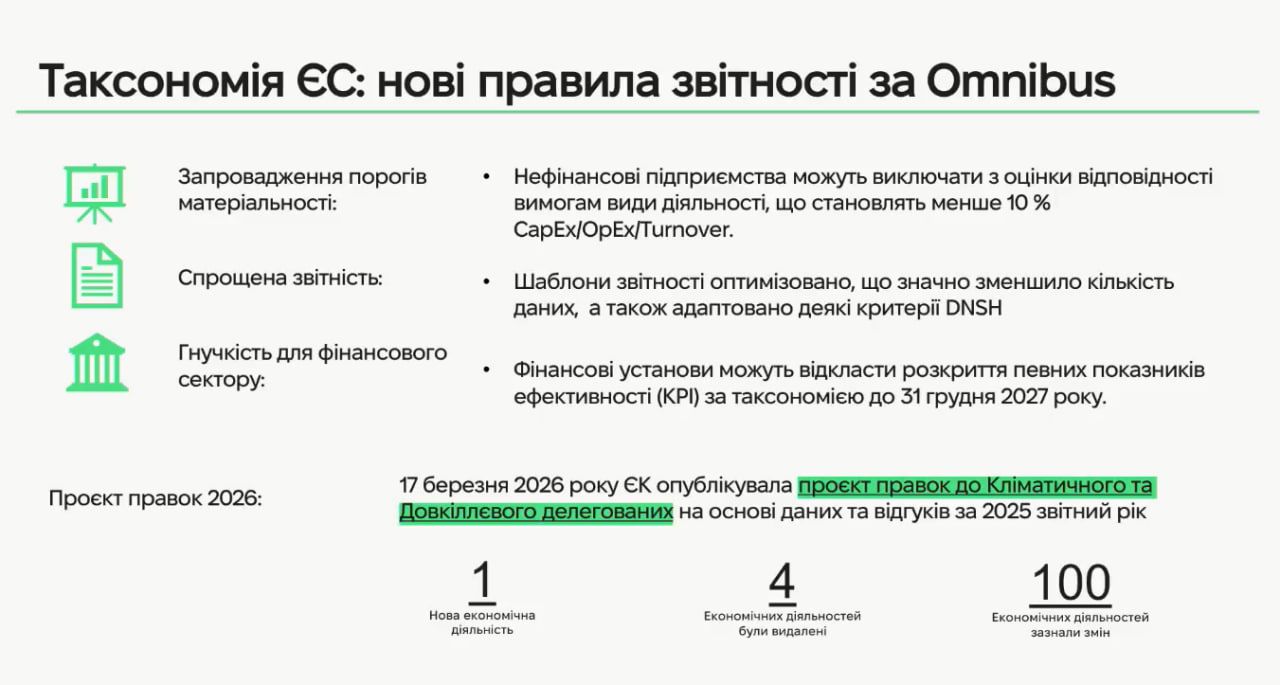
The draft law is planned to be submitted to the Verkhovna Rada by the end of this year. The same timeline is promised for the preparation and publication of secondary legislation.
Fundamental strategy
The Ministry of Economy considers the state environmental policy strategy of Ukraine, which is currently being updated for the period until 2030, to be the basis for all further requirements on decarbonization and eco-modernization, investment attraction tools, and the achievement of climate goals.
According to Bohdan Semenenko, Head of the Department of Environmental Protection, Prevention and Control of Industrial Pollution, the Ministry of Economy has already developed the relevant document. It is currently undergoing approval by central government bodies and public consultation.
The previous strategy was developed back in 2019, so it does not correspond to the current reality at all. Therefore, several factors were taken into account in the document update.
- European integration. While in 2019 Ukraine was still an associated member of the EU, it is now a full-fledged candidate for accession. Now, the implementation of all European directives is not optional but mandatory. Therefore, they have been “embedded” in every aspect of the strategy.
- Impact of the war. Previously adopted approaches are faced with unpredictable circumstances that must be taken into account during recovery planning. For example, this concerns hazardous waste from destruction, such as asbestos.
- Climate policy. Deindustrialization caused by the war has already played its part. However, Ukraine is already planning investments in recovery. Whether these investments will be implemented depends on the decarbonization vision.
For a detailed analysis of the draft law on the National Emissions Trading System, read the material by EcoPolitic.