Throughout 2024, revenue from various types of environmental taxes in the European Union reached €371.9 billion. By way of comparison, in the previous year, 2023, this figure stood at €350.4 billion, meaning that revenue from polluters increased by €21.4 billion — 6.1 per cent.
This is according to Eurostat data.
Comparison with GDP
Despite the growth in absolute figures, eco-tax payments accounted for a smaller share of GDP. Whilst in 2014 this stood at 2.5 per cent of GDP, by 2024 it had fallen to 2.1 per cent.
The share of environmental taxes in government revenue also fell — from 6.1 per cent to 5.1 per cent.
Structure of environmental taxes
Energy taxes accounted for the largest share of environmental taxes — in 2024 they totalled €287 billion, compared with €269.3 billion in 2023.
Transport taxes came second. They also rose year-on-year – from €64 billion to €67 billion.
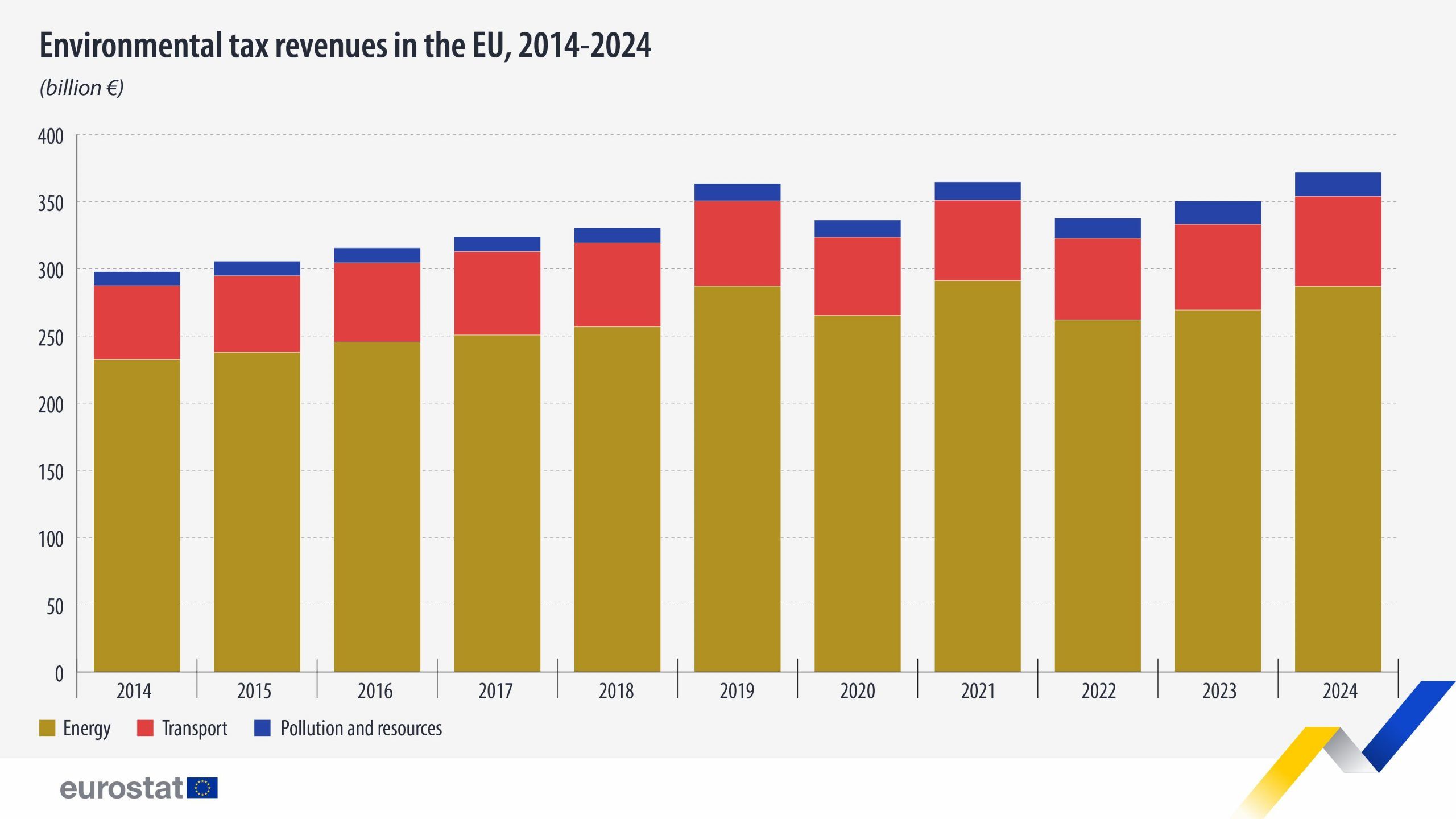
Source: Eurostat
Dynamics among countries
In 22 EU countries, environmental tax revenues increased. Among the countries with the highest growth rates:
- Romania – +21.7%;
- Lithuania – +13.9%;
- Poland – +12.7%.
Only in five countries did this type of fiscal payment contribute less to the budget than in the previous year. These were Sweden, with a drop of 17.7%, Slovakia (-6.1%), Finland (-3.8%), Greece (-3.7%), and Bulgaria (-2.3%).
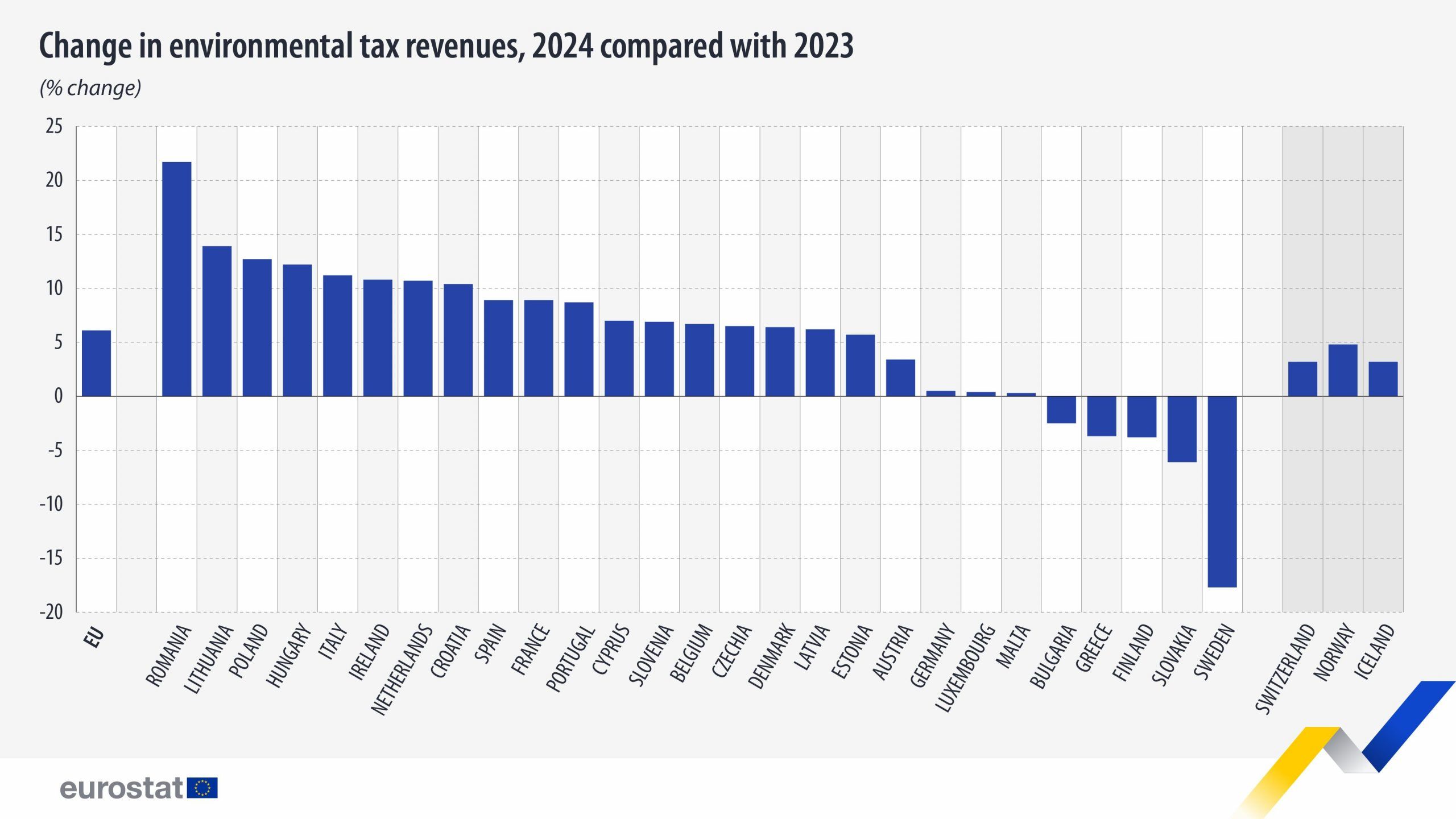
Source: Eurostat
In Ukraine, during 2025, polluting enterprises paid UAH 5.6 billion in environmental tax. Whether these funds were used rationally, EcoPolitic analyzed in its own study “Environmental Tax: Actual Use in the Regions of Ukraine”.