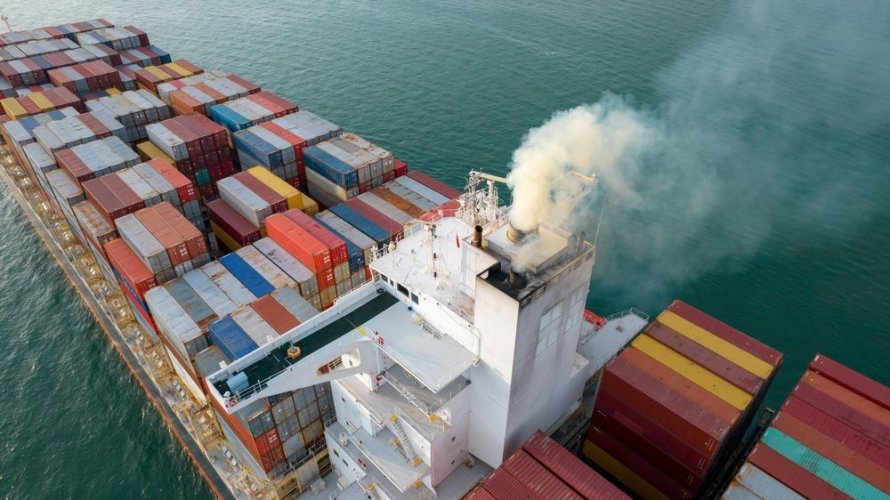
EU countries on Thursday, March 23, reached a preliminary agreement on reducing greenhouse gas emissions in the maritime transport sector thanks to the use of renewable fuels.
The agreement aims to ensure that the vessels meet the EU's climate targets in 2030 and 2050, Reuters reports.
It is noted that the goals are planned to be achieved thanks to the increase in targets for reducing emissions from the energy used on ships.
In addition, it is planned to introduce measures to encourage the use of so-called renewable fuels of non-biological origin.
"The agreement ensures that fuel suppliers, ships and maritime operators will have enough time to adapt to the new conditions so that the maritime sector can meet its climate goals," said Sweden's Infrastructure Minister Andreas Carlsson.
The article emphasized that the agreement between the representatives of the EU member states and the EU Parliament must now be officially approved by the bloc's ministers.
Earlier, EcoPolitic wrote, that the Council of the EU agreed to pay special attention to the decarbonization of the maritime sector within the framework of the Innovation Fund, and to include its emissions in the emissions trading system.
As EcoPolitic previously reported, in the US, the 7-state Midwest Hydrogen Coalition is committed to producing and using H2 for several decarbonization purposes, including Great Lakes cargo ships and ferries.