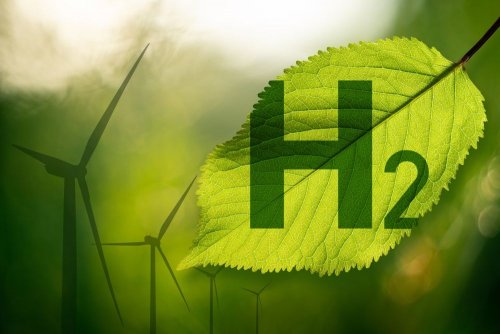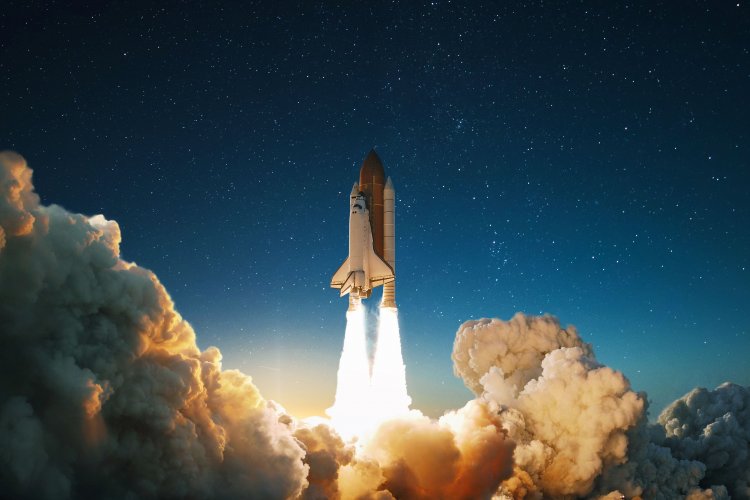
Leaders of the aerospace industry consider green hydrogen to be a promising eco-fuel for airplanes, satellites and spaceships.
It is being considered as a fuel for power plants, and NASA and other space agencies are studying its use as a fuel source for rocket engines, reports AZoM.
It is noted that in the EU alone, aviation accounts for 3.6% of greenhouse gas emissions due to the use of kerosene as fuel
Hydrogen is a clean source of energy, during its combustion, only water vapor is released. In addition, H2 has a high energy density, which means it can store a lot of energy in a small space. It also has a high specific impulse, meaning it can provide a lot of thrust, making it an ideal fuel source for rocket engines. This is important for airplanes and spacecraft, which must be light to be able to fly.
Europe is at the forefront of the development of hydrogen technologies, in particular aircraft, which could lead to the fact that air travel will become an ecological mode of transport with no emissions and no impact on climate change in the future. Thus, hydrogen can reduce the effect of global warming from flights by 50%-90%. This technology is possible and could be used in short-range aircraft by 2035.
The authors highlighted that a preliminary estimate of this technology would be an additional cost of less than €18 per person during a short-range flight and a significant reduction in climate impact.
A new report from the World Economic Forum confirms that hydrogen could be the key to making air travel greener. A report by the World Economic Forum and Cambridge University's Aviation Impact Accelerator suggests that hydrogen fuel cells could be used to power medium-range flights by 2035, and hydrogen-powered aircraft could be used for long-haul flights.
One of the biggest challenges for the aerospace industry is the development of safe and efficient hydrogen storage and delivery systems. After all, it is stored in tanks that are compressed by gases under high pressure. However, these tanks are bulky and heavy, which can be a problem for aircraft and spacecraft. In addition, hydrogen fuel cells must be strong and withstand the harsh conditions of flight.
As EcoPolitic reported earlier, NASA is looking for partners to develop the technologies needed to create a new generation of monoplanes low-emission airliners, which will appear on the market in the 2030s.