The future European clean energy system will rely on imported green hydrogen, because Europe will never be able to produce its own hydrogen in sufficient quantities.
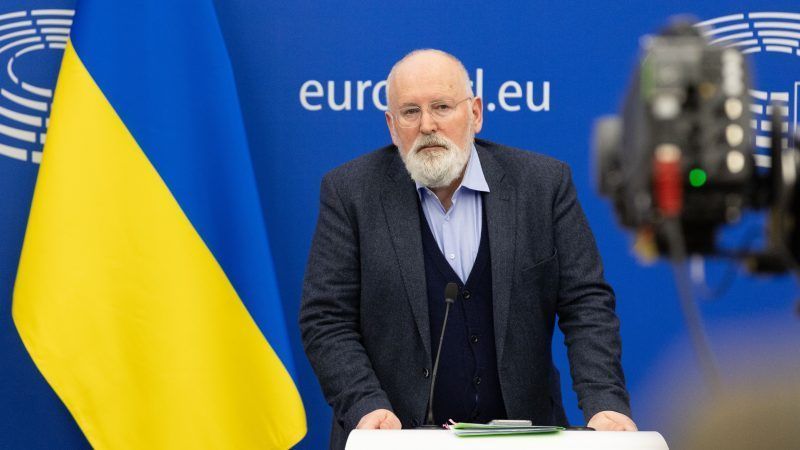
Frans Timmermans, head of the EU on climate issues, stated this on April 28 at a meeting with the environmental committee of the European Parliament, reports Recharge. During the discussion, the impact of the war in Ukraine, the state of the new European climate legislation and food security were discussed.
Timmermans said hydrogen will be "the driving force behind the energy system of the future EU," but the bloc will have to rely on imports. For, as the European Commissioner firmly believes, European countries will never be able to produce their own hydrogen in sufficient quantities.
In his opinion, the EU will need to diversify energy supplies from many sources — "as much as possible so that the bloc does not become too dependent on one source."
Timmermans envisions a hydrogen economy around the Mediterranean, where each country depends on the other and each has a "share in this production, distribution and use of green hydrogen." According to him, in this way it is possible to create greater stability in the geopolitical system and open up huge opportunities for the development of Africa.
The EU is already looking beyond its borders when it comes to future supplies of renewable hydrogen. For example, Germany is trying to build partnerships with countries such as Australia and North Africa.
Timmermans also noted that while Europe has "difficult relationships" with countries such as Egypt and Turkey, these countries are going to produce renewable energy "in quantities exceeding their own needs, so they will want to look to put this surplus somewhere".
In addition, the European Commissioner added that Europe will need more liquefied natural gas (LNG) and gas from pipelines of other partners. This fuel must come from different supplier countries so that the EU does not become overly dependent on one person.
Therefore, Timmermans said, the European Commission is proposing a long-term partnership that starts with LNG and ends with a hydrogen economy.
As reported EcoPolitica earlier, the international certification and classification company DNV stated that Europe will refuse Russian gas and actually decarbonize faster because of the Russian invasion of Ukraine.