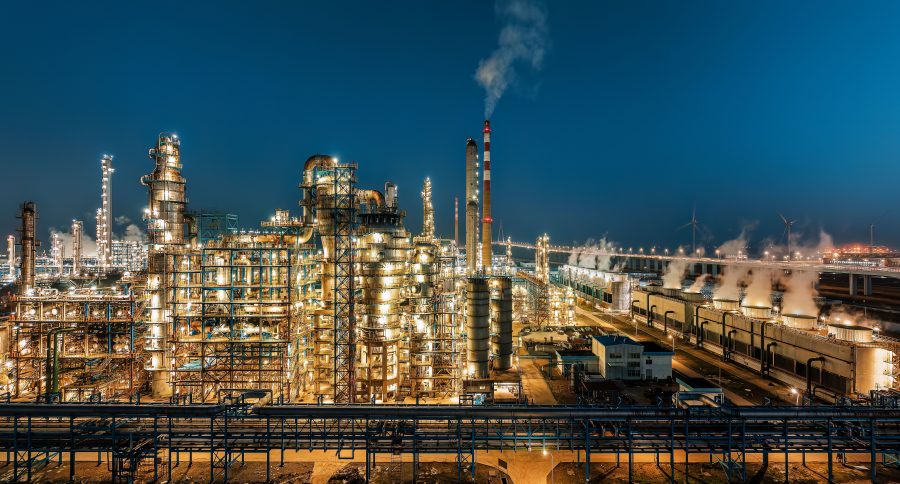
The narrative regarding the potential loss of competitiveness in the EU’s chemical industry due to high energy costs and competition from China has most likely been shaped under pressure from corporations. In reality, however, the sector has made hundreds of billions of euros in profits, and the free emission allowances under the EU Emissions Trading Scheme (EU ETS) constitute substantial state aid.
This is evidenced by a new study from the Corporate Europe Observatory (CEO) and the European Environmental Bureau (EEB), as reported by Euronews.
Fostering economic fear
The watchdog’s report states that the EU Alliance on Critical Chemicals (SCA), established in January, has effectively become a front for industry lobbyists. They are using fears over the loss of Europe’s industrial resilience as a means of exerting pressure on the authorities and as a tool to deregulate EU environmental policy.
The CCA was formed with the approval of the European Commission, which failed to take into account the potential risks of corporate influence. The Alliance comprises a number of chemical and oil and gas giants, including BASF, TotalEnergies and Avantium.
The official aim of the CCA is to identify chemical substances and production sites deemed ‘critical’ to the European economy. In the long term, this was intended to form the basis for unlocking billions of euros in future state aid.
For example, the alliance of chemical manufacturers has itself drawn up a list of substances in the production of which governments are expected to invest. Among them are highly harmful substances such as benzene, chlorine and hydrofluoric acid, which is linked to PFAS ‘forever chemicals’ – substances that are being systematically phased out across Europe.
“Since the Alliance’s inception, it has become clear that the European Chemical Industry Council (CEFIC) is the driving force behind this initiative, while the Commission’s industrial department is unconcerned about the risks of excessive corporate interests influencing this process,” the CEO-EEB report states.
Systematic Refutation
The study found that all of the industry’s claims about crisis and existential risks are unfounded. Over the past ten years, the profits of chemical companies have amounted to hundreds of billions of euros.
Moreover, the chemical industry has continued to benefit significantly from state aid in the form of free carbon emission allowances under the EU ETS. However, companies chose not to allocate a substantial portion of their own profits to modernization, instead distributing them among shareholders.
Structural Corporate Capture
In fact, CEFIC played a key role in the Antwerp Declaration, which united industrialists in calling for urgent action to “save” the EU’s heavy industry.
At the same time, CEFIC representatives serve as vice-chairs of the group that determines critical molecules and sites, as well as chairs of the trade working group.
Watchdog organizations state that this is evidence not just of business lobbying, but of structural corporate capture.
“I have the impression, given the way CEFIC presented the structure of the Steering Board and working groups, that a significant amount of preparatory work must have been carried out behind the scenes with the involvement of both the European Commission’s Directorate-General for Internal Market, Industry, Entrepreneurship and SMEs (DG GROW) and CEFIC. I feel that it was CEFIC who was running the show,” said Tetiana Santos, Head of Chemicals Policy at the European Environmental Bureau (EEB).
The key leadership positions in the SCA are therefore held by industry representatives. They set the agenda, oversee and carry out the technical work. Meanwhile, representatives from environmental organizations are effectively excluded from the decision-making process.
EcoPolitic also reported that EU member states are siding with the oil lobby and the United States on issues concerning methane emission regulations. Efforts are focused on resisting the introduction of new monitoring and reporting rules, which are set to take effect in January.