In July, Portugal will launch Europe's largest hydroelectric solar power plant as part of its transition to renewable energy.
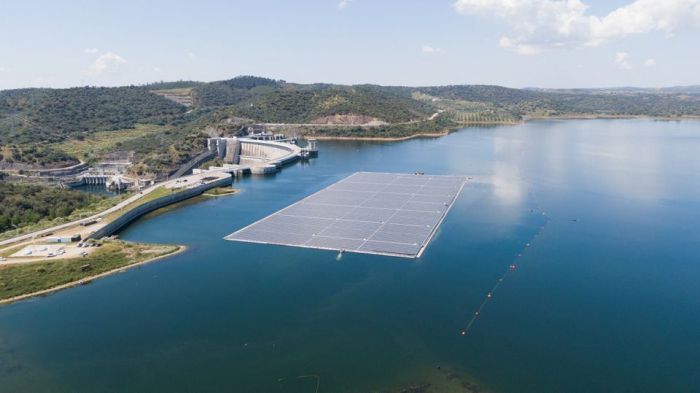
The other day, two tugboats moved 12,000 solar panels the size of four football fields into Portugal's Alqueva reservoir, reports Reuters.
The station was built by the country's main energy company EDP (EDP.LS) on the largest artificial lake in Western Europe.
The project is part of Portugal's plan to reduce dependence on fossil fuels, the price of which has risen since the Russian invasion of Ukraine.
The panels at the Alqueva reservoir, used for hydroelectric power generation, will produce 7.5 gigawatts/hour (GWh) of electricity per year and will be supplemented with lithium batteries to store 2 GWh.
Solar panels will provide electricity to 1.5 thousand families, or a third of the needs of the cities of Moura and Portell.
EDP executive board member Ana Paula Marquez said the war in Ukraine showed the need to accelerate the transition to renewable energy. The Alqueva project is part of EDP's strategy to become 100% green by 2030. At the same time, hydropower and other renewable energy sources account for 78% of EDP's 25.6 GW of installed capacity.
The day before EcoPolitica wrote that a wind farm with a capacity of 3.6 GW will appear in the North Sea off the coast of Yorkshire in the north of England. It will not only the largest offshore wind farm, but the first in the UK connected to HVDC (High Voltage Direct Current).