A 3.6 GW wind farm will be built in the North Sea off the coast of Yorkshire in the north of England. It will not only be the largest offshore wind farm, but also the first in the UK to be connected to HVDC (High Voltage Direct Current).
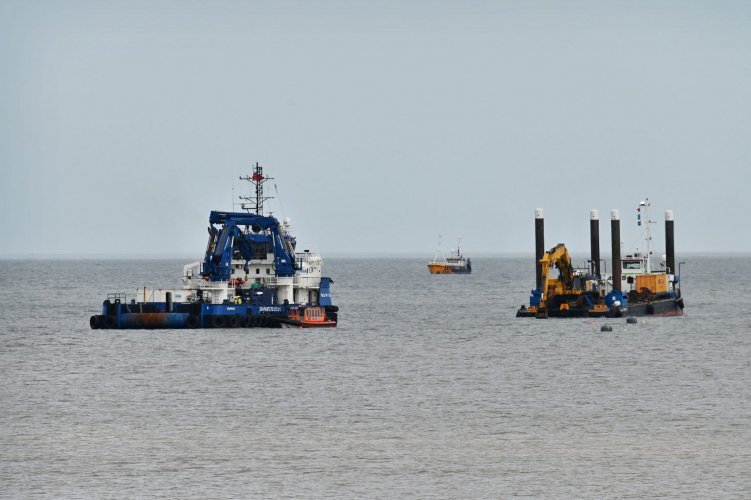
It was the beginning of the laying of the first export HVDC cable that marked the start of offshore construction work, reported in the company Dogger Bank, engaged in the construction of wind farms.
It should be noted that the construction project of this offshore wind farm is a common cause of Norway, Britain and Italy. The Norwegian energy giant Equinor, the British energy company SEE Renewables and the Italian Eni Plenitude are working on it.
The construction of the wind farm is divided into three phases of 1.2 GW each. The first foundation for windmills and the first turbines will be installed in 2023. Completion of the construction of all three phases is scheduled for 2026.
Once the station is fully operational, it will be able to provide electricity to 6 million UK households, about a fifth.
The Danish company NKT will supply and install the onshore and offshore HVDC cable for all three phases of the project. It will connect the first part of the wind farm to the land at Ulrom. The length of the line is more than 130 km. ACE Winches in Aberdeenshire and LMR Drilling UK Ltd in Berkenged are among the companies assisting NKT in this work.
The campaign will continue into 2022, with work to begin on export cables for Dogger Bank B in the East Riding and Dogger Bank C in Teesside in subsequent years.
The 14 MW Halide-X turbines will be made by GE Renewable Energy. One such turbine generates up to 74 GWh of electricity per year, reducing the consumption of carbon dioxide by 52,000 tons.
Before EcoPolitica wrote about the largest wind farms in the world.