During the war, Ukraine’s outdated power grid proved to be extremely vulnerable to destruction. Therefore, the new energy infrastructure must be built on the principles of decentralization, with widespread use of renewable energy sources. However, this structure will also be unstable unless energy storage systems (ESS) and energy storage facilities (ESF) are integrated into it.
This was emphasized by Andriy Konechenkov, Chairman of the Board of the Ukrainian Wind Energy Association (UWEA), in an interview with the energy project of the Interfax-Ukraine agency, Energoreforma.
The weak spot of green energy
The key advantage of renewable energy sources (RES) is their accessibility. The sun and wind can generate energy anywhere, eliminating the need to compete for fossil fuels.
However, according to the UWEA chairman, the main vulnerability of clean energy generation is weather conditions. As soon as the sun goes down or the wind dies down, electricity production stops.
System stabilization
Renewable sources can indeed become a reliable energy resource, but only if energy-saving installations are used.
Andriy Konechenkov cites Denmark as an example. According to him, some local projects are entirely independent of fossil fuels – they are 100% powered by wind, solar, and energy storage systems.
At the same time, the head of the UWEA expresses concern about the future disposal of batteries, but hopes for a rational solution to the problem.
Development of the storage segment
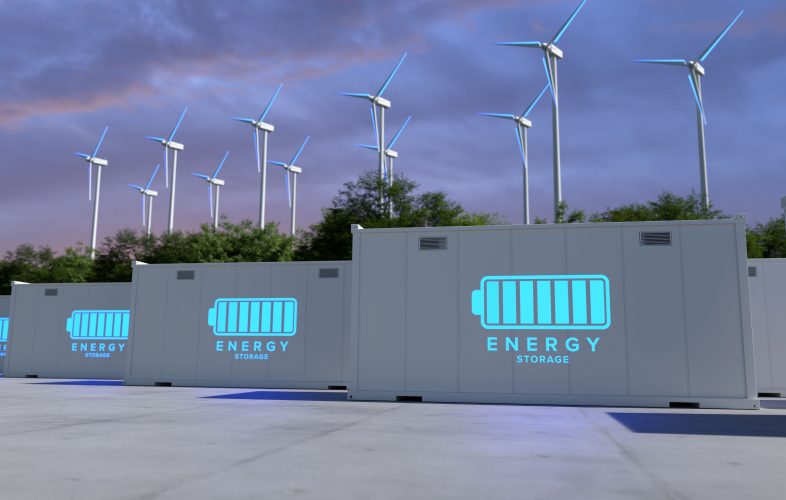
Companies that already have their own solar and wind generation are installing storage systems. However, even without renewables, ESS can be a fully independent solution thanks to market arbitrage.
“There is already experience today – in Ukraine, over 500 MW of ESS capacity and about twice that in storage volume were installed last year. And quite a few companies are already working with ESI. That is, this relatively new technology has now reached an industrial level,” said Andriy Konechenkov.
According to him, most new projects are being built with the integration of energy-saving systems. For example, OKKO, Elementum Energy, and Eco-Optima are installing ESI for generation balancing. At the same time, this allows for reduced imbalance costs.
EcoPolitic reported that in 2025, 11% of Ukraine’s total generation was accounted for by “green” energy. The largest share of clean generation is provided by solar – 78%.