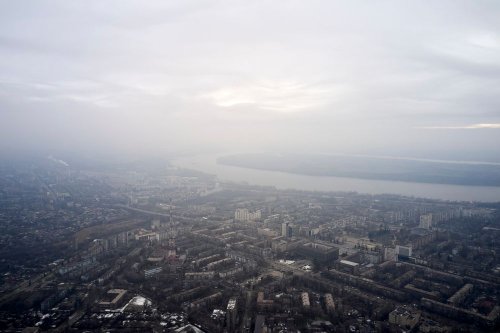
Poland needs to develop the heating sector to ensure better air quality and get rid of smog, including the replacement of old, inefficient domestic heating sources.
Patrick Demski, board member of the Polish Electricity Association (PKEE), spoke about the prospects and difficulties of this development, reports EURACTIV.
In public debate, it is noted that smog and poor air quality are caused by power plants. However, the country's energy sector is undergoing a transition period to protect the environment, climate and human health.
Over the past decade, Poland has significantly reduced emissions and increased electricity production from renewable sources, in particular exceeding targets for the share of renewable energy until 2020.
However, there is still a certain proportion of individual heating sources that have the greatest impact on air quality.
One of the ways to modernize the heating system is to install new individual sources with the lowest possible emissions, as well as the development of district heating.
“District heating is based on thermal installations and thermal power plants, which must meet strict environmental requirements set by EU law. This is a very efficient technology, intended mainly for urban areas", – go into the materials.
Demsky also explained that heating needs should be covered primarily by using district heating where possible. This model provides high fuel efficiency, improves living standards and reduces the problem of ground emissions.
In Poland, about 40% of households are connected to district heating networks.
"The 'Fit for 55' package should properly reflect the role of heating systems - in particular district heating - in combating winter smog. We agree with the Commission that the heating sector has the potential to actively contribute to the achievement of EU climate targets, but an appropriate transitional period," – Demsky said.
Also, the schedule with the requirements for efficient district heating, presented in the revision of the Energy Efficiency Directive, should provide adequate time for adjusting investment plans.
In order to avoid difficulties, PKEE proposes to introduce a new definition of an efficient heating system from 2030 and remove the eligibility conditions for highly efficient cogeneration, due to the duration of investment processes in the energy sector and the need to transform the system while maintaining affordable prices.
The development of district heating in Poland is also affected by the ongoing revision of the EU ETC Directive. The European Commission has proposed to revise the benchmarking system by accelerating the phase-out of free surcharges and increasing their value from 1.6% to 2.5%.
"This proposal is of particular concern for Poland, as its implementation could interfere with the efficient removal of coal in the district heating sector," – the material says.
Also of concern is the review of the Renewable Energy Directive on a possible expansion of the permanence criteria for biomass fuels. Indeed, further strengthening of these criteria may hinder the achievement of the goal of using renewable energy for heating and cooling.
The Polish heating sector faces big challenges, but the transition process is already underway. There are many projects to replace coal-fired power plants with heating sources that emit less CO2, such as natural gas or biomass CHP. Also, Poland has made great efforts to diversify the sources of natural gas imports.
In addition, the country is interested in the development of hydrogen technologies. Thus, the goal of the Hydrogen Poland project is to create a consortium that combines scientific and industrial potential, whose competencies can cover the entire hydrogen value chain. Green hydrogen will be used mostly, but not exclusively, for bus fleets and will help reduce emissions in Polish cities.
PKEE also plans to implement new projects related to promising technologies.
The Polish energy sector will continue to support the improvement of air quality and the achievement of EU climate targets. However, this requires a stable and envisaged legal framework that will ensure the transition at an acceptable pace.
Recall that in Poland there was a "gun" to combat smog.
As EcoPolitica previously reported, China is being urged to get rid of the smog that threatens people's health.