The European Commission has proposed to ease a number of Green Deal rules for farmers who have been protesting across Europe over the past few months.
The relaxations will apply to leaving land fallow, i.e. in an untreated state for restoration, and crop rotations, Reuters reports.
It is noted that the European Commission has sent proposals to the governments of EU member states and the European Parliament to discuss ways to improve the situation of farmers. Such initiatives will be considered at a meeting of agriculture ministers on March 26.
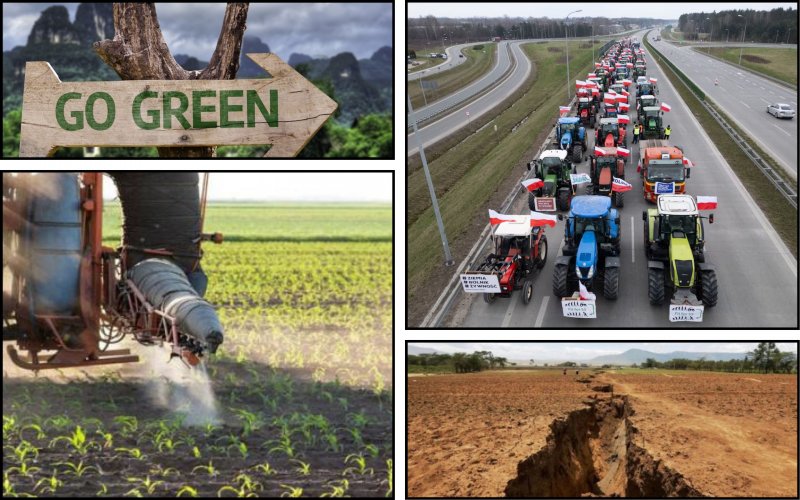
The article says that the protests were organized by farmers from different countries, including Poland. They demanded the removal of a number of Green Deal requirements to combat climate change, as they said they could not pay for them. Polish farmers also expressed dissatisfaction with increased competition from Ukrainian farmers and cheap imports of their products to EU markets.
Reuters emphasized that the European Commission's proposals are focused on offering farmers more flexibility in complying with environmental rules regarding:
- protection of peatlands;
- limiting water pollution and soil erosion;
- continuing to receive payments from the EU agricultural fund;
- receiving more financial support for keeping part of their land in a non-productive state, for example, with hedges or trees, to improve biodiversity;
- diversification of crops instead of crop rotation;
- exemption from rules on soil cultivation, ground cover or crop rotation for certain crops.
It is noted that exceptions to the rules may also be the result of adverse weather conditions. And small farms with an area of up to 10 hectares would not be subject to control or fines.
"The European Commission is particularly keen to 'suppress' opposition from farmers ahead of the European Parliament elections in June, which are expected to be won by the far-right, for whom farmers represent a growing electorate," the article says.
The article adds that the European Commission has already imposed restrictions on imports of Ukrainian agricultural products, allowed some exceptions for land that must be left fallow, and canceled a plan to halve the use of pesticides.
Earlier, EcoPolitic wrote, that hundreds of farmers in the Czech Republic protested against the Green Deal on February 19, which imposes restrictions to combat climate change, high energy prices, and bureaucracy.
Earlier, EcoPolitics analyzed new threats to the Green Deal and challenges for Ukraine's climate policy, as European countries plan to reduce or are already reducing spending on the green transition.