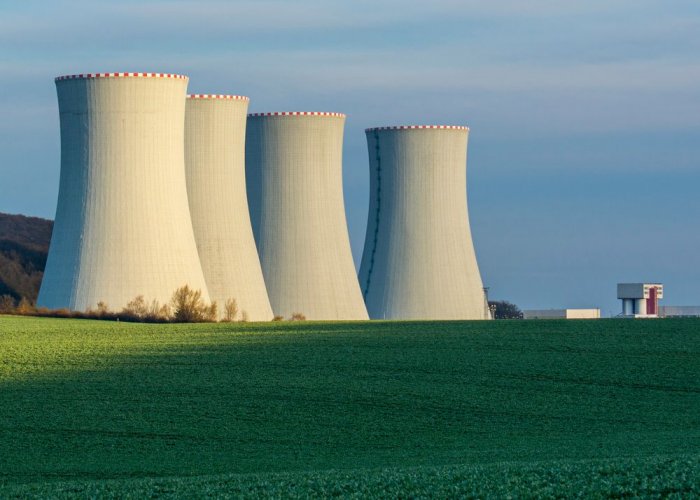
In France, the start-up of 12 nuclear reactors stopped for repairs out of 56 existing ones has been postponed, which may intensify the energy crisis in Europe.
French Prime Minister Elizabeth Bourne said that while Electricite de France SA is doing its best, the country must be prepared for any situation, including the possibility of targeted blackouts in winter, reports Bloomberg.
The company had to restart a quarter of its nuclear plants by mid-December 2022. Network operator RTE already warned, that the risk of energy shortage in January is increasing.
In May, EDF found that pipes at 16 of France's 56 reactors were prone to corrosion cracks due to the complex design of the safety injection systems. That forced the company to shut down a dozen reactors and replace dozens of radioactive pipe sections.
It was noted in the material that emergency welding teams from the USA and Canada were involved in the elimination of the detected cracks. However, the schedule is already far behind the plan. Bringing that many reactors back online in four weeks seems impossible in terms of resources for both EDF and the nuclear safety authority.
"These problems have made France, which normally relies on nuclear power for more than two-thirds of its capacity, vulnerable, despite being less affected by Russian gas supplies than Germany," the authors emphasized.
They also pointed out that the potential fallout from France's nuclear shortage is keeping grid operators across the continent on alert in case the EU's second-largest economy needs extra power.
In order to prevent social unrest, President Emmanuel Macron's administration has set aside about €100 billion to help businesses, consumers and governments cope with rising electricity, natural gas and gasoline prices through 2023, the report said.
To cope with the reduction in energy supplies from the Russian Federation, France has also developed a plan aimed at reducing gas and electricity consumption by 10% within two years. It involves reducing indoor temperature and lighting everywhere, from government institutions and museums to factories and supermarkets.
Also with the threat of nuclear power shortages, the government is working on regulatory measures to raise production limits for existing hydro and wind farms and is negotiating with its German counterparts on a deal that could increase imported capacity. In addition, backup power systems for data centers alone can release up to 1 gigawatt of electricity.
The government is also looking to encourage or force companies to use backup batteries and diesel generators. With 25 of its 56 reactors idle, EDF's nuclear capacity is about 25% below historic levels, pushing local electricity prices even higher than elsewhere in Europe.
According to the network operator, RTE now sees higher risks going into January with nuclear capacity 3-4 gigawatts lower than the previous forecast of 45 gigawatts, as maintenance usually takes longer than planned.
As EcoPolitic reported before, energy-intensive companies in France convert their gas boilers to operate on fuel oil, oil and coal to avoid power outages in the event of further reductions in Russian gas supplies.