The year 2025 is coming to an end. Journalists at EcoPolitics set themselves the task of assessing how progressive it was for Ukraine's environmental policy. We reviewed all the news published on the website this year and attempted to compile two lists: achievements and outright failures. Let us examine the results.
What failures did experts point out?
1. Elimination of a separate specialized ministry.
The most resonant and discussed event was the elimination of the Ministry of Environmental Protection and Natural Resources of Ukraine as a separate institution. Its functions were transferred to the Ministry of Economy, which also absorbed the Ministry of Agrarian Policy and Food.
Activists from environmental organizations, scientists, and public figures strongly opposed this decision. They emphasized that it would be an institutional disaster for the environment, national security, and the state's strategic course toward European integration.
Environmentalists also recalled the past unsuccessful experience of merging the Ministry of Environment with other institutions and the associated loss of time, qualified personnel, and resources.
However, their views were ignored in the high offices, and a mega-ministry was created, in which it is a priori impossible to balance and take into account the interests of all three sectors simultaneously. It was therefore no surprise that when activists summed up the results of the first 100 days of the merged Ministry of Economy, they found very few reasons to thank the agency but came up with a lengthy list of grievances and unresolved problems.
2. Ignoring the growing level of corruption in the sectors subordinate to the profile ministry.
While at official events at various levels, the right words about “European integration” and “strengthened oversight” were being spoken, in the sectors overseen by the Ministry of Environment, and later the Ministry of Economy, a different policy continued in parallel: cash, schemes, and impunity.
This year, law enforcement officers handed over notices of suspicion to both the CEO of SE “Forests of Ukraine” Yurii Bolokhovets and many top officials of this enterprise, with some even receiving two such notices. However, no personnel decisions were taken by the Ministry of Environment or the Ministry of Economy.
In August 2025, the Director of the State Bureau of Investigation (SBI), Oleksii Sukhachov, stated openly and publicly across the country about the systemic corruption in the forestry sector. Shortly after his appointment, Prosecutor General Ruslan Kravchenko announced the existence of “systemic corruption, official negligence, and outright enrichment at the expense of natural resources” in the forestry sector.
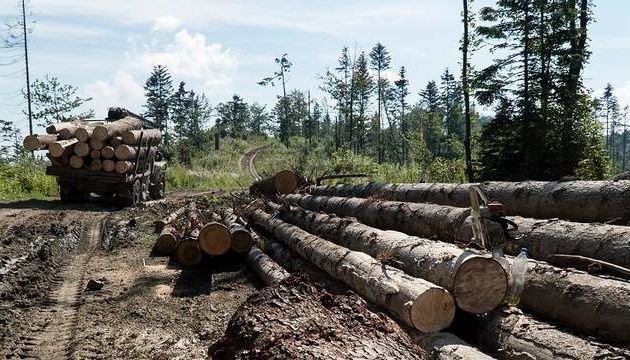
Photo: facebook.com/kekz.ua.
However, the Ministry of Economy, following the “good tradition” established by the Ministry of Environmental Protection and Natural Resources, continues to stubbornly ignore this. The agency sees the solution to the raw material shortage in the country’s woodworking industry not in bringing the forestry sector out of the shadows and combating “illegal” loggers, but in increasing the scope of logging, including that of old-growth forests.
And if the forest is a “gold mine”, the subsoil resources keep pace: an official of the State Service of Geology and Subsoil of Ukraine was exposed for facilitating the illegal extraction of amber worth 354 million UAH.
The areas of water protection and environmental control follow the same pattern. For example, in Volyn, officials from the Water Resources Office “awarded bonuses” to their subordinates in such a way that they could later take the money back in cash: almost 600,000 UAH in two months, and during searches in the office of the scheme’s organizer, nearly 1 million UAH in cash was found.
And at the State Environmental Inspectorate (SEI) of the Prydniprovskiy District – it’s not just “bonuses” anymore but a different scale: during searches of department head Liliya Chygrykova, $880,000 and more than €200,000 (equivalent to over 46 million UAH) were seized, plus elite assets were found – an apartment in an upscale residential complex and a premium-class car.
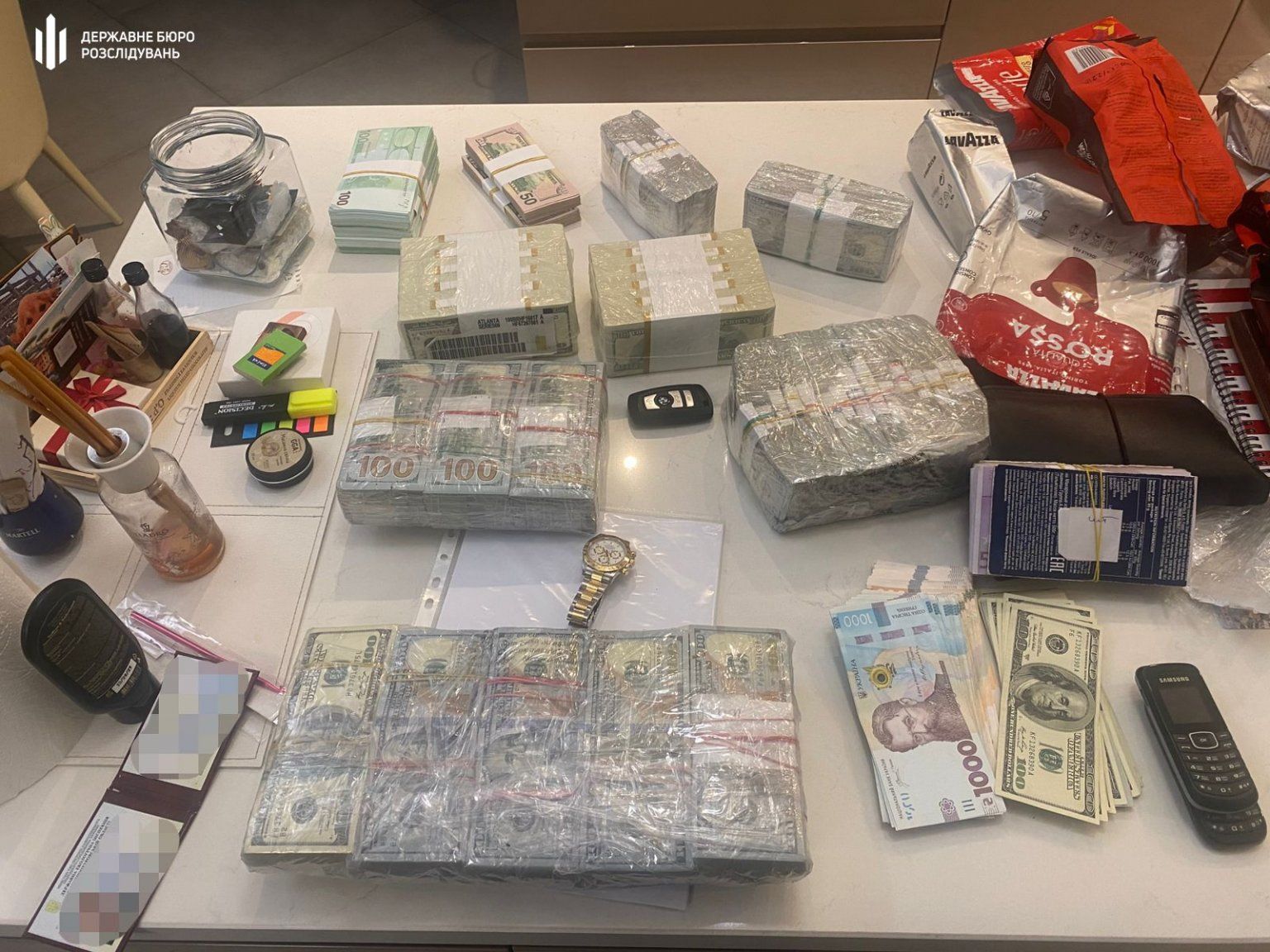
Photo: State Bureau of Investigation.
The publication “Informator” claims this is part of a corruption pyramid built by the former head of the State Environmental Inspectorate and current Deputy Minister of Economy, Environment and Agriculture of Ukraine, Ihor Zubovych. Previously, it covered only the environmental control system, but after its “architect” was promoted, it expanded far beyond the SEI.
3. Complete lack of response from both the Ministry of Environmental Protection and the Ministry of Economy to the loud and protracted scandal over the construction of a wind power plant on the unique mountain meadows of the Carpathians.
In the heart of the Ukrainian Carpathians – on the Runa meadow in Zakarpattia region – the scandalous construction of a wind power plant (WPP) continues, which environmentalists and the public call illegal and say threatens one of the last untouched high-mountain areas of the region.
According to environmental organizations and journalistic investigations, despite the absence of environmental impact assessment (EIA) documentation, several foundations for wind turbines have already been poured on the Runa meadow, and the developers – companies that are part of LLC MC “Wind Parks of Ukraine” – plan to install at least seven more.
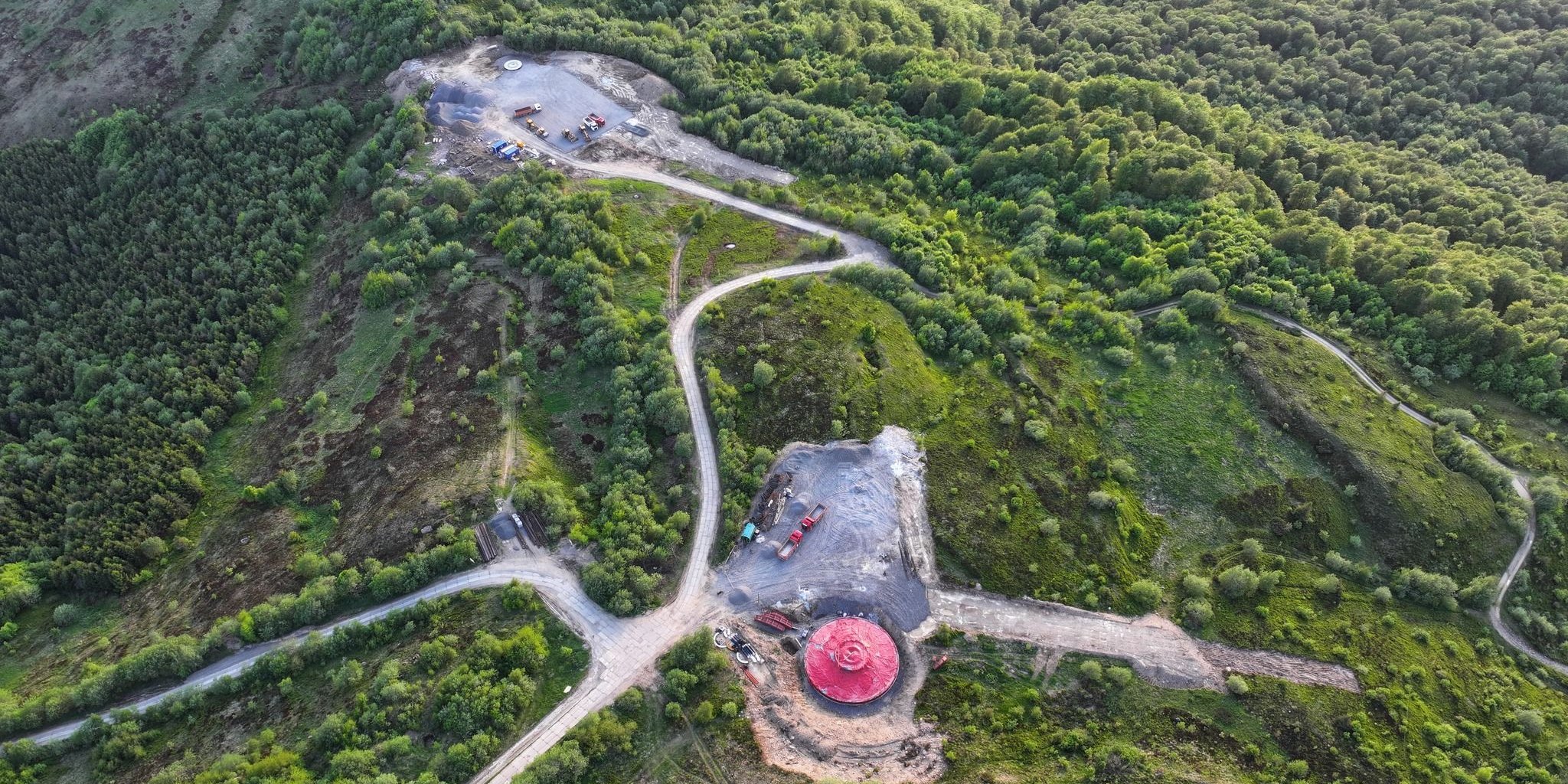
Photo: facebook.com/SavePikuy.
So, what is the response of the authorities? The relevant ministry, the prosecutor's office, and the courts are inactive, while other state bodies – the State Environmental Inspectorate, State Inspectorate for Architecture and Urban Planning of Ukraine (DIAM) – even assist (!!!). Initially, the SEI ignores numerous public appeals demanding an inspection, then delays the process and does not provide the public with the inspection report. And finally, “does not see” any violations.
DIAM also essentially defends the developer; even during a joint meeting of two parliamentary committees of the Verkhovna Rada, it stated that the wind turbine foundations are “not the construction of a wind power plant," but are “separate structures” which supposedly do not require an environmental impact assessment.
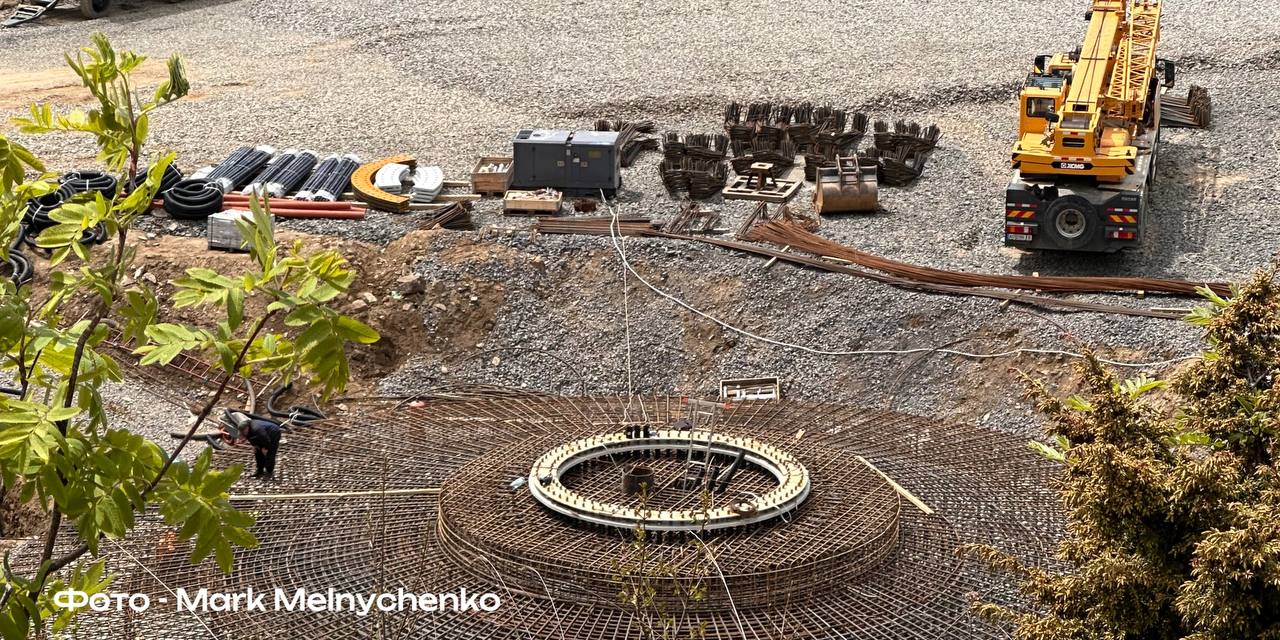
Photo: Mark Melnychenko.
4. Disinformation (or as ecologists put it, “blatant lies”) of the Secretariat of the Bern Convention regarding the destruction of the Markhalivskyi Forest.
A separate story surrounds the scandal regarding correspondence with the European Secretariat of the Bern Convention. It began back when Minister Hrynchuk was in office, and current officials have decided to continue this “glorious” tradition – to conceal the real situation from European partners.
Thus, at the end of September, Volodymyr Boreyko, director of the Kyiv Ecological and Cultural Center, accused Deputy Minister Ihor Zubovych of lying to European officials from the Secretariat of the Bern Convention about logging within the territory of the Markhalivskyi Forest, which is part of the Emerald Network.
According to the ecologist, in response to a request from the Bern Convention Committee, this official sent a reply in which he concealed the documented numerous violations of environmental protection legislation and the fact that Ukrainian courts had ruled the construction on this site illegal.
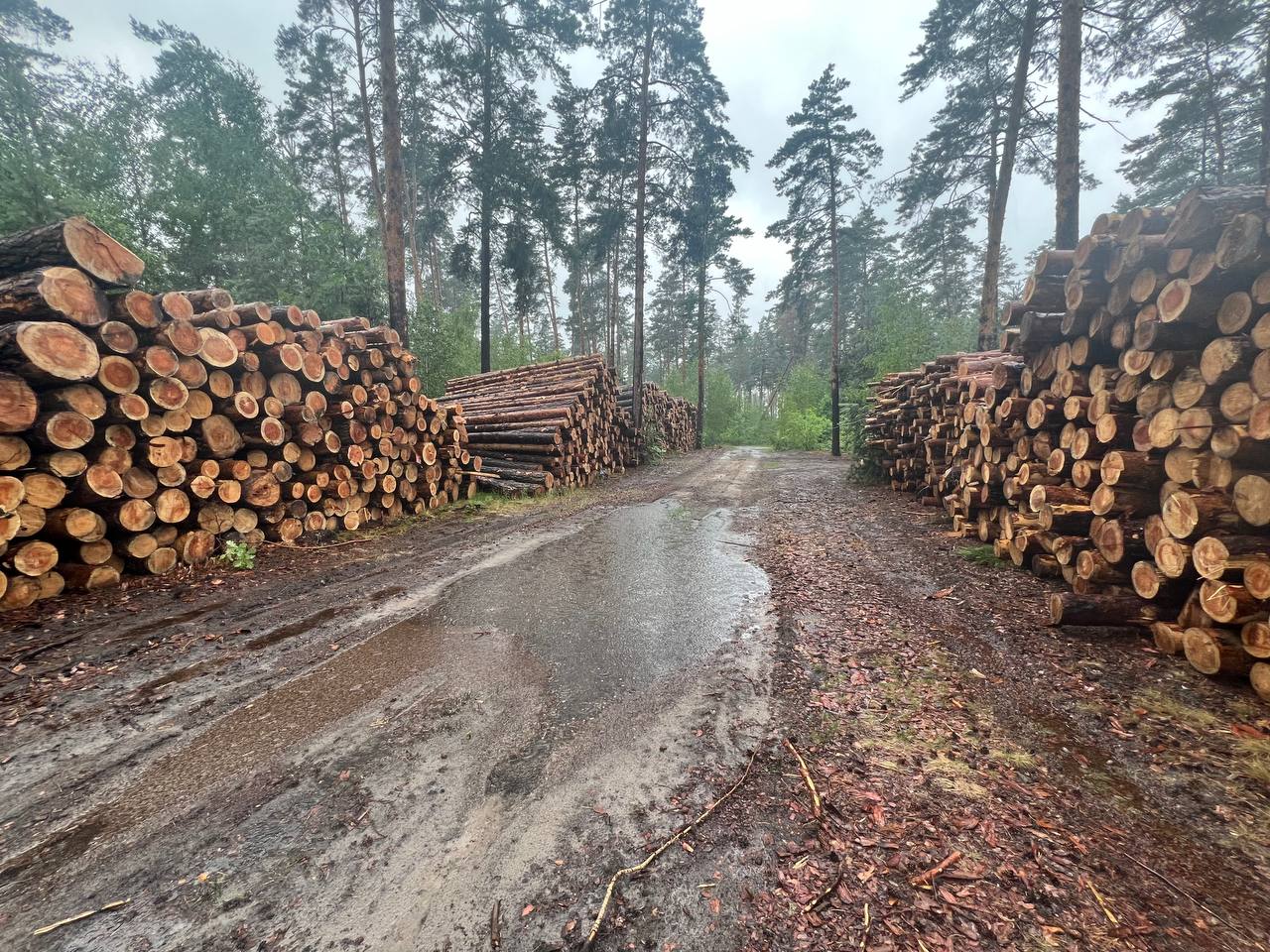
Photo: facebook.com/profile.php?id=61557935170719.
Boreyko maintains that the Deputy Minister attached a letter from the Ministry of Veterans Affairs to his response, which blatantly stated that there are no protected flora and fauna species in this area of the Markhalivskyi Forest.
Thus, officials continue to repeat the same mistakes and undermine international trust in our country.
5. Ignoring the comments of the European Commission and European Parliament regarding draft law No. 12089.
Despite criticism from environmentalists, activists, and widespread public outcry, on March 12 the Verkhovna Rada finally passed draft law No. 12089 on the protection of the bona fide acquirer's rights – the so-called “Mazepa Law”. A petition to the President of Ukraine asking him to veto the law quickly gathered the required 25,000 signatures; however, Volodymyr Zelensky responded to it only a month after he had signed the law. Experts warned that the law essentially legalizes the theft of forests, lakes, and protected areas, and also poses significant corruption risks.
According to eco-activists, in just two months after it came into force, Ukrainian courts made at least seven rulings requiring prosecutors to deposit multimillion sums in order to continue proceedings on returning illegally developed forests, waterfront protection zones, and green areas to state ownership.
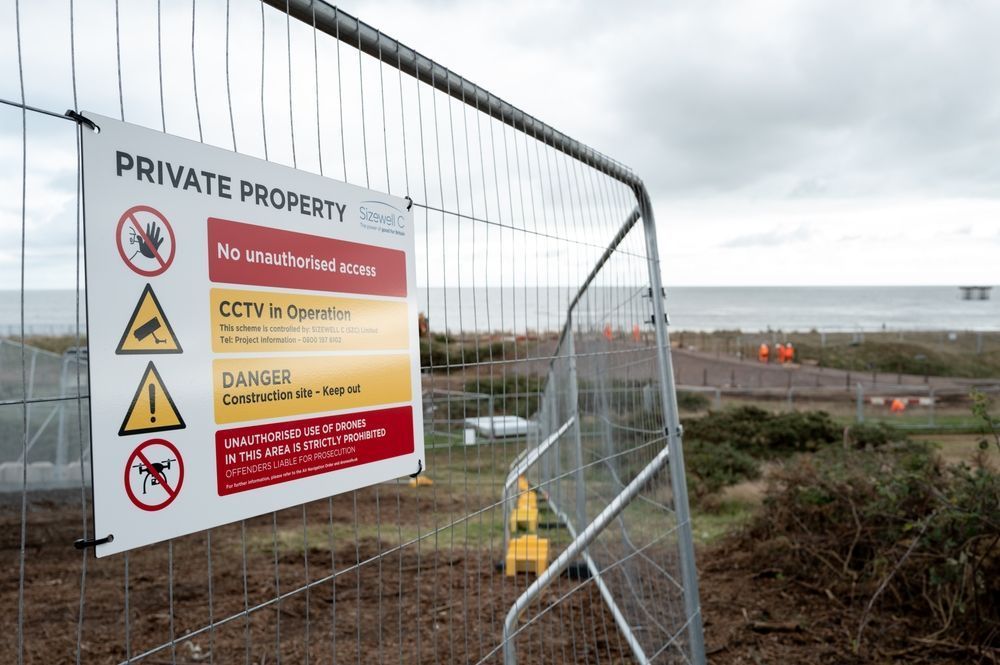
On November 4, the European Commission published its annual report on Ukraine's progress toward European integration. The institution noted that the “Mazepa Law” not only has a negative impact on the environment but also carries significant corruption risks. The European Parliament also agreed that draft law No. 12089 effectively legalizes the appropriation of stolen state land.
It is worth noting that, in this case, the government acted preemptively: in the draft budget for 2026, the Cabinet of Ministers of Ukraine tried to adjust decisions previously made by the parliamentary majority. Given the state's limited financial capacity under wartime conditions, the government incorporated a mechanism for postponing the implementation of certain provisions of the “Mazepa Law”.
However, Members of Parliament registered three amendments that undermined this initiative. One of them was rejected during the first reading, but during the final vote on the 2026 budget, the Cabinet's proposal did not receive the required number of votes.
“Therefore, next year, land thieves can feel at ease. Moreover, they will be able to demand compensation from the state at market value for the land they have appropriated themselves,” the Ukrainian Nature Conservation Group (UNCG) summarized.
6. Sabotage of the Ban on Off-Roading by National Parks and Ministries.
Environmentalists and eco-activists had long demanded the adoption of this law and celebrated its passage at the beginning of February. The law prohibits the use of motorized vehicles off established roads within protected areas of the Nature Reserve Fund (NRF). However, in October, UNCG members were forced to acknowledge that this dangerous recreational practice continues to flourish due to critical neglect of the law at the local level.
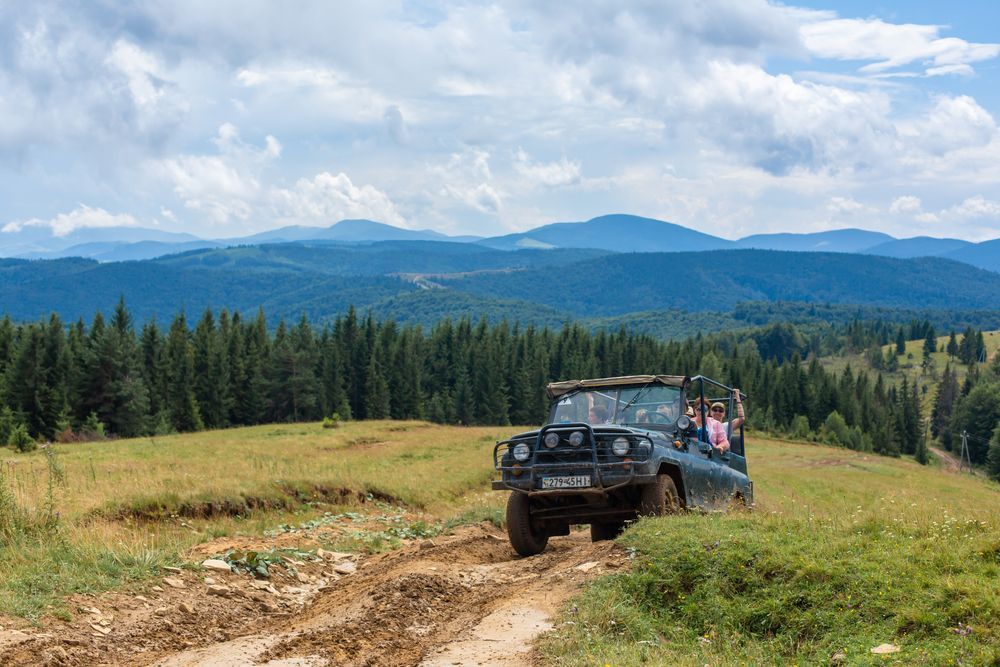
Almost a year has passed since the law came into force, but not a single (!) protected area institution, according to environmentalists, has complied with its requirements or designated such territories as prohibited for vehicle access. Some responded formally, while the majority simply ignored both the implementation of the law itself and direct requests from the Ministry of Environmental Protection and Natural Resources, to which these institutions are directly subordinate.
At the beginning of October, activists again appealed to the Ministry of Economy concerning the regulation of uncontrolled off-road driving within the nature reserve fund. However, as the saying goes, nothing has changed.
7. “Resetting” of important government draft laws due to the resignation of the Cabinet.
In July, the Cabinet of Ministers was restructured. As a result, all draft regulations developed by this executive body were automatically withdrawn. Notably, these draft laws included:
-
No. 9484 “On Amendments to Article 2 of the Law of Ukraine ‘On Scrap Metal’,” which was intended to align the laws “On Waste Management” and “On Scrap Metal”;
-
the long-awaited by the professional community draft law No. 10066 “On Packaging and Packaging Waste,” which was supposed to regulate the concept of extended producer responsibility (EPR);
-
No. 9194 "On Amendments to the Code of Ukraine on Administrative Offenses Regarding the Strengthening of Responsibility for Violations of Legislation in the Field of Registration of Emissions and the Transfer of Pollutants and Waste";
-
No. 7689 “On Amendments to Certain Legislative Acts of Ukraine Regarding the Simplification of Business Conditions (Deregulation),” which was aimed at abolishing certain permitting documents, the use of which is inappropriate and economically unjustified;
-
No. 6018 “On Environmental Insurance,” which provided for the creation of a non-governmental body – the Environmental Insurance Bureau.
Work on some of these had been ongoing for a very long time, so their withdrawal came as a frustrating surprise for stakeholders.
8. The weak ministry under Ms. Hrynchuk's leadership failed to resolve pressing environmental issues that arose in 2025.
The sectoral environmental agency during Ukraine’s independence has never been effective. Why is that, you ask? Our answer: because of the constant carousel of ministers, who change quickly and do not have time to properly understand the situation, as well as the high level of corruption within the ministry.
The term of former minister Svitlana Hrynchuk was no exception. In her incomplete year in office, she was repeatedly subjected to fierce criticism from activists and witnessed their pickets in front of the ministry building.
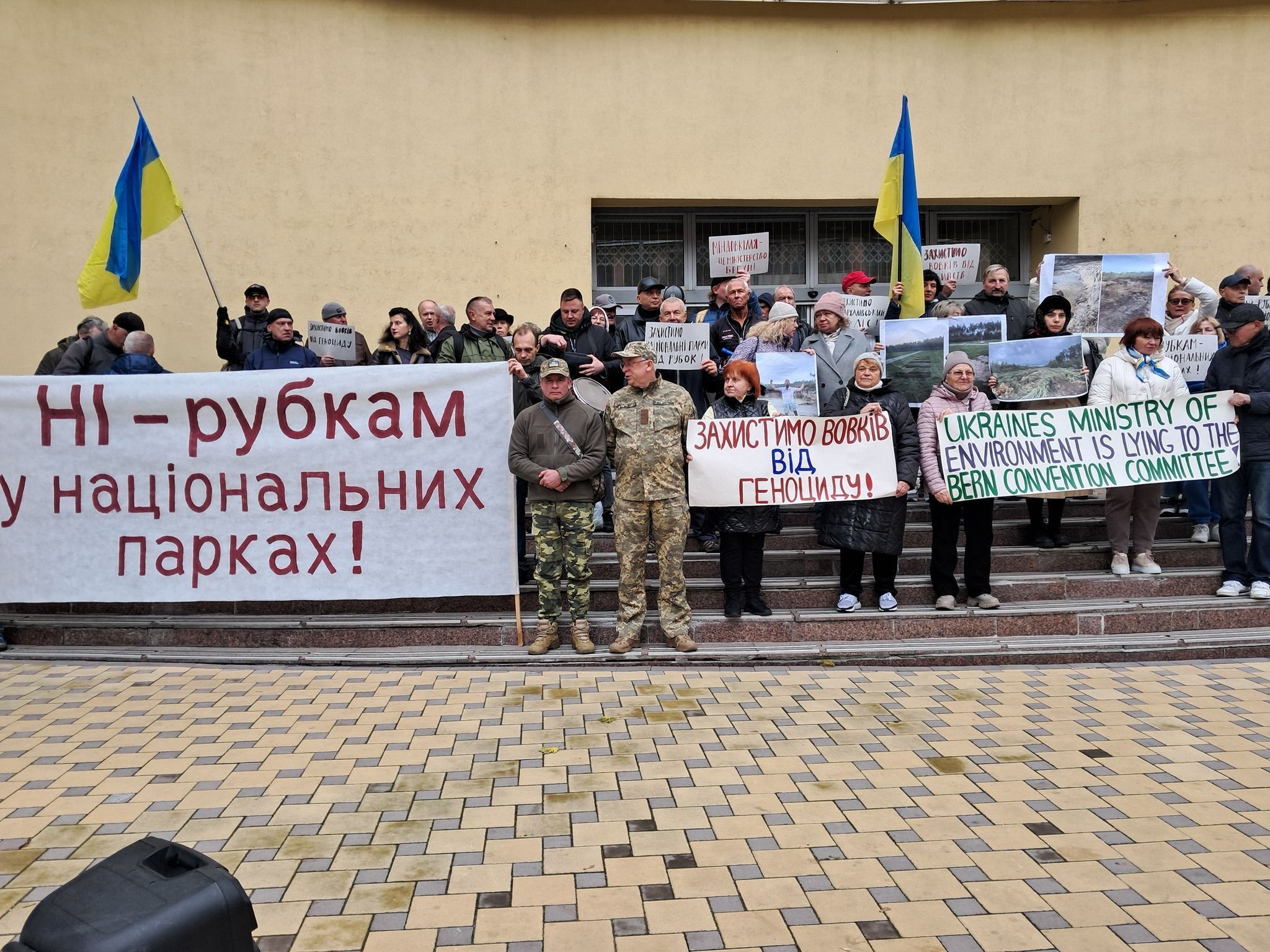
Photo: facebook.com/kekz.ua
In all the high-profile environmental cases that resonated throughout the environmental protection community, and sometimes even the entire country, the Ministry remained inactive. It did not express its principled position to protect the environment, which is its direct responsibility, but simply chose not to react and pretended that nothing was happening.
During Hrynchuk’s tenure, the main buzzword was “ambitious.” The plans, strategies, and the Nationally Determined Contribution of Ukraine (NDC2) that were developed were ambitious. However, almost all of them lacked any real connection to the situation in the country, where a full-scale war has now been ongoing for nearly four years.
Achievements that do not exist
In 2025, the Verkhovna Rada, the Cabinet of Ministers, and the relevant ministries “delivered” the following results:
-
Adopted the new Nationally Determined Contribution of Ukraine to reduce emissions (NDC2).
-
Restored the monitoring, reporting and verification (MRV) system for greenhouse gas emissions.
-
Approved an action plan for establishing a national emissions trading system (ETS) and presented the preliminary configuration of the national ETS.
-
Prepared and approved Ukraine’s negotiating position for Cluster 4 “Green agenda and sustainable connectivity.”
-
Signed the Agreement on Open Sea.
-
Approved the operational plan of measures for 2025–2027 for implementing the Environmental Security and Climate Change Adaptation Strategy up to 2030.
But can the adoption of all these documents be considered an achievement? After all, the development and approval of plans, resolutions, and laws are the direct job responsibilities of officials in legislative and executive bodies. They are paid salaries from our taxes specifically to do this work.
As for the relevant environmental agency, it is, frankly, a sad subject: the directions assigned to it – protection of all components of the environment, the plant and animal world, ensuring the rational use of the country’s natural resources – have been dismally failed by both the former and the current Ministry. We have already vividly and clearly seen this in the list of failures above.
Will the coming year be better than the previous one? We shall see. However, unfortunately, representatives of Ukraine’s environmental community currently have no bright hopes or expectations in this regard.