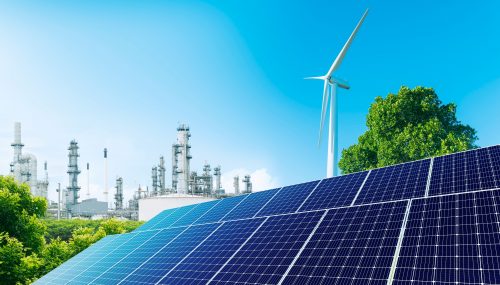
The EU is mobilizing up to € 300 billion in investments in green and digital infrastructure to tackle climate, biodiversity and energy crises, as well as to renounce energy from Russia.
The European Investment Bank (EIB) has also pledged € 1 trillion in investments in climate action and environmental sustainability by 2030, according to Project Syndicate.
Europe is pursuing active climate diplomacy to encourage partners to increase their climate ambitions to move to a sustainable, zero-emission economy. Through its new development framework, EIB Global, the EIB is working with partners around the world to mobilize funding for energy efficiency, renewables and grid projects.
The joint efforts of the EIB and the EU within Team Europe support the future with clean energy. The Bank has helped establish a partnership with South Africa on a fair energy transition, supported the India-based International Solar Alliance, which develops solar energy in 105 tropical countries, and signed an integrated water management and flood prevention scheme in Argentina.
The EU stands ready to support the world community in eliminating dependence on fossil fuels. After all, more green investment will give more strategic autonomy, and decarbonization becomes a geopolitical imperative.
Europe also calls on global partners to join in accelerating the financing of clean energy, as climate neutrality will help achieve energy security.
The latest report of the Intergovernmental Panel on Climate Change Mitigation highlights the urgency of decarbonisation. Total greenhouse gas emissions must peak by 2025 to avoid a catastrophic rise in global temperatures. However, the transition to clean energy throughout the economy must be made carefully to take into account the inevitable social and economic consequences and to be fair.
Depriving Europe of its dependence on Russian fossil fuels must take into account the following considerations:
- the search for alternative suppliers of natural gas, no matter how critical it may be in the short term, should not lead to a new long-term dependence that requires large investments in fossil fuel infrastructure;
- the impossibility of replacing excessive dependence on fossil fuels with excessive dependence on raw materials needed for the green transition, as these resources are largely concentrated in only a few countries, not all of which have the same values and interests as the EU.
Strengthening the EU's strategic autonomy and resilience must remain a key goal of the transition period.
It will be recalled that experts told how subtle diplomacy will help make the Green Deal global.
As EcoPoliticа reported earlier, Europeans are urged to work from home to reduce dependence on Russian oil.