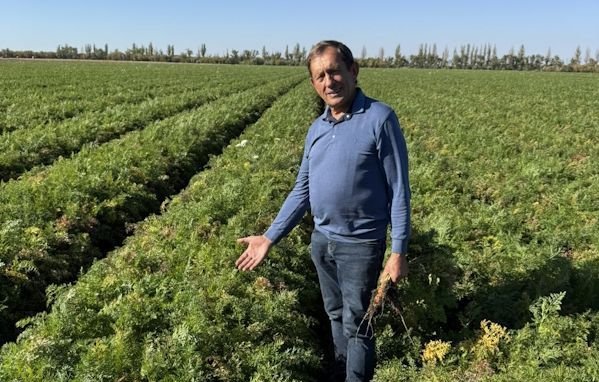
Land reclamation reform is underway in Ukraine, with 71 water user associations (WUAs) already operating. Farmers receive grant support from the US and are gradually modernizing outdated irrigation systems. One such example is the Vladam farm in the Mykolaiv region. Previously occupied and mined, it is now back in full operation, having restored irrigation to its vegetable fields.
The State Agency for Land Reclamation, Fisheries, and Food Programs told the story of the farm.
A new start for irrigation in the south
After the de-occupation of the farm's land, its founder, Adam Melnyk, focused on demining the land and restoring the critically damaged irrigation infrastructure.
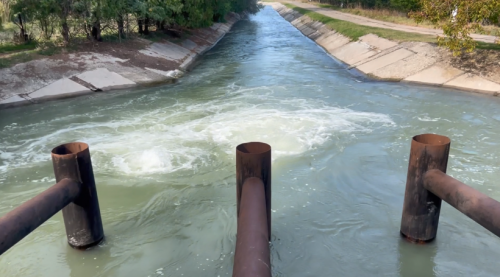
The decisive mechanism that helped bring water back to the fields of the arid south was the reform of hydraulic engineering.
In July 2023, farmers in the Mykolaiv and Kherson regions created the Inguletska Water Management Association. This made it possible to attract grant assistance provided to Ukrainian farmers by the US government's AGRO Program.
"Handling this on our own was impossible because wartime challenges significantly increased the costs of energy, seeds, and plant protection products. Thanks to the support from the American people, we managed to bring the enterprise out of a critical situation and restore its efficiency to pre-war levels," the farmer said.
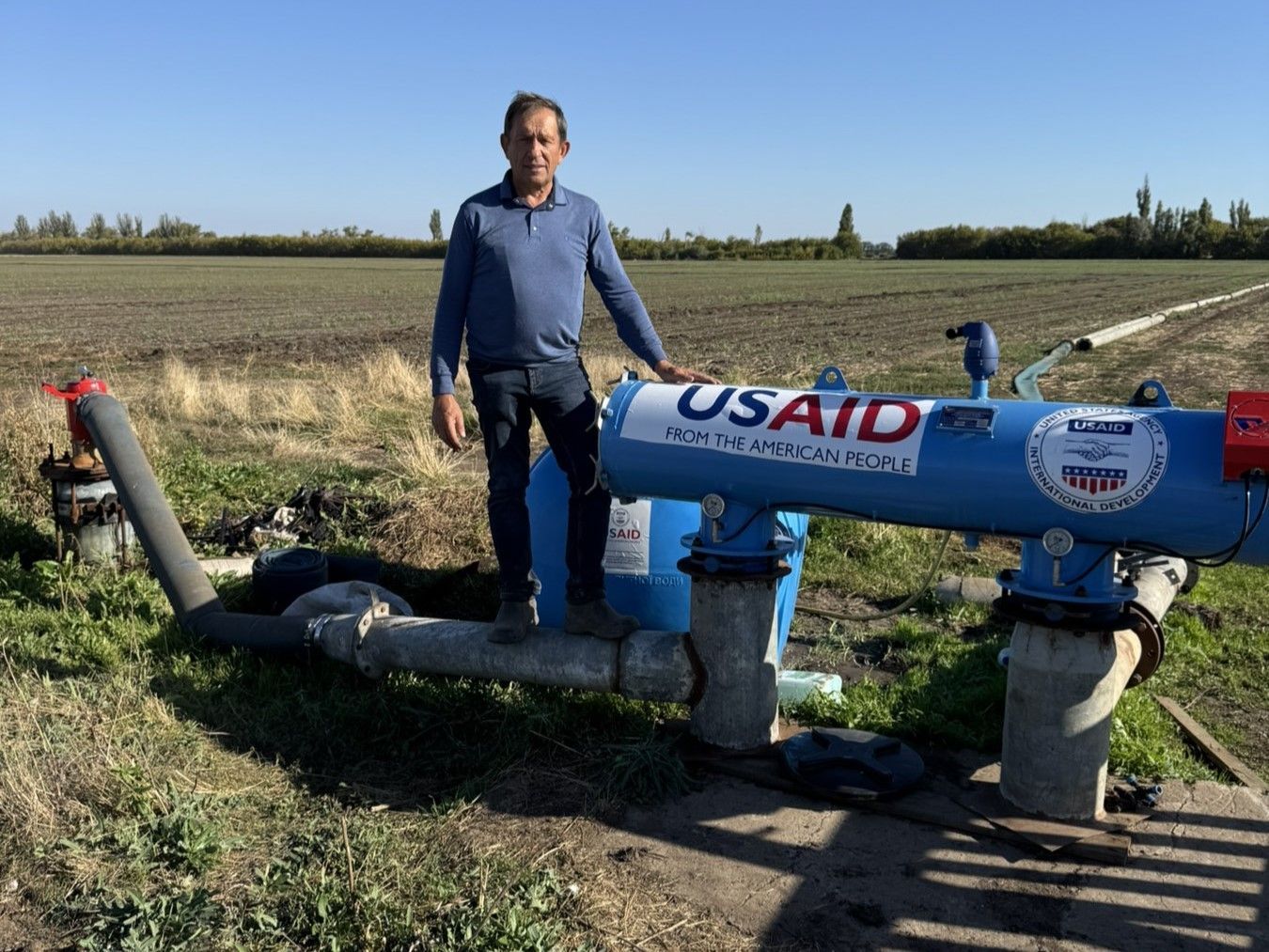
Source: darg.gov.ua
Project results
The main and most desirable result was the restoration of irrigation. This concerns 303 hectares of fields, including 244 hectares belonging to the Vladam farm.
According to the State Agency for Fisheries, modern approaches to land reclamation have made irrigation more economical. Water consumption has fallen by 10%, and more efficient drip irrigation now irrigates 62 hectares of land where vegetables are grown. Fertilizer is also applied in a new way—through a fertigation system. This allows plants to be fertilized evenly and without unnecessary waste of substances.
An additional bonus from the modernization of the irrigation network is remote monitoring. Farmers can control the main "vital" indicators of the system in real time, from pressure to the operation of pumping stations.
EcoPolitic previously reported that in some places, farmers are taking advantage of the land reclamation reform without regard for environmental protection standards. For example, in the Zhytomyr region, within the Lesini Dzherela water management complex, farmers have almost turned the Tnia and Tesnivka rivers into a cascade of ponds. Environmental activists managed to defend the fate of water bodies through the Supreme Court.
It is quite ambiguous that Lesini Dzherela was positioned as an effective and efficient model that is worth scaling up across the country.