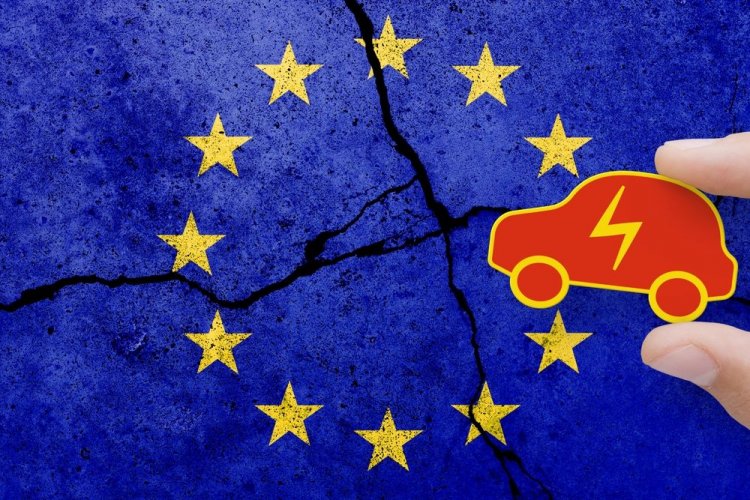
At the end of the year, the European Commission will revise the target of zero CO2 emissions for vehicles with internal combustion engines by 2035. Previously, the update was planned for 2026.
This was reported by representatives of the European Commission, Reuters reports.
A number of EU governments have criticized the European Commission's desire to ban the sale of internal combustion engine cars, as they were concerned about the free choice of consumers and the feasibility of switching to clean transportation. In particular, Italy, Portugal, Slovakia, Bulgaria, and Romania called for the ban to be postponed.
Germany also advocated a gradual transition to environmentally friendly vehicles rather than a complete ban on ICE cars.
"2035 cannot be a strict deadline for the implementation of the ban on internal combustion engines. It is technically unfeasible," said German Chancellor Friedrich Merz.
Difficulties in implementing an ICE ban in the EU
The Commission's proposal to ban the use of internal combustion engines by 2035 has received widespread criticism from European car manufacturers amid declining demand for electric vehicles.
In addition to the weak demand for electric vehicles in Europe, Chinese manufacturers offer electric vehicles at much lower prices, forcing European automakers to compete with Asian market leaders. In particular, US import tariffs have also made it difficult for European automakers to access the US market, which has put another strain on the European automotive industry.
Support for car plants in the EU
In March, the European Commission presented a plan to rescue the EU's automotive industry, which provides 13 million jobs and accounts for 7% of the bloc's gross domestic product. The plan calls for €1.8 billion to provide raw materials for battery production in the EU and €1 billion by 2027 to support innovation in the automotive sector.
It should be recalled that in June 2022, the European Parliament approved the changes to emissions control regulations proposed by the European Commission, which provide for a complete ban on internal combustion engine vehicles starting from 2035.
Additionally, the environment ministers of the 27 EU member states agreed to reduce carbon dioxide emissions from new vehicles to zero by 2035.
Specifically, in February 2023, the European Parliament approved new carbon emission reduction targets for new passenger cars and light commercial vehicles, which are part of the "Fit for 55" package.
Additionally, in March 2023, EcoPolitic reported that the introduction of new carbon emission standards for vehicles in Europe, in particular, the ban on new internal combustion engine cars from 2035 could affect Ukrainian emission standards.