CO2 emissions in the EU rose by 9 million tons in the third quarter of 2025 – Eurostat

CO2 emissions in the EU rose by 9 million tons in the third quarter of 2025 – Eurostat shutterstock
Maria Semenova

However, some countries have significantly reduced their emissions, notably Estonia, which has cut emissions by 17.4%

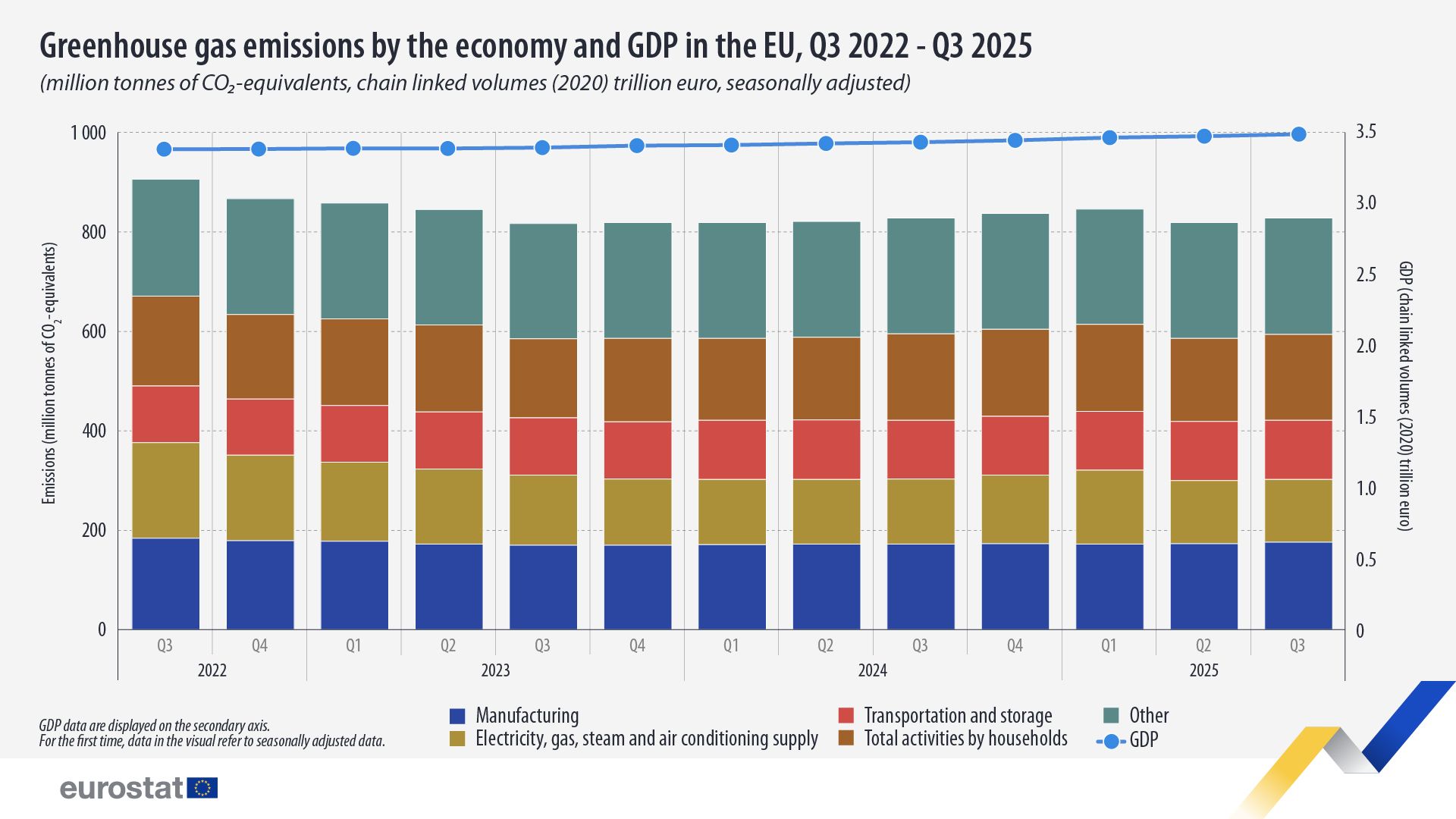
Compared to the second quarter of 2025, emissions in the European Union increased by 9 million tons of CO2eq to 828 million tons in the third quarter. In percentage terms, this represents an increase of 1.1%. At the same time, however, the EU's gross domestic product grew by 0.4% over the same period.

This is evidenced by new data from Eurostat.

The largest increase in greenhouse gas emissions was in households (3.6%) and the manufacturing industry (1.4%). Only one sector saw a reduction in CO2 emissions: energy, gas, steam, and air conditioning supply, where emissions fell by 0.8%.
ec.europa.eu/eurostat

Source: Eurostat

Dynamics by country

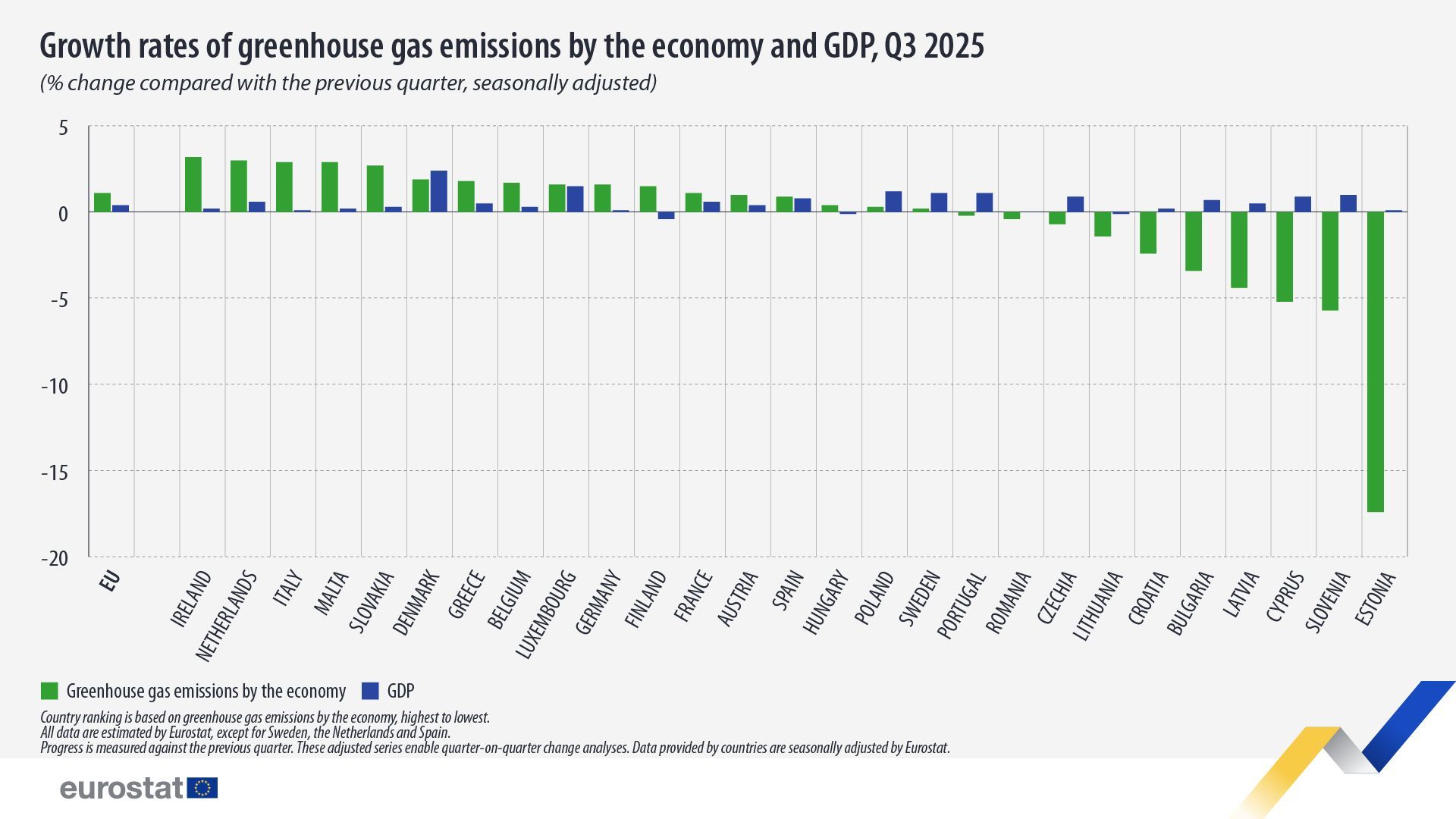
Overall, seasonally adjusted emissions increased in 17 countries of the European Community. However, in 10 countries, they were lower than in the previous quarter.

Estonia (-17.4%) was the record holder in reducing air pollution from greenhouse gases. Slovenia and Cyprus were also among the top three, with CO2 emissions falling by 5.7% and 5.2%, respectively.

Nine countries also increased their GDP at the same time. These are Bulgaria, Croatia, Estonia, Cyprus, the Czech Republic, Latvia, Romania, Portugal, and Slovenia. The only country where CO2 emissions fell along with GDP during that period was Lithuania.
ec.europa.eu/eurostat

Source: Eurostat

Recently, the European Parliament supported the EU's climate target for 2040. As EcoPolitic reported, the Union must reduce its greenhouse gas emissions by 90% from 1990 levels. Countries are granted certain flexibilities – up to 5% of the reductions may be offset through international carbon credits.
Related
Emissions from the fashion industry exceed Japan’s carbon footprint and are rising every year

Producing new fabrics is still cheaper than recycling

Has the battle against global warming been lost? Progress on climate action in EU countries has stalled

According to the UN, the global target of limiting the rise in global temperature to 1.5°C is now out of reach

Almost half a billion: the Decarbonisation Fund’s summer performance review

The fund has also received funding from UNIDO for industrial decarbonisation. It is not known exactly which projects the funds will be spent on

The business community has called for further refinement of the draft legislation on the Ukrainian quota market

According to the business community, a separate fund should be established to manage the revenues from the NETS, and the priority for the use of these funds should be the decarbonisation of industry