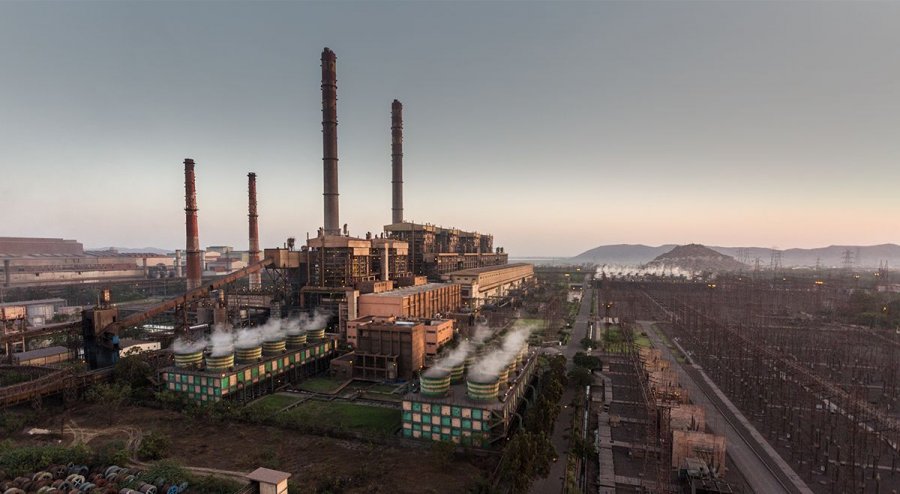
India's largest steelmaker JSW Steel has announced its intention to reduce carbon dioxide (CO2) emissions by 42% by 2030 from its 2005 baseline.
The company will allocate 10,000 crore rupees (~$1.26 million) for the implementation of relevant measures, the publication reports with reference to the statement of the company's chairman Sajjan Jindal The Economic Times.
To this end, the company, in particular, signed a contract to commission almost 1 GW of renewable energy production capacity, of which 225 MW will be commissioned in April 2022. The rest of the capacities are planned to be introduced in stages.
In addition, Jindal added, the company's finished products this year underwent a life cycle analysis and also received an Environmental Product Declaration (EPD). According to him, JSW Steel received the Steelie award from the World Steel Association in the category of "Excellence in Life Cycle Applications".
"We have become the first steel company in the world to issue a USD-denominated Sustainable Development Linked Bond (SDLB). The $500 million SLB has a maturity of 10.5 years and is linked to our target to reduce CO2," the head of the company also emphasized.
The company was also named to the S&P Dow Jones Sustainability Index for Emerging Markets, and the World Steel Association recognized JSW Steel as a Sustainability Champion for the fourth consecutive year.
Before Ecopolitic reported that Austrian steel company Voestalpine from its metallurgical plant in Linz, shipped the first batch of low-carbon steel coils manufactured using the greentec Steel Edition technology to customers.