European fuel producers could produce 1.83 million tons of e-kerosene in 2030 and save about 5 million tons of CO2.
This is stated in research Transport & Environment, published the 9th of June.
The new T&E forecast analyzed the planned production capacities of 18 European e-kerosene producers.
According to T&E, by 2025 more than 0.16 million tons of e-kerosene will be available to airlines annually. By 2030, this figure will exceed 1.83 million tons. This represents 3.65% of European fuel demand and would save the equivalent of up to 5 million tonnes of CO2(2) – or the equivalent of 30,000 transatlantic flights.
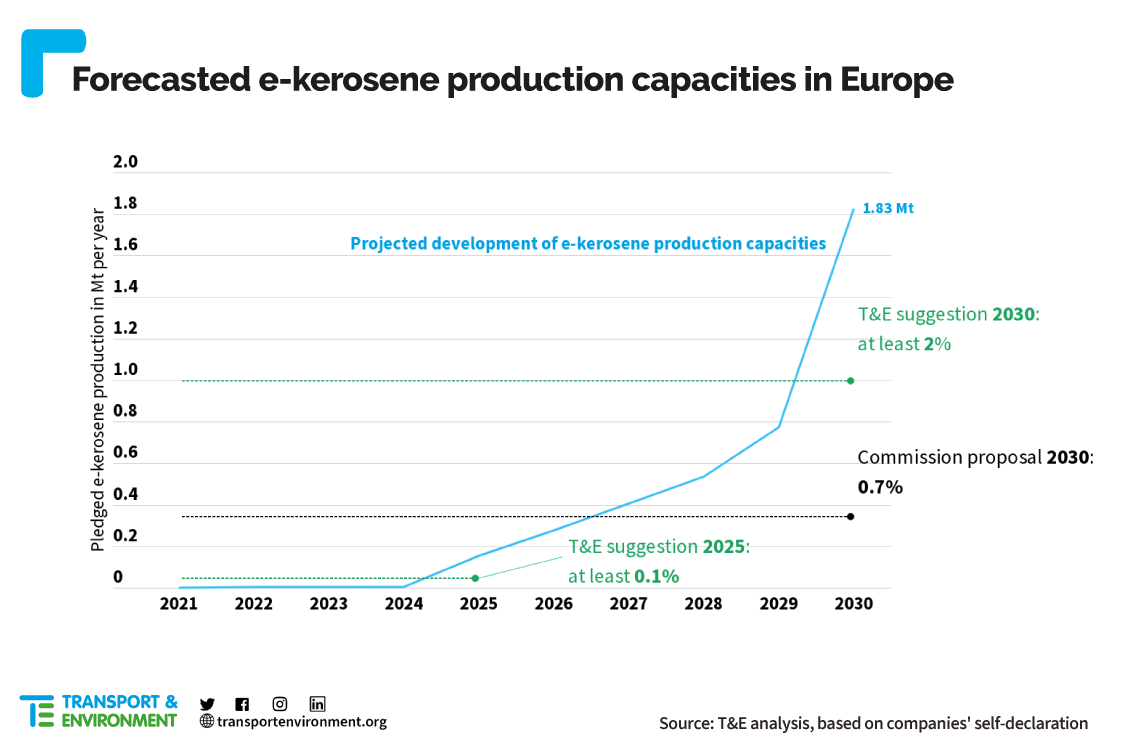
Photo: Transport & Environment
CO2-based sustainable aviation fuel (electronic kerosene, SAF), formed by combining green hydrogen (H2) and carbon dioxide (CO2), has the potential to significantly reduce aviation's climate impact.
New T&E analysis shows that the European e-kerosene market is poised for higher rates and faster scaling of the fuel, but policymakers are not providing sufficient incentives to further develop production. For aviation to be decarbonized quickly and effectively, e-kerosene must be made available to airlines so that it can be blended with aircraft jet fuel.
“Green e-kerosene is the clean jet fuel of the future and should be the best option for airlines and policy makers alike. The opportunities for Europe are unprecedented in terms of climate change reduction, job creation and strategic autonomy. Now is the time for national and European legislators to promote and mandate the use of e-kerosene in aviation,” said Matteo Mirolo, Aviation Policy Representative at T&E.
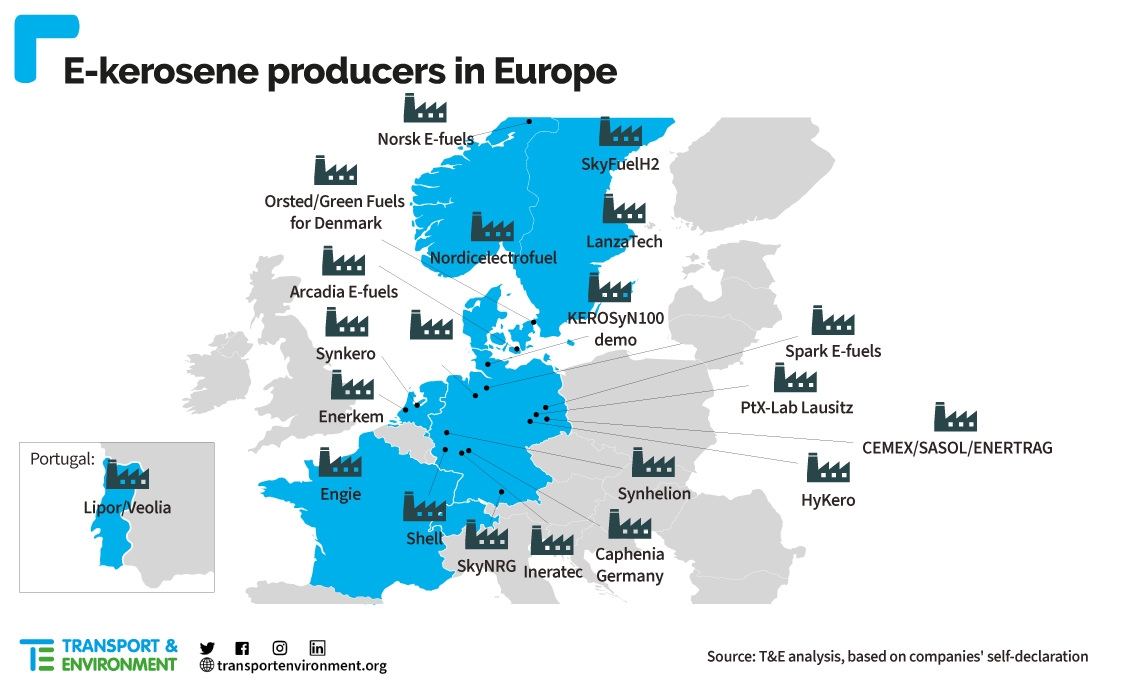
Photo: Transport & Environment
Two conditions are needed for e-kerosene to have near-zero greenhouse gas emissions and be mass-produced. First, hydrogen must be produced using additional renewable electricity (so-called green hydrogen). Second, carbon dioxide must be captured from the atmosphere, a process otherwise known as direct air capture (DAC). A new T&E analysis shows that 7 out of 22 manufacturers plan to introduce DAC as a source of CO2.
Recall that the company Gloyer-Taylor Laboratories (GTL) from Tennessee, USA, has developed ultra-light cryogenic hydrogen tanks , allowing airliners to fly four times as far.
Earlier, EcoPolitics reported that the Swedish government intends to raise airport taxes for airlines using high emission aircraft into the environment.