The UN Climate Change Conference (COP31) will take place in Antalya, Turkey, from 9 to 20 November. Ukraine plans to play an active role — drawing attention to the impact of the war on the environment, attracting investment for decarbonisation, and demonstrating that it remains firmly on track to achieve its goal of climate neutrality by 2050.
This is reported by EcoPolitics, citing speeches by senior officials at the event ‘Pre-COP31: Ukraine’s Climate Policy — Solutions for the Country’s Sustainability in the Face of Global Challenges’
The event was held to finalise the programme for COP31. It has been announced that in 2026, Ukraine will host the highest number of events at the conference in the last five years — over 70.
Exercises for SOR31
According to Oleksandr Kravchenko, Minister for the Economy and the Environment, Ukraine faces three challenges at COP31:
- To uphold respect for Ukraine’s territorial integrity, as the Russian Federation continues to include data from the temporarily occupied territories in its climate reporting. This is one of the ways in which the enemy seeks to legitimise the occupation. Ukraine will therefore insist that international documents do not contain such legitimisation, particularly in the context of climate issues
- Continue efforts to attract investment. Kravchenko noted that the mechanisms set out in Article 6 of the Paris Climate Agreement must also apply to Ukraine, particularly in view of the risks posed by the war.
- Maintain and strengthen international expert and technical support.
"I believe that Ukraine is, in many respects, a flagship platform. And the lessons we are learning here now may well be relevant to the world as a whole."
The impact of the war and green recovery
However, Ukraine does not intend to limit itself to the topics mentioned above. According to Oleksandr Krasnolutskyi, Deputy Minister of Economy and the Environment, issues such as food security, ‘green’ energy, decarbonisation and concessions for Ukraine will also be raised. However, the overarching theme will remain the war and its impact on the environment.
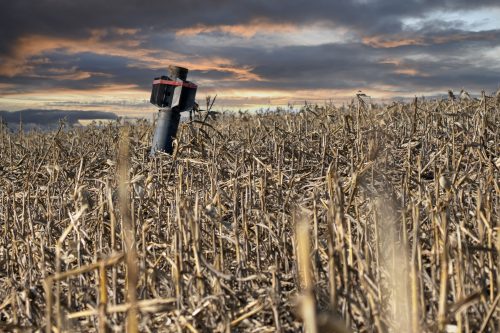
Rocket explosions, forest fires and burning oil depots have already caused emissions of over 31 million tonnes of CO₂, which is comparable to the annual emissions of some European countries. Whatever efforts Ukraine makes towards decarbonisation, the impact of the war will not disappear until a stable peace is achieved.
Ukraine will also turn its attention to the Black Sea. As a result of the enemy’s actions, scientists are constantly recording the destruction of marine ecosystems, which is affecting the entire Black Sea region.
Minister Oleksandr Kravchenko highlighted both the destruction of the power grid and Ukraine’s response to this — rebuilding it on the principles of distributed generation, whilst rolling out renewable energy systems and energy conservation measures
"Such a system is not only more resilient to attacks and strengthens Ukraine’s energy security. At the same time, it creates additional economic incentives for Ukraine, whilst having a lower impact on the climate. That is precisely why we believe that a green recovery for Ukraine is a matter of both climate and economic policy, as well as a crucial national security issue."
Presentation of achievements
However, government officials emphasise that they wish to highlight not only the problems, but also the achievements in shaping climate policy
Oleg Bondarenko, Chair of the Parliament’s Environmental Protection Committee, believes that this is precisely what the adoption of a long-term low-carbon development strategy entails. The government must approve a climate change adaptation strategy and sectoral strategies. He also mentioned how Ukraine is preparing to implement its own emissions trading scheme and expressed the hope that the relevant legislation would be passed in the near future.
"We must demonstrate that we are committed to our obligations to achieve climate neutrality by 2050. This is enshrined in our Climate Policy Act," added Oleksandr Krasnolutskyi.
As a reminder, there are currently four alternative draft laws on the National System of Technical Standards in Ukraine — one drafted by the ministry, which has been removed from the website, and three drafted by MPs. For a detailed analysis of their key provisions and differences, see the article by EcoPolitic.