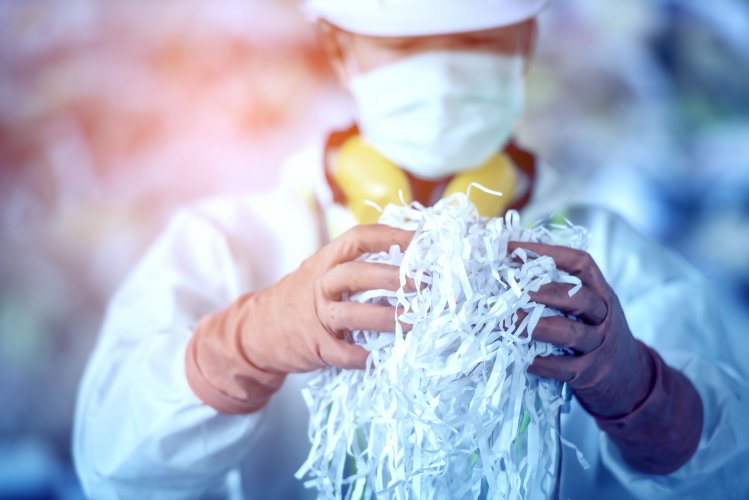
The European packaging recycling industry is facing a similar existential challenge to farmers, as the flow of cheap plastic waste from other countries threatens the profitability of recycling in Europe.
In the vast majority of countries, plastic waste has little or no value, so it can be shipped to Europe at low cost, POLITICO reports.
It is noted that in the EU, the recycling rate of plastic packaging waste reaches about 35%. However, mostly transparent bottles are recycled, which are easier to recycle.
The article says that EU lawmakers are preparing a new Packaging and Packaging Waste Regulation (PPWR), which sets requirements for recycled content and recycling rates. This creates a strong market for supply and demand and should potentially facilitate the transition to a circular economy.
POLITICO emphasized that Europe currently imports plastic waste from China, which jeopardizes the environmental goals of the Green Deal. This reduces incentives to collect and recycle local materials. In addition, companies in the recycling industry have to look for innovative methods to process mixed plastic packaging and textiles and invest in infrastructure.
“Without further investment in recycling infrastructure in the EU, the EU will never meet its recycling targets, nor will it create the capacity needed to handle waste not only from packaging but also from other large sectors such as textiles. Ultimately, the incineration of plastic waste that can be recycled will continue and grow," the article says.
The European Commission required that in the PPWR Regulation, the targets for recycled waste content should be based on waste generated in the EU. However, some multinational industries want to relax this requirement so that the standards include waste from any country.
"It is extremely important to ensure that the PPWR will, above all, promote the demand for recycled plastic in packaging that comes from waste that is collected and recycled in the EU," said Sophie Sicard, President of the Plastics Recycling Division of the European Confederation of Recycling Industries.
She explained that without such a decision, the PPWR would be a blow to existing circular value chains.
It is noted that if the policy is opened up to broadly include waste from anywhere in the world, it will seriously undermine Europe's packaging recycling capabilities. Not only will future investment in recycling stop, but existing recycling facilities will also slow down or close. This is how Umincorp, a plastic waste recycling company in the Netherlands, and Renewcell, a Swedish textile recycler, recently went bankrupt.
Earlier, EcoPolitic wrote, that hundreds of farmers in the Czech Republic protested against the European Green Deal on February 19, which imposes restrictions to combat climate change, high energy prices, and bureaucracy.
As EcoPolitic previously reported, the fight against climate change requires a radical reduction in the production, use, and disposal of plastic, as this industry generates 2 billion tons of greenhouse gas emissions, about 3.4% of all anthropogenic emissions.