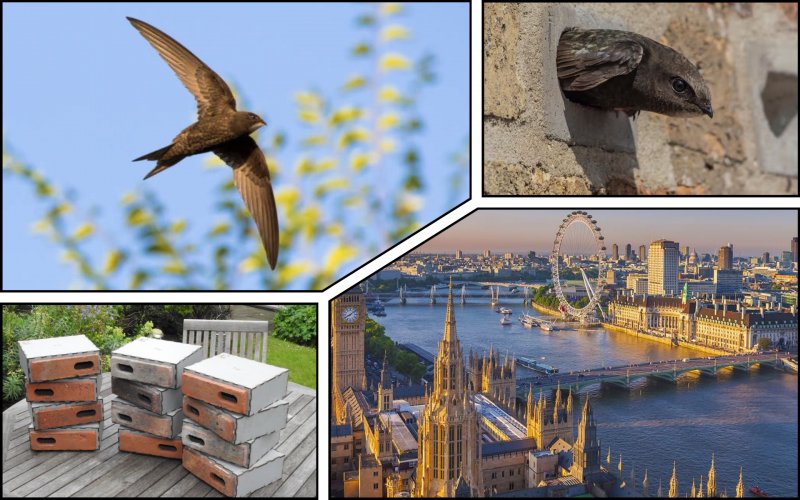
In Great Britain in The House of Lords will debate an amendment to make it mandatory for new homes in England to use fast bricks, which would create nesting sites for birds.
According to the initiators of the changes, this could help stop the decline of wildlife, reports The Guardian.
A quickbrick is said to be an inconspicuous hollow brick that provides a home for birds and invertebrates, particularly cavity-nesting robins.
"There aren't many simple conservation solutions like this," said politician and environmentalist Zach Goldsmith. "The cost of adding fast bricks to new buildings is so small compared to the cost of the building itself that it's almost impossible to measure, and the impact on endangered species would be huge."
The article highlighted that the British population of migratory swifts has declined by 60% between 1995 and 2020. Currently, their numbers have further declined from 59,000 breeding pairs to about 48,000.
The loss of nesting sites – particularly due to energy efficiency measures that cover old roofs – is said to be a factor in the decline of birds and the flying insects they feed on.
The material said that the installation of fast bricks in all new houses received cross-party support during the debate in parliament. In July, a petition was signed by 110,000 people, but the government reiterated its desire to leave any requirements for their installation to local authorities. Only five of England's 455 planning authorities ask builders to install bricks in new homes in line with best practice.
"This amendment is a great opportunity for the government to meet its commitment to halt biodiversity loss by 2030," said author and campaigner Hannah Bourne-Taylor, who created the petition.
Earlier, EcoPolitic wrote, that in Europe and Britain over the last 40 years, 600 million birds have disappeared, which are nesting – about 17-19%. Species related to agriculture were the most affected.
Previously, EcoPolitics analyzed what "biological diversity" is, why it is important for our planet, what threatens it and how to preserve it.