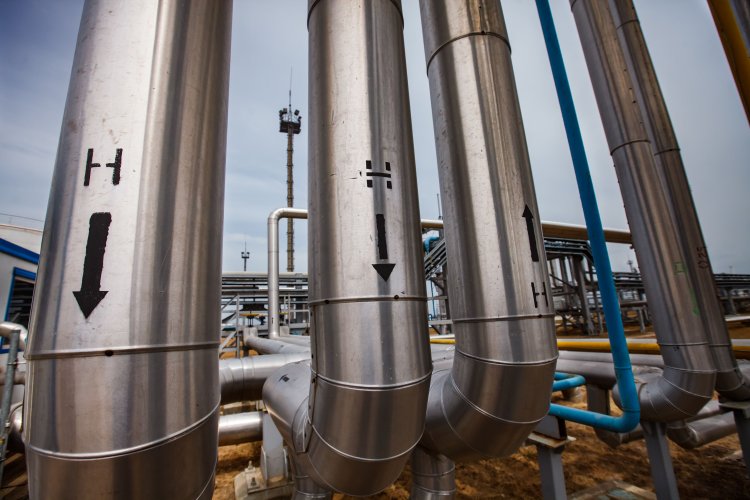
Austria, Germany and Italy require the European Union to provide political support to a small number of infrastructure projects for the transportation of "green" hydrogen.
Countries are seeking EU Common Interest (PCI) status for these projects, which will provide access to certain funds and speed up the permitting process, Reuters reports.
It is noted that the ministers of these three countries are putting pressure on the European Commission to give the projects priority status.
According to ministers, this will contribute to security of supply and greater diversification of import sources, while reducing dependence on fossil fuels. They are asking for support for the following projects:
- hydrogen gas pipeline between Germany, Austria and Slovakia;
- conversion of the gas pipeline running from Italy through Austria to Slovakia for the transportation of hydrogen.
"The proposed infrastructure will connect European hydrogen demand centers, such as plants, with the import of renewable hydrogen from North Africa and contribute to the construction of the European hydrogen network," the ministerial letter said.
It is noted that such an initiative appeared against the background of Europe's efforts to strengthen renewable energy as an alternative to the supply of Russian gas after the full-scale invasion of Ukraine
The paper highlighted that as a number of sectors look to renewable hydrogen as a way to reduce their carbon footprint, demand for the fuel in Europe is likely to outstrip local supply, meaning imports will be needed. The EU plans to produce 10 million tonnes of renewable hydrogen and import another 10 million by 2030.
The authors added that another hydrogen project is planned to be implemented in Southern Europe. The BarMar pipeline will transit 2 million tons of low-carbon hydrogen between Spain and France per year from 2030.
Earlier, EcoPolitic wrote, that the Port Authority of Rotterdam, the Netherlands, has reserved a plot of land on the island of Maasvlakte for the construction of a plant for the production of green hydrogen with a capacity of up to 1 GW. Necessary infrastructure is available near the site.
As EcoPolitic previously reported, the Hydrogen Bank will be launched in the EU from autumn 2023 with an initial funding of €800 million, which is intended to partially subsidize the production of green hydrogen.