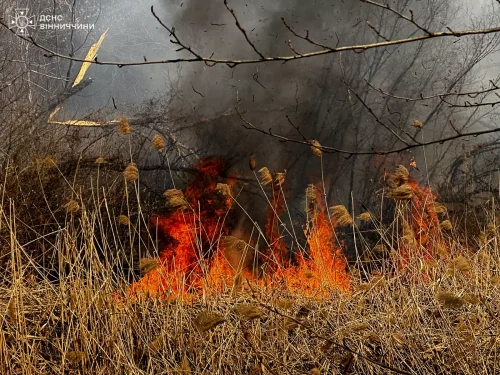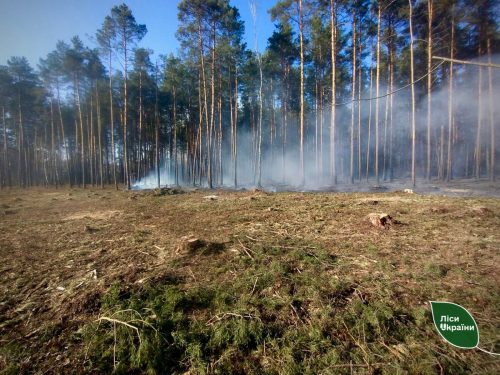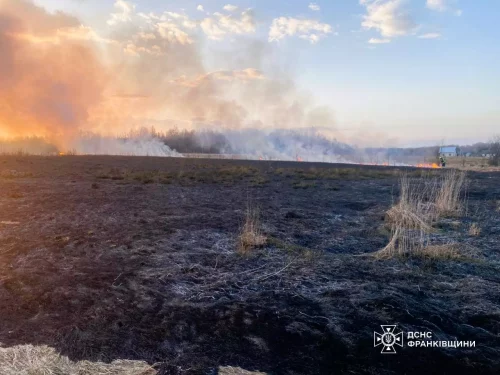
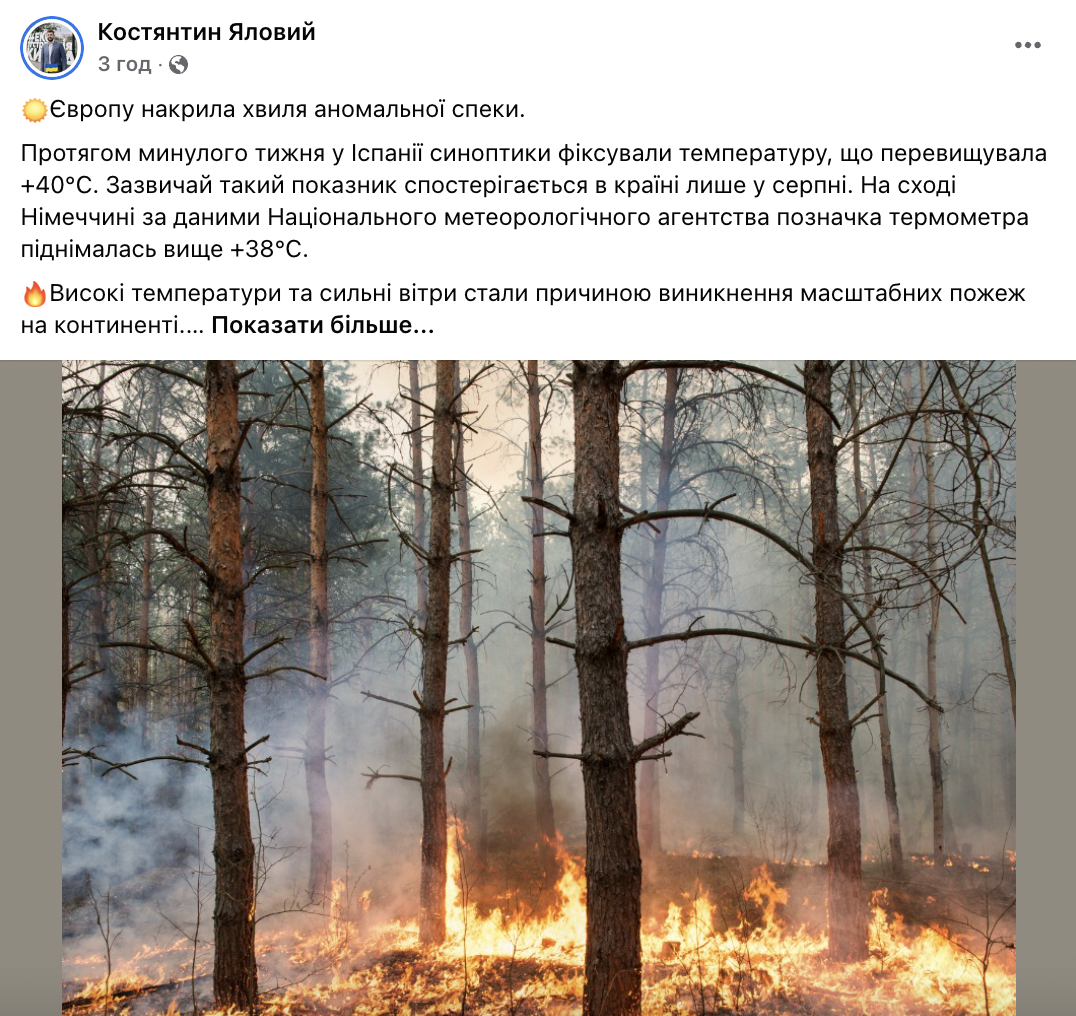
A wave of abnormal heat in Europe, in some places more than +40 ° C, and strong winds led to large-scale fires on the continent, due to which hundreds of people were evacuated.
An emergency level of fire danger has been declared in most of the territory of Ukraine, says deputy of the Kyiv City Council of the VIII convocation Konstantin Yalovy on Facebook.
According to climatologists, due to global warming, periods of heat will become more frequent and longer, which will entail catastrophic natural phenomena for the continent.
Thus, during the past week in Spain, the temperature exceeded +40°C, which is usually observed only in August. And in the east of Germany, the thermometer rose above + 38 ° C.
In Spain, within the Sierra de la Culebra mountain range, a fire destroyed 30,000 hectares of forest, including about 600 square meters in a biosphere reserve. The government has declared the area a disaster zone. The fire also endangered the survival of Spain's largest wolf population living within the region.
In Greece, on the island of Euboea, the second largest in the country, a forest fire approached close to the houses, because of which the inhabitants had to be evacuated.
Germany is also suffering from wildfires. Not far from Berlin, fire covered about 110 hectares. Residents of 20 villages had to leave their homes due to the proximity of the fire.
In the Turkish mountainous region of Bordubet, about 3,000 hectares of forest were affected by the fire. It was eliminated by 2.5 thousand firefighters, 45 helicopters and 12 aircraft. Also evacuated 275 local residents.
Ukraine also has to contend with the effects of extreme heat, and the fighting exacerbates the situation, as explosions and shelling have become another source of fire.
The State Emergency Service has declared an emergency level of fire danger in the southern, western, most northern, Vinnitsa, Dnepropetrovsk and Donetsk regions.
Back in early May, the State Forest Agency announced that the number of fires had increased by 2.6 times compared to the same period in 2021.
Yalovoi noted that the consequences of fires have a long-term negative impact on the environment. In addition to a decrease in the number of populations of rare animals and plants, the quality of the soil and the conditions for the natural restoration of vegetation are declining.
This drought and fires will further exacerbate the food crisis in the world caused by Russian aggression.
“The world must do everything to prevent the consequences of climate change. The course towards the transition to renewable energy sources, green technologies in production, climate modernization of all sectors of the economy should become the basis for the development of each country. The restoration of Ukraine after the end of hostilities will be based on these principles," he added.
Recall China has received a double climate shock, forcing people to flee from flooding in record heat.
As EcoPolitics reported earlier, in Europe in 2021 the temperature rose by a record 2°C.