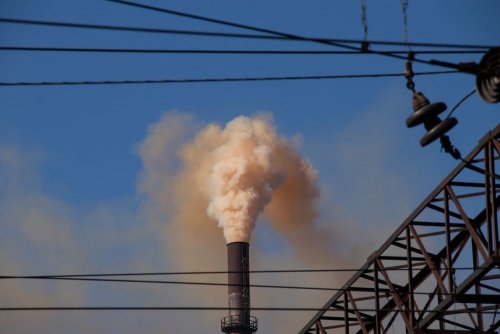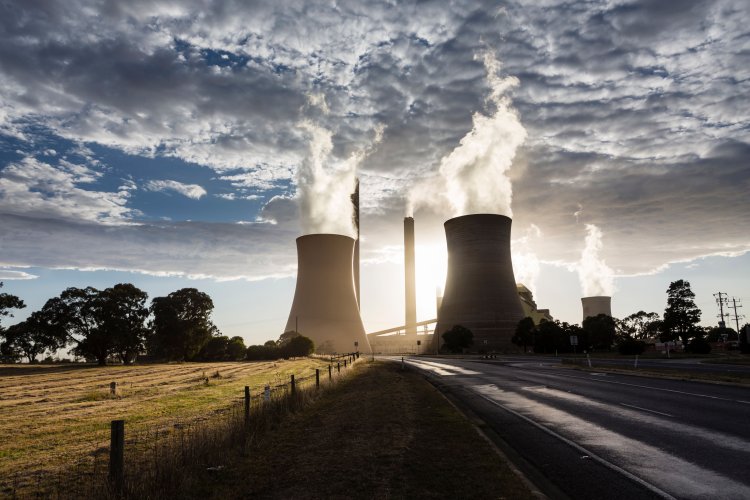
Modern nuclear power can become an alternative to coal and natural gas and help the world achieve its decarbonization goals.
In the Bloomberg the Editors note that outdated nuclear regulatory rules are hindering the innovation that is desperately needed to combat climate change.
The article emphasized that green energy is intermittent due to weather conditions. In order to fill the gaps, you need either incredibly large-capacity drives or more reliable power sources. Currently, fossil fuels still account for approximately 80% of the world's primary energy supply.
The authors emphasized that nuclear reactors produce "clean" and reliable energy in large quantities. Accidents at nuclear power plants, in particular at Chernobyl and Fukushima, are quite rare, and the risks of nuclear energy extremely low per unit of produced energy.
They also emphasized that the latest reactor designs are even safer. And the latest tools and technologies reduce the danger from radioactive waste.
"According to the International Energy Agency, nuclear energy production needs to roughly double by 2050 to meet global emission reduction targets. Unfortunately, the world is moving backwards in key aspects," the article says.
It is noted that the share of nuclear energy in world energy production decreased to 10.1% in 2020 from 17.5% in 1996 and will continue to decline until 2050. Despite the development of renewable energy, fossil fuels are expected to dominate for decades.
"Governments around the world should extend the life of existing nuclear plants, work with industry to finance new ones, and redouble efforts to improve waste disposal and otherwise ease the public's mind about potential risks," the authors emphasized.
They added that governments also need to promote nuclear innovation. In recent years, small modular reactors (SMRs) have gradually become a commercial reality. These reactors can provide a much safer, cheaper and more flexible source of energy and boost wind and solar power.
“Governments could exploit economies of scale through standardized production, while potentially powering everything from homes to factories to transportation. But the bureaucracy stands in the way," the Editors noted.
The authors emphasized that the US Nuclear Regulatory Commission (NRC) has prevented the construction of new reactors for decades, mainly due to obsolete safety standards. More generally, lawmakers need to rethink their entire approach to nuclear regulation — developed in a different era, with different needs — and return to the original principles. Their primary goals must shift from total risk avoidance to maximizing the use of nuclear power, accelerating innovation, and reducing carbon emissions through old and new technologies.
"Resisting climate change means acknowledging harsh realities. The world cannot decarbonize without nuclear power—and it cannot expand its nuclear capacity without rethinking the rules. There is not enough time," the authors emphasized.
Earlier, EcoPolitic wrote, that Poland's Minister of State Property, Jacek Sasin, said that the country was forced to postpone the closure of coal mines, however, their final operational date of 2049 will remain unchanged. The shutdown will begin after the first nuclear power plant starts up.
As EcoPolitic previously reported, the special representative of the US president on climate issues, John Kerry, and the Minister of Energy of Ukraine, Herman Galushchenko, announced the pilot project "Clean fuel in Ukraine with SMR".