In Ukraine, farmers could increase rapeseed acreage by nearly 30% for biofuel production. This forecast comes from the Ministry of Economy amid the possibility that oil price issues will persist due to the conflict in the Middle East. However, Ukraine currently plays the role of a raw material supplier rather than an active player in the biofuel sector. Producers have the capacity to replace up to one-third of imported diesel with clean fuel, but this requires regulatory changes and centralized incentives.
Ukrinform provided more details on the obstacles to the development of the biofuel market and potential solutions.
A growing trend
Globally, the share of biofuels in the transportation fuel market has been steadily increasing, even when oil prices were not particularly high. Experts predict that by 2030, it will reach 15%, compared to 4–4.5% today.
More than 60 countries worldwide have clear requirements regarding the biofuel content in fuel. Pure diesel is banned in some countries. In the European Union, the mandatory share of biofuel in the market must not be less than 5.2–12.6%. This wide range is due to differences in the domestic policies of member states.
Ecological additives
In Europe, biofuel is often produced near oil refineries to save on logistics.
Bioethanol is added to gasoline. This technical ethyl alcohol is mainly produced from corn, wheat, barley, sugar beets, and cane.
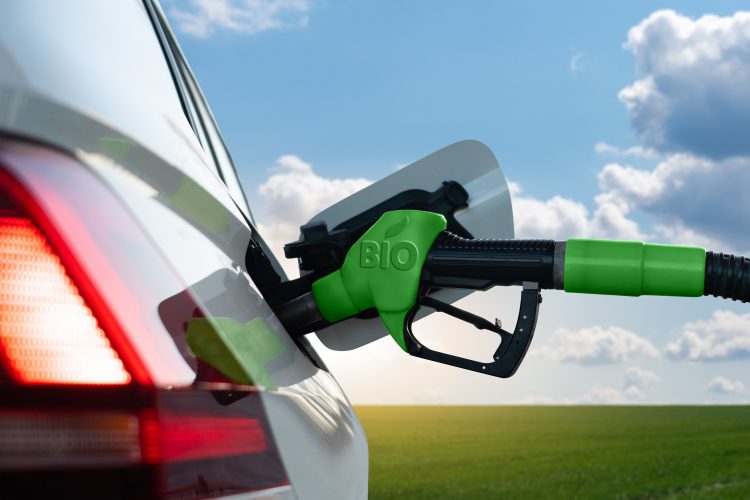
Biodiesel is usually added to diesel fuel. Most often, it is made from vegetable oils – rapeseed, soybean, palm, and sunflower. In some cases, animal fat is also used.
The most common blends contain 5% and 10% biocomponents: E5 and E10 (ethanol) and B5 and B10 (biodiesel).
Ukrainian challenges
Expanding the use of biofuel in Ukraine faces a number of obstacles:
- Technical characteristics of vehicles. Not every car can operate on biodiesel or fuel with a high content of it without retrofitting.
- Operating temperature. Pure biodiesel rapidly thickens at temperatures below +5℃. Therefore, the optimal option is fuel with a biodiesel share at the level of 5-10%.
- Rapeseed prices. It is more profitable to sell raw materials than to invest in one’s own production. Ukrainian farmers sell rapeseed abroad at a price of over 500 euros per tonne.
- No incentives. Unlike bioethanol, Ukraine has not established mandatory quotas for the use of biodiesel in fuels.
Raw material supplier
EU countries produce over 25% of the world’s biofuel – about 13-15 million tonnes annually. The leaders are Germany, France, and Spain. Ukraine, in turn, supplies a significant amount of raw materials for this production, but it manufactures only a very small quantity of high value-added biofuel – 60-70 thousand tonnes.
Previously, 14 large biodiesel production plants were built in Ukraine. Their total capacity stands at 300,000 tonnes annually.
Ukraine usually becomes active in biofuel production when oil prices remain above $100 per barrel for an extended period. However, as soon as prices stabilize, the sector stagnates, since the production cost of "green" fuel is quite high.
The way out of this situation should be a comprehensive approach at the state level:
- Regulatory control of the biodiesel share in fuel. For bioethanol, similar regulations will come into effect on May 1, 2025, with certain exceptions.
- Simplification of permitting, certification, and other bureaucratic procedures.
- Tax incentives. Currently, the excise duty for biofuel is the same as for traditional fuel – €253.8 per 1,000 liters. This increases investment risk in the sector.
Ecopolitic previously reported that the Ukrainian bioethanol market risks facing a surplus of products. Full-capacity operation of the existing plants will lead to the production of this type of biofuel in quantities exceeding the pre-war volume of gasoline production.