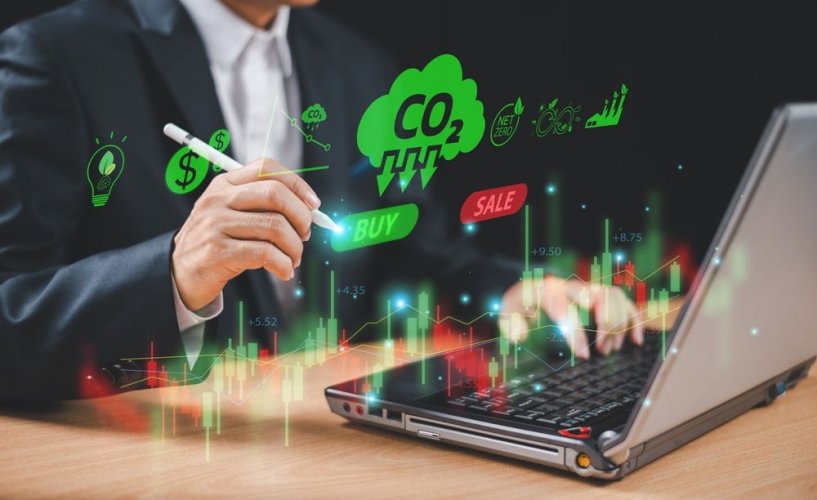
In Ukraine, the public consultation on the draft law "On the Principles of Operation of the National Greenhouse Gas Emission Allowance Trading System" (NGGEA) has just concluded. But it is already clear that the launch of the domestic system is not so much about environmental reform as it is about a very large-scale economic and financial transformation of industry.
In fact, the current debate is not about how to set a price for CO₂ emissions. Much more fundamental questions are at stake:
- who will pay for decarbonisation?
- where will businesses find the money to modernise their production facilities in the midst of a full-scale war?
- how can we prevent the ETS from becoming an additional financial burden on industry?
- how to reconcile European integration with post-war economic recovery?
To find answers to these questions, EcoPolitic spoke with experts who have studied the European experience of introducing the ETS in depth, the financial aspects of decarbonisation in the EU, and who are also well-versed in the current situation in the Ukrainian manufacturing sector.
This article will not contain figures, graphs or modelling results. We will discuss the fundamental principles without which all the calculations and forecasts of scientists and analysts simply lose their meaning.
Why Ukraine Cannot Simply Copy the European Experience
The first thing to understand: in shaping its own emissions trading system during full-scale war, Ukraine finds itself in fundamentally different conditions than the European Union once did. While the European system was launched in an economy with access to capital and stable funding sources, our country is attempting to implement a similar mechanism while at war and simultaneously undergoing postwar reconstruction.
The second crucial factor is the time allotted for the launch of NGGEA and the EU ETS.
“The European Union has spent 15 years adjusting its emissions trading system, and it has turned out-after recent debates-that it does not work or works ineffectively. Therefore, aiming to implement the NGGEA in 3–5 years during a war is overly ambitious and not particularly prudent,” said the Head of the Committee on Industrial Ecology and Sustainable Development of the European Business Association (EBA) Stanislav Zinchenko.
The expert emphasised that traditional European ‘soft pressure’ tactics would not work, as the companies simply do not have the capital to modernize.
Launching the ETS without investment in decarbonization leads nowhere
All the experts interviewed by us are unanimous: the availability of financial resources for enterprise modernization is critically important. As the head of ESG Liga of the Association of Environment Professionals (PAEW), Olha Semkiv, very aptly observed, the emissions trading system itself does not automatically decarbonize industry – it merely creates a price signal.
“Actual emission reductions occur only when enterprises have access to technologies, expertise, and financing for modernization,” the expert explains.
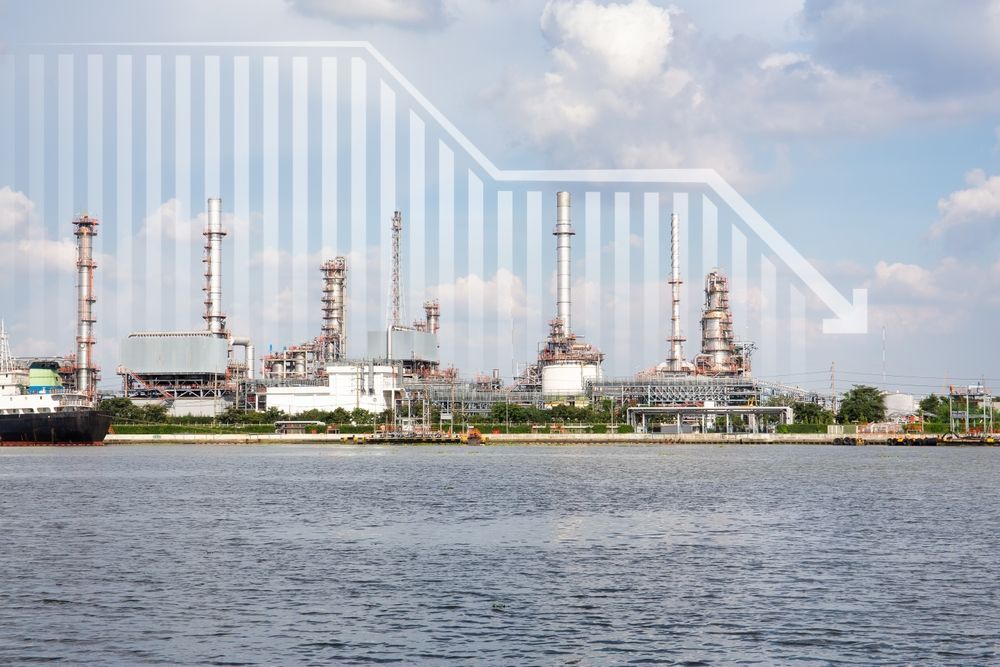
Therefore, she believes that for Ukraine, the most important are not so much market mechanisms as instruments that make it possible to finance decarbonization measures. According to Olha Semkiv, particular attention should be paid to the so-called hard-to-abate sectors: metallurgy, cement, chemical industry, and energy. These industries account for a significant share of industrial emissions and, at the same time, require the largest investments to switch to low-carbon technologies.
“And the European Union recognizes that, for such sectors, carbon pricing alone is not enough: dedicated investment support for technological transformation is needed,” the specialist notes.
Semkiv emphasizes that for Ukraine, this is especially relevant, since it simultaneously addresses two needs – decarbonization and the post-war recovery of industry.
Who will pay for modernization
We asked experts which financial resources domestic enterprises most often use for decarbonization projects and whether there is any assistance from the state. According to them, the situation is currently critical. According to Stanislav Zinchenko, 100% of the few environmental and modernization projects presently being implemented are financed by the enterprises’ own funds.
“Access to long-term foreign capital for Ukraine is currently virtually closed due to very high war risks. International financial institutions (IFIs) primarily finance the public sector, energy infrastructure, or critical recovery, but not the large private industry. Access to 'green bonds' (Green Bonds) for Ukrainian issuers is now only theoretical,” the expert says.
He notes that there is no direct financial assistance from the state for the decarbonization of industry. Instead, the state often withdraws working capital from businesses through tax mechanisms.
“The only support currently present is regulatory concessions or simplified procedures, but this is not funding. Without changing this paradigm, we will not achieve any of the climate goals – only through deindustrialization and the closure of enterprises,” the specialist warned.
According to Olha Semkiv, in practice, most Ukrainian companies implement environmental and energy efficiency projects mainly with their own funds or with international financing.
“It is international financial organizations and donor programs that currently remain the main source of external capital for decarbonization,” she says.
The specialist points out that possibilities for state support remain limited due to the war and significant budgetary pressures. Thus, attracting private and international capital to finance the 'green' transition is critically important.

Financial instruments for Ukraine’s green transition
All the experts interviewed are convinced that the approach to financing decarbonization in Ukraine must be as comprehensive as possible, combining incentives and direct support. They see the following possible sources:
1. Targeted grants and blended financing mechanisms involving IFIs and donors. Stanislav Zinchenko considers these to be the fundamental component.
“Decarbonization projects in metallurgy or cement sectors have a payback period of 10–15–20 years. Without non-repayable or concessional funding from the EU, EBRD, or World Bank, it is impossible to launch on a large scale,” he asserts.
2. Concessional green loans (Green Loans) with subsidized rates. The EBA committee chair noted that Ukraine needs programs similar to “5-7-9%,” but scaled up for large industry and linked to a specific indicator of emissions reduction.
3. Government guarantees.
4. Tax incentives and benefits, in particular for the import of “green” technologies, as well as accelerated depreciation. These should reduce the tax burden and free up capital for enterprises to invest in decarbonization.
5. Targeted use and reinvestment of environmental taxes. These should not simply “dissolve” in the general budget, but be fully returned to businesses as co-financing of environmental projects.
6. Market Mechanisms of Article 6 of the Paris Agreement.
Modernization Fund: a lifeline or another ineffective state institution?
One of the most debated ideas of the Ministry of Economy, Environment, and Agriculture has been the proposal to establish a separate Ukrainian Modernization Fund within the ETS framework. Justifying this decision, officials refer to the requirements of Directive 2003/87/EC on the EU ETS.
According to Stanislav Zinchenko, the idea of creating a Modernization Fund analogous to the EU Modernisation Fund is absolutely correct and logical. However, the expert immediately cautions: for this fund to become an effective instrument rather than another bureaucratic structure for “eating up” funds, it must operate under strict principles:
- Transparent funding through environmental taxes and revenues from quota sales in the future ETS.
- Independent management. Representatives of international donors (EU, EBRD) and business associations must be involved in fund management and project selection to eliminate corruption risks and increase trust.
- Accessibility for the private sector. The expert emphasizes that the newly established fund should provide priority access to financing for those players with the highest emissions, who are also the backbone of national exports: the metallurgical, chemical, and cement industries.
“If these conditions are met, it will be a breakthrough. If not, we will get yet another ineffective state agency. Unfortunately, the currently operating fund is a negative example of eco-tax use. Why it even includes the word ‘decarbonization’ in its name, I personally do not understand,” Stanislav Zinchenko emphasized.
The expert says he is more optimistic about Ukraine’s participation in European funds than the creation of another domestic one.
Olha Semkiv also considers the idea of a Modernization Fund logical in the context of European experience. However, she also has a number of concerns about it, due to the differences between the European and Ukrainian situations:
- In the EU, the Modernization Fund appeared as an element of an already mature emissions trading system, which generated significant revenues and stimulated emission reductions through price signals. For the EU, the ETS was a tool to achieve climate targets, whereas for Ukraine today, it primarily remains an instrument for European integration.
- Within the European Union itself, the Modernization Fund operates at the supranational – European – level, not the national one. It is a joint mechanism for member states, not a set of separate national funds.
“That is why the question arises as to the advisability of establishing a new permanent institution, as in the context of eventual EU accession, a separate Ukrainian Modernization Fund will lose its relevance. Accordingly, the key issue is whether its goals can be achieved through the existing instruments for modernization financing, economic recovery, and international support. It is precisely this comparison with existing mechanisms that determines whether a new fund creates real added value,” the expert explains.
Main risk: decarbonization through deindustrialization
However, the most alarming signal, according to experts, lies elsewhere: when launching the ETS, Ukraine does not start from the same baseline as the EU did.
In recent years, part of the reduction in industrial emissions has resulted not from modernization of production, but from the destruction of enterprises, loss of industrial assets, and a decline in production volumes.
“For example, the country's steelmaking capacity has been reduced by more than half compared to the pre-war period, and part of the largest sources of industrial emissions has been physically destroyed or lost. Therefore, today the focus is less on the decarbonization of the existing industry and more on the type of industry that Ukraine will rebuild in the future, as well as the financial resources that will be available to enterprises,” noted Olha Semkiv.
That is why experts caution: if the National Emissions Trading System (NETS) is regarded solely as a mechanism for additional payments, there is a risk that the system will stimulate not modernization but further contraction of production.
Protecting Our Own
A separate point raised by all experts is the need to protect the interests of Ukrainian businesses under the extremely challenging current conditions in which they have to operate.
Stanislav Zinchenko insists: when launching the NETS, Ukraine must firmly defend before Brussels the application of the declarative Article 30.7 of the CBAM Regulation – the so-called “force majeure clause”.
“While the war and the initial recovery period continue, Ukrainian exports must be exempt from CBAM financial payments in the EU. Our domestic NETS must serve as a tool for internal development and preparation, not a mechanism of additional tax pressure that could further undermine exporters. Decarbonization should be pursued through modernization and the construction of new facilities, not by closing plants that cannot afford to buy quotas,” the specialist believes.

Olha Semkiv pointed out another aspect of protecting Ukrainian entrepreneurs – during the negotiation process, Ukraine must defend the interests of its enterprises regarding access to European funds, since formal participation does not guarantee that Ukraine will receive a proportional return of resources in the form of support for Ukrainian projects. The specialist warned that European companies have much more experience working with such instruments, established teams for preparing applications, and a significant expert advantage over Ukrainian enterprises.
In the expert’s opinion, it is extremely important to ensure conditions under which domestic companies can effectively compete with European ones for funding:
- adequate access to information;
- development of project capabilities;
- technical support and assistance in preparing high-quality investment projects for participation in European programs.
“It is precisely this approach that will enable us to fully leverage the opportunities offered by participation in European decarbonization and modernization financing mechanisms,” said Olha Semkiv.
The Problem with Launching the ETS That Is Hardly Discussed
Even perfectly crafted regulations will not work without people capable of implementing them. This therefore raises a question for which there is still no clear answer: does Ukraine have sufficient institutional capacity and competence to launch its own emissions trading system?
The ETS is not just another environmental law. In essence, it is about creating a new market with complex rules and mechanisms for monitoring, verification, and control.
“I have many questions about the ETS implementation timeline because I don’t see the most important elements – competence and specialists. In fact, launching the ETS is tantamount to launching a stock market with very complex regulations,” said Stanislav Zinchenko.
He recommends that the authorities focus over the next five years on emissions monitoring and verification, building competencies, and strengthening institutional capacity.
Stanislav Zinchenko sees the main systemic issue for Ukraine regarding decarbonization and industrial policy as the lack of deep, in-house expertise.
“Instead of developing national institutions and involving industry experts in drafting strategies and regulations, the state has entirely outsourced this area. All key reforms and draft laws (including those on the ETS or emissions monitoring) as well as strategic documents are drafted within international technical assistance projects by the 'experts' of numerous grant organizations and so-called reform offices,” the expert states.
In recent years, Ukraine’s environmental policy has become overly dependent on external consultants and grant-funded projects, the head of the EBA committee is convinced. This results in numerous strategies, concepts, and legislative initiatives that are often adapted versions of European solutions, but do not always take into account the specific features of Ukraine’s economy and industry.
“Grant consultants are usually theorists who rather clumsily copy EU directives and prepare presentations. However, they have never worked in the real sector, do not know the technologies for producing steel, cement, or fertilizers, and do not understand how different financial and tax instruments work. They propose a distorted imitation of European rules, but without European funding for Ukraine, which has a different economic structure than Germany or Sweden,” explains Stanislav Zinchenko.
As a result of this practice, the expert cites the gradual loss of internal expertise and analytical capacity within the relevant state agencies:
"The constant engagement of external 'advisors' has led to a situation where the line ministries-formerly the Ministry of Environmental Protection and Natural Resources, now the Ministry of Economy-have lost their own analytical functions. There is simply no one there capable of professionally evaluating the reforms proposed by grant providers. The state has become a passive recipient of foreign ideas, which often contradict each other and the country’s national economic interests."
Key Conceptual Cautions
It is possible to convene many roundtables, hold discussion panels, and make countless presentations, but from the experts we heard about two fundamental aspects, without which all this imitation of vigorous activity would make no sense at all.
First: decarbonization cannot be achieved through presentations and grant reports.
"Until the state starts engaging with real domestic businesses and industrial associations as key partners, and until it develops its own sovereign economic expertise, we will remain stuck, passing laws disconnected from reality that are impossible to implement. This is exactly how the system works in the European Union, which Ukraine is now joining," warned Stanislav Zinchenko.
Second: the entire range of tools-regulatory, market, and financial-must be applied simultaneously.
"Otherwise, achieving targets for reducing greenhouse gas emissions will be extremely difficult," cautioned Olga Semkiv.
We hope that Ukrainian officials responsible for the national “green” transition will not only declare openness and willingness to engage in dialogue, but will also genuinely heed the opinions of experts and business representatives during the launch of the ETS.
Editor’s note. Following the publication of this article, the editorial team received a request from expert Andrii Hunko asking for his comments and any references to him to be removed. At his request, the relevant sections have been removed from the article.