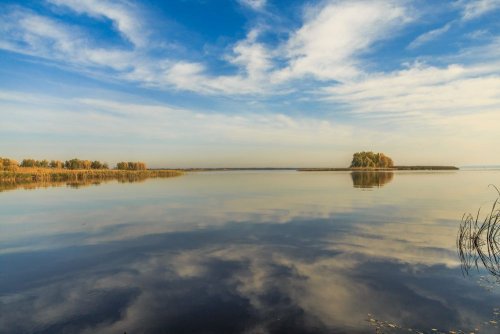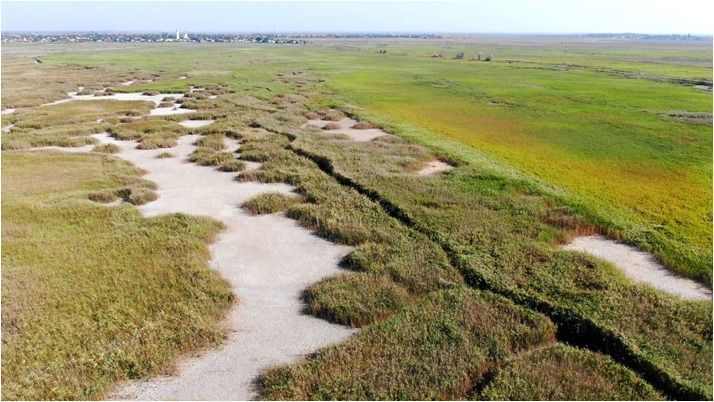
The extensive network of rivers, branches, and lakes at the mouth of the Danube is gradually losing its natural functions. Small bodies of water are drying up, and the soil is degrading, which threatens to turn important wetlands into a desert in the future.
This is reported by the media outlet "Bessarabia INFORM," citing Maxim Yakovlev, Deputy Director for Scientific Work at the Danube Biosphere Reserve.
The most striking example of the system’s degradation is the decline in water flow at the Kiliya Estuary of the Danube. At the beginning of the 20th century, its share of the river’s flow was 72%, but in recent decades it has fallen below 50%. Already, water losses in this single branch of the Danube alone reach a staggering 40 km³ annually.
Hydraulic engineering as a sentence
Hydraulic engineering interventions have become perhaps the most significant factor in water redistribution. The researcher cites the example of the flow-diverting dam built at Cape Izmailsky Chatal. This structure has blocked the Danube at its branching point across a significant portion of its width.
At the same time, the distribution of flow within the river’s internal network has also changed. In particular, during low-water periods, less and less water flows through the Kiliya branch. This poses a threat to the entire dependent network—floodplains, floodplain lakes, and smaller estuarine branches.
The critical nature of this trend has already become a topic of discussion at the national level. In particular, the Danube Biosphere Reserve has raised this issue on multiple occasions. A decision has not yet been reached.
Source: bessarabiainform.com
A postponed eco-catastrophe
The desiccation of the Danube delta leads to multifaceted consequences. Among them are:
- degradation of wetlands covering an area of 80,000 ha;
- loss of sufficient depth for navigation;
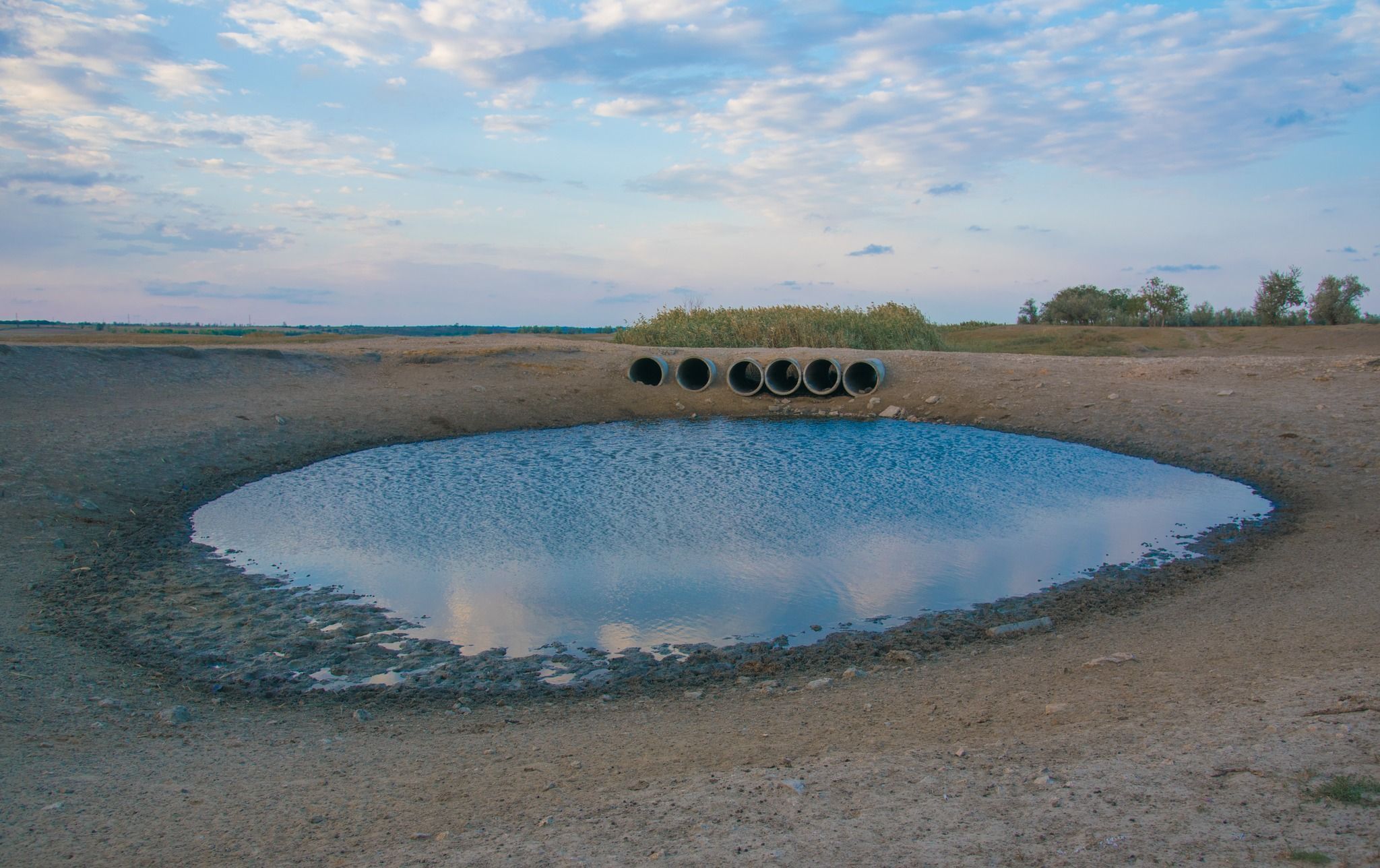
- drying up of smaller branches;
- deterioration of water exchange in the system of lagoons and lakes;
- more active intrusion of salt seawater upstream the river delta.
An additional risk factor is climate change. Southern Ukraine is already experiencing a lack of precipitation, longer and hotter droughts, and consistently rising average temperatures. In combination with the desiccation of the Danube, global warming is launching the desertification process in the region.
In turn, this leads to reduced soil water levels – meadows degrade, soils become increasingly saline, and landscapes lose their bioproductivity.
Wetlands in their healthy state acted to restrain arid processes. However, due to desiccation and heat, they are losing their role as a climate buffer, which increases risks for the entire region.
EcoPolitic previously reported that more than 80% of freshwater fish species have already disappeared globally. One of the main causes is habitat fragmentation due to dams, dikes, and other hydrotechnical structures.