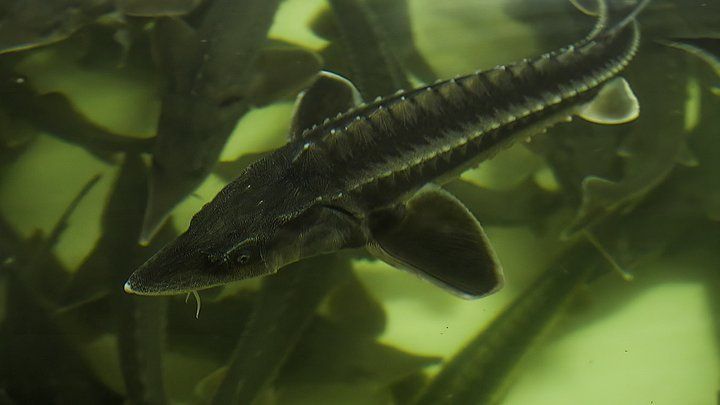
The return of Red Book-listed sturgeons has been observed in the waters of the Dnipro River in the Zaporizhzhia region. These fish disappeared from the local waters following the construction of the Kakhovka Hydroelectric Power Plant dam, but after its demolition, they began to resume their natural migration routes.
Mykhailo Mulenko, an employee of the Khortytsia National Reserve, told the media outlet “Suspilne” about this.
Scientists describe this return as a natural process, as the animals instinctively sense the places where their ancestors lived. And this species of fish was of commercial importance to local communities as far back as the 20th century.
“If you look at the records of the Dnipro Expedition, which studied the nature and archaeological heritage of this region before the construction of the Dnipro Hydroelectric Power Plant in the late 1920s, you’ll even find figures on the catch of this fish, and it was a valuable commercial species for local fishermen,” noted Mykhailo Mulenko.
Returning to the sources
The hydroelectric power plant’s dam became an insurmountable barrier for the fish. The lack of a fish passage meant that sturgeon spawning occurred at most near Kherson.
However, the destruction of the hydraulic structure eventually led to the return of the species. Some experts speculated that sturgeons came into the Dnipro from artificial farms in the Yakymivka and Vasylivka districts. However, other researchers, including Mykhailo Mulenko, are convinced that this is part of a natural process.
“We cannot prevent this in any way and cannot influence this situation. The fish swim upstream, they sense their native spawning grounds, and this is normal,” emphasized the research associate.
Reports of sturgeon sightings have become more frequent. They are coming particularly from divers and military personnel. The scientist stressed that testimony from eyewitnesses attests to the free movement of this rare fish within the water column.
A full assessment of the sturgeon return is currently impossible due to the temporary occupation of part of the spawning grounds.
EcoPolitic previously reported that since the 1970s over 80% of the world’s freshwater fish population has disappeared. Artificial barriers that fragment bodies of water are among the main causes of the destruction of the natural habitats of these animals.