EU4Environment project expert Oleksiy Yaroshevych said that the water management plan for the de-occupied Crimea for 2025-2030 is to be implemented at the expense of the €50 billion Ukraine Facility program.
This happened during a discussion of the future water management plan for Crimea, Ukrinform reports.
"We are now discussing ways to implement the Crimean river basin management plan after de-occupation and expect that it will be included by the government in a large plan for restoration, reconstruction and modernization under the Ukraine Facility program. We expect and hope for full funding of our initiative, as the issue of the state of our water bodies, including those in the de-occupied Crimea, is an important part of Ukraine's European integration," Yaroshevych said.
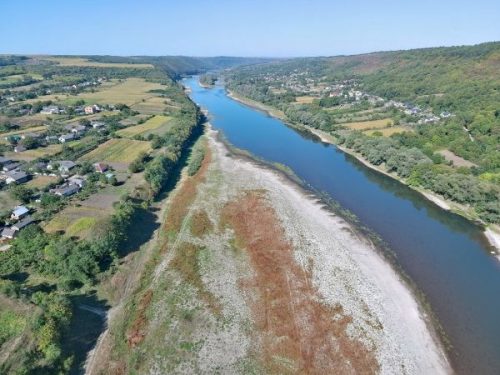
It is noted that according to official data, the Crimean river basin currently consists of:
- 331 rivers
- 19 lakes;
- 411 surface water bodies;
- 10 groundwater bodies.
EU4Environment project expert Kateryna Mudra emphasized that Ukraine needs to update this data and monitor the state of the water. After de-occupation, experts will carry out all the necessary work.
Ihor Hopchak, Deputy Head of the State Agency of Water Resources, said that the main goal of the RBMP is to improve the ecological and chemical state of surface and groundwater in Ukraine as a whole. As of today, the level of pollution in rivers and water bodies mostly does not meet European standards.
"At the first stage, by 2030, we plan to maintain the good condition of those surface water bodies that have it today, as well as improve the condition of those water bodies that need it by 5%. In the long run, we must achieve good condition of all surface and groundwater in the country," he said.
Experts noted that the developed initiative does not take into account the resumption of water supply to Crimea from the Dnipro. This will be possible only after the de-occupation of the peninsula.
"We will talk about restoring the Dnipro water supply after the de-occupation of the peninsula. First, the restoration of the Kakhovka Reservoir and the North Crimean Canal, and only then – the issue of water supply," Hopchak explained.
The article explains that until 2014, Crimea received 85% of fresh water from the Dnipro River through the North Crimean Canal. After the occupation, water supply was stopped. Currently, the peninsula uses water from reservoirs and underground sources, which, according to environmentalists, leads to soil salinization.
Earlier, EcoPolitic wrote, that Yevhen Khlobystov, an expert of the Crimean Tatar Resource Center, said at the COP27 Climate Summit that the solution to the accumulated environmental and economic problems of Crimea is possible only after its return to Ukrainian jurisdiction.
As EcoPolitic previously reported, on March 18, the Cabinet of Ministers approved the Reform Plan for the Ukraine Facility, a €50 billion European support program for Ukraine, with green transition as one of its cross-cutting areas.