In Ukraine, there are plans to supplement the standards governing the concentrations of hazardous substances in soil and to expand the list of such substances, by adopting a relevant government resolution. As well as closing regulatory gaps, this should help to determine more accurately whether land contaminated during hostilities can be used safely in the future.
This was reported by the Ministry of Economy and the Environment.
The document establishes a more precise regulatory framework for assessing chemical contamination of soil. The draft takes account of the realities of war, as vast areas have been contaminated by explosives and their degradation products as a result of the conflict.
However, there are currently no approved maximum permissible concentrations for such chemicals. Consequently, there is no basis for determining whether, for example, agricultural land can continue to be used after munitions have been cleared.
The Ministry of Economy added that proposals and comments on the draft may be submitted within one month of its publication.
Extended list
If the draft resolution is adopted, more than ten new chemicals will be added to the list of pollutants. These include hexogen, nitroglycerine, octogen and TNT.
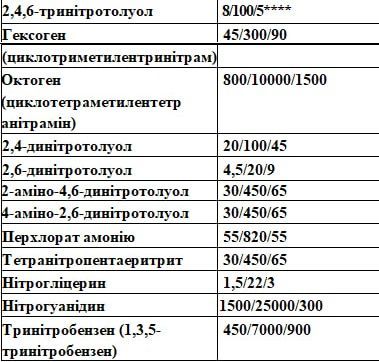
Additional substances on the list of pollutants. Numerical values – total content, mobile fraction, aqueous extract in mg per kg of soil. Source: draft resolution.
According to the latest data from the State Environmental Inspectorate, as a result of the war, as of 16 October, approximately 1.6 million m2 of land has been contaminated.
EcoPolitic previously reported that hostilities are causing pollution of surface and groundwater. The State Water Agency has recorded levels of heavy metals and petroleum products exceeding permissible limits.