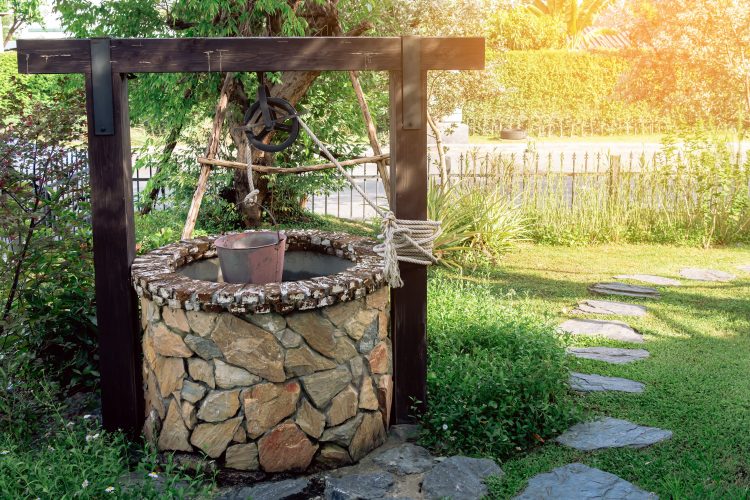
A well on private land does not require a water charge, but testing the water quality is essential. You cannot tell the nitrate content in water by its colour or taste. Similarly, you may overlook the presence of harmful bacteria.
This was reported by the media outlet ‘Suspilne’, citing comments from Nataliia Denysiuk and Kateryna Bilokon, experts at the Zhytomyr Regional State Laboratory of the State Service of Ukraine for Food Safety and Consumer Protection.
This water is completely free of charge
Provided that citizens do not contravene the requirements of current legislation, they may use groundwater from their own wells free of charge. Such use does not require a special permit, the conditions for obtaining which are set out in Article 48 of the Water Code of Ukraine.
EcoPolitics adds that explicit authorisation for use can be found in Article 48 of the Ukrainian Law ‘On Subsoil’. Under its provisions, landowners or land users have the right to use groundwater, excluding mineral waters, within the boundaries of their land plots. This applies to all uses except for the production of bottled drinking water. However, there is one condition: the volume of water abstracted must not exceed 300 cubic metres per day.
Security considerations
The main problem is not the cost, but safety. Experts stress that the quality of such water must be constantly monitored, and even a liquid that has no particular smell, colour or visually noticeable impurities can be harmful to people.
Citizens may request such a test from the State Food and Consumer Service’s laboratory; however, this service is subject to a charge in accordance with the approved rates.
"Laboratory analysis can be used, in particular, to determine the nitrate content and check that the water complies with the established regulatory requirements," said Natalia Denysiuk.
The human senses are powerless when it comes to detecting nitrates
The State Service for Food Safety and Consumer Protection has emphasised that one cannot rely solely on taste, colour or smell when assessing water quality. For example, nitrates dissolve in water and cannot be detected by the naked eye. Furthermore, if their concentration is not particularly high, this does not affect the taste either.
"The regulatory limit for nitrate content in drinking water is no more than 50 milligrams per cubic decimetre. If laboratory analysis reveals that this limit has been exceeded, such water should not be used for drinking or food preparation until the circumstances have been clarified and a safe alternative water source has been secured. It is particularly important not to use water with elevated nitrate levels for preparing infant formula,” the specialist emphasised.
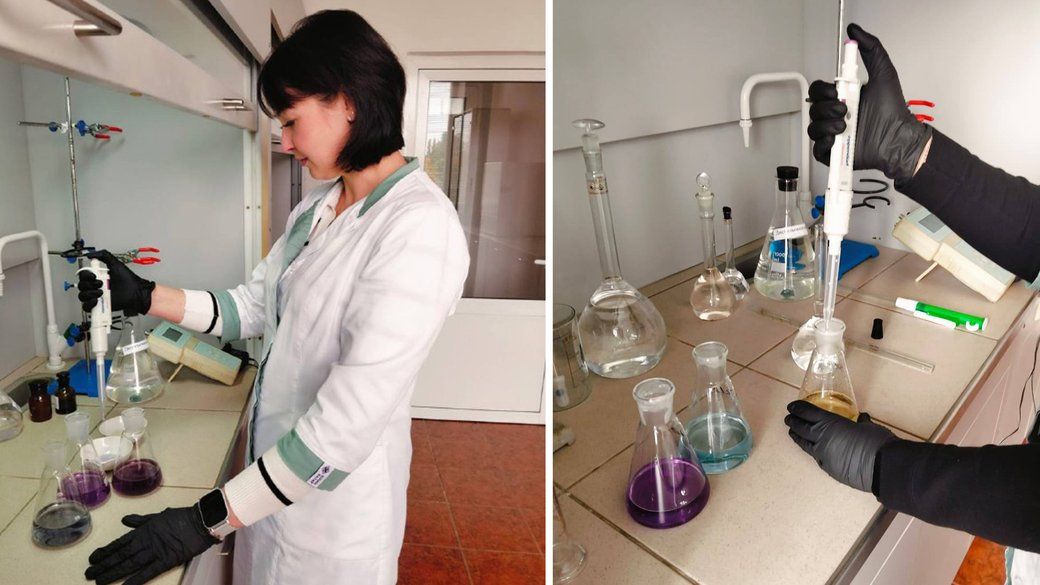
Source: State Service for Food Safety and Consumer Protection / Suspilne
Boiling and domestic cleaning won’t help
High temperatures help to destroy most harmful microorganisms, but not nitrates. On the contrary, boiling causes some of the liquid to evaporate, so the concentration of nitric acid salts actually increases in the remaining volume.
You should not rely on household cleaning methods without first checking their effectiveness.
"Specialised technologies are required to remove nitrates, and their effectiveness depends on the equipment and the conditions under which it is used. Until the test results are deemed safe, an alternative source of drinking water should be used," the State Service of Ukraine for Food Safety and Consumer Protection emphasised.
It’s not just about nitrates
Water may contain not only harmful chemical compounds, but also bacteria and parasites. For this reason, laboratories usually analyse microbiological parameters and carry out parasitological tests.
"Microbiological parameters include, in particular, total coliforms, E. coli, pathogenic enterobacteria and coliphages. Where necessary, virological parameters are also tested, in particular the presence of enteroviruses, adenoviruses, rotavirus antigens, reoviruses and the hepatitis A virus. Parasitological tests may include the detection of pathogenic intestinal protozoa and helminths,” said Kateryna Bilokon, acting head of the laboratory’s bacteriology department.
It is advisable to agree in advance with the laboratory on the list of parameters for a specific sample. This list may be influenced by the condition of the well and the purpose of the test itself.
Sample preparation
The accuracy of the analysis depends largely on the quality of the samples collected. The State Service for Food Safety and Consumer Protection has therefore issued guidelines on how to collect water samples from a well correctly.
Preparing the container. For chemical analysis, a clean plastic bottle (formerly containing drinking water or still mineral water) with a capacity of 1.5–2 litres is sufficient. For microbiological analysis, the choice of sterile containers and the procedures must be agreed in advance with the laboratory staff.
Water preparation. To ensure accurate results, you must first drain off any stagnant water by running it through a pump or supply system for 10–15 minutes. For microbiological testing, it is best to agree on the procedure separately.
Sample collection. The key thing is to prevent external contamination, so you must not touch the inner surfaces of the container or the lid. Microbiological testing is more complicated – in that case, you must prevent contamination from your hands, the air or surrounding objects.
Labelling and delivery. The date and time of collection, as well as the address of the well, must be indicated on the container. The sample should be delivered to the laboratory as quickly as possible, ensuring it is protected from direct sunlight and heat. For microbiological analysis, the sample must be transported in a thermal container at a temperature of 6 ± 2°C.
"Before taking a sample, be sure to check with the laboratory exactly which tests need to be carried out, what type of container to use and how to transport the sample. The requirements for water used in chemical and microbiological analysis differ," emphasised Kateryna Bilokon.
EcoPolitics previously reported that the war is causing the pollution of water bodies with heavy metals and petroleum products, even far from the front line. There is even a risk of pollutants entering water supply systems.
At the same time, Ukraine is experiencing a critical shortage of water in its rivers and lakes. For instance, in the Odesa region, the Kytai and Katlabug rivers are being forcibly replenished, the low water levels on the Dniester are only getting worse, and in the Lviv region, the rain has not helped to remedy the situation.