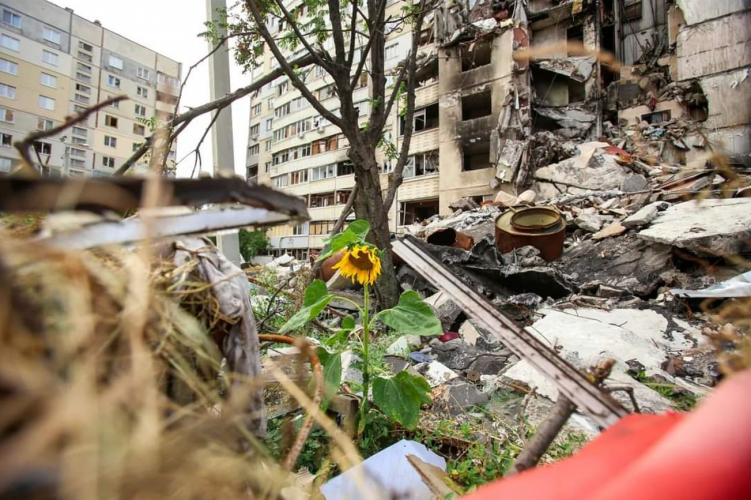
Deputy Minister of Environmental Protection and Natural Resources Oleksandr Krasnolutskyi said that Ukraine has already generated more than 600,000 tons of demolition waste, i.e., the debris of buildings and other objects destroyed by shelling.
This happened during an offsite meeting of the Verkhovna Rada Committee on Environmental Policy and Nature Management in Kharkiv region, the press service of the Ministry of Environment reports on Facebook.
Krasnolutsky emphasized that to solve the problem of demolition waste, the government approved a procedure for its disposal in September 2022.
"Currently, the Ministry is constantly communicating with international partners to provide assistance to Ukraine – to purchase mobile crushers for construction waste, equipment for disassembling and sorting it, equipment that will ensure waste processing for reuse in construction, etc." he said.
It is noted that the Japanese International Cooperation Agency JICA has agreed to assist Ukraine in recycling projects for demolition waste. Cooperation with JICA will help move joint projects forward quickly, particularly in the Kharkiv region, as required in wartime. As of the beginning of March, about 50 thousand tons of demolition waste had already been generated in the region, and daily shelling only increases these volumes.
The press service added that it is also important for the Kharkiv region to solve pre-war problems with solid waste management. The launched waste reform creates the necessary opportunities for this.
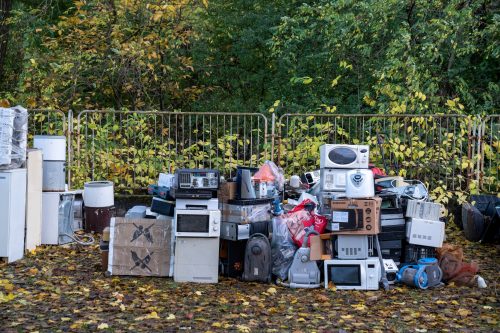
Yevheniia Popovych, Director of the Department of Digital Transformation, Electronic Public Services and Waste Management at the Ministry of Ecology, said that 8 new waste processing plants are planned to be built in the region. The two main ones are planned to carry out the full range of waste management activities, namely
- sorting
- processing
- production of RDF fuel;
- "energy utilization" of waste with the production of electricity and heat.
According to her, the new facilities will ensure 100% recycling of household waste generated in the region.
Krasnolutsky added that Law No. 2320-IX "On Waste Management" established clear, transparent rules for investors and guarantees to protect their investments.
"International partners are now emphasizing that they are ready to help us move from ruins to green transformation. At the highest political level, at all forums and international platforms, green recovery is seen as the main investment case for Ukraine," he emphasized.
Earlier, EcoPolitic wrote, that in September 2022, the Cabinet of Ministers approved the Procedure for the Management of Waste from the Destruction of Buildings and Structures resulting from damage caused by hostilities, terrorist acts, sabotage, or liquidation of their consequences.
As EcoPolitics previously reported, over the two years of the full-scale war, environmental damage from Russian aggression has reached $63 billion.