A study by the Agora Energiewende think tank found that Germany's emissions would fall to 673 million tonnes in 2023 (the government's annual target is 722 million tonnes of CO2), the lowest level in 70 years.
However, about half of the reduction is due to reduced demand and reduced production in energy-intensive industries, reports Bloomberg.
"Germany is still not on track to meet its 2030 climate targets," said Simon Müller, director of the research group.
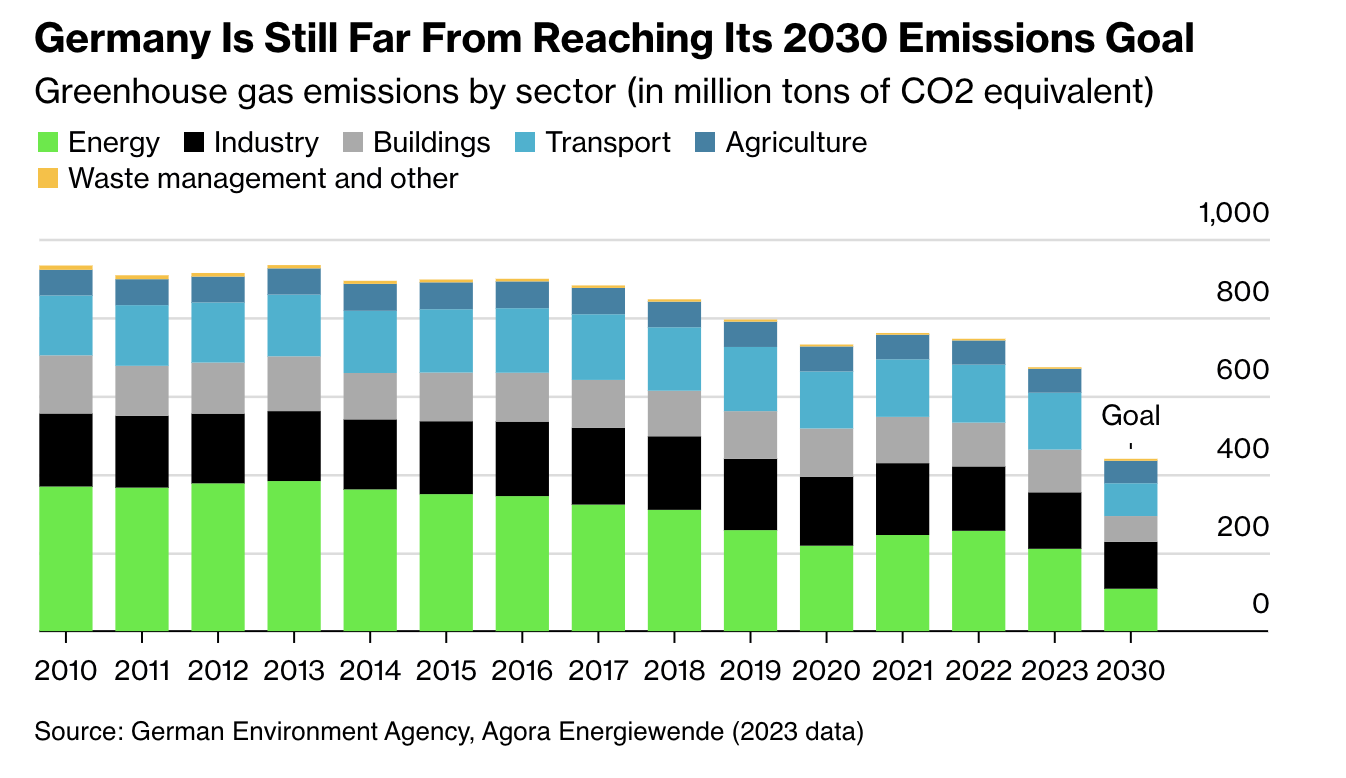
Analysts pointed out that only 15% of the total reduction in emissions is the result of higher energy efficiency standards or more renewable energy sources.
The Ministry of Economy called such results "very pessimistic", stating that the full effect of the implemented projects will become noticeable only in 2024.
The bulk of emissions (about 44 million tonnes) were cut as companies and utilities burned less coal amid higher carbon prices, it said. According to Germany's Federal Environmental Protection Agency, revenues from emissions trading schemes will reach a record €18 billion, a 40% increase over 2022. These funds will go entirely to the country's climate and transformation fund.
The article added that Germany is also relying more on electricity supplied by its neighbors and has become a net importer for the first time. According to analysts, emissions may start to rise again if the economy "picks up." However, the housing and transport sectors have already fallen short of the consistent climate targets for 2019 and 2020.
As EcoPolitic reported earlier, France in the first nine months of 2023 reduced greenhouse gas emissions by 4.6% compared to the same period in 2022.