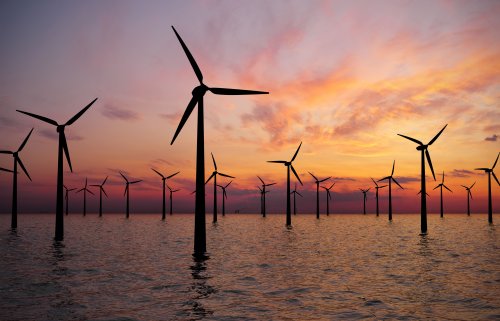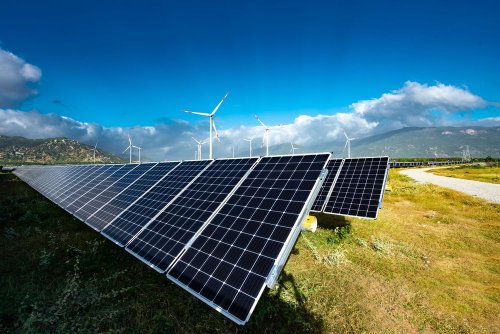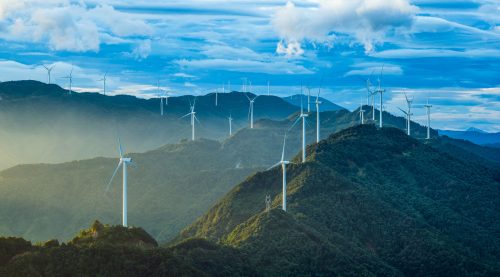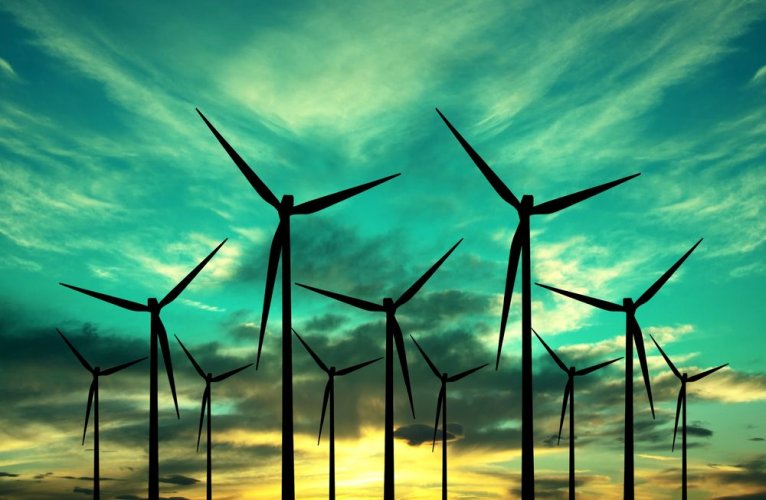
Germany's economy and climate ministry on Wednesday presented a package of measures to speed up the expansion of onshore wind power generation as the country seeks to reduce its reliance on Russian fossil fuels.
This was reported Reuters with reference to the relevant documents available to the agency.
It is known that Germany aims to fulfil 80% of its electricity needs from renewable sources by 2030, with a goal of increasing the capacity of onshore wind power to 115 gigawatts (GW) - equivalent to the capacity of 38 nuclear plants.
But only around 0.8% of land in Germany is currently designated for onshore wind power, with 0.5% actually being used. The draft legislation presented on Wednesday aims for that percentage to rise to 2% by setting out a minimum percentage of land each of the 16 federal states must make available for wind farms.
The agency also added that since taking office after last year's elections, German Economy Minister Robert Habeck, a member of the ecologist Greens party, has been unsuccessfully seeking to convince states to allocate bigger areas for wind farms voluntarily.
The number of construction permits for new onshore wind turbines fell by 14% in the first three months of this year compared with 2021, with Germany's Wind Energy Association saying southern states such as Bavaria and Baden-Wuerttemberg could do more.
The government is also preparing amendments to the law on environmental protection, according to which wind turbines can be placed in protected natural landscapes. At the same time, the requirements for the protection of animals are significantly reduced, in particular, the permissible distances from windmills to the habitats of rare birds are reduced, and some species of birds are removed from the list of authorities when issuing licenses for new installations.
Before EcoPolitics wrote that the Russian cyberattack against Ukraine at the beginning of a full-scale invasion caused damage wind energy in Germany.