In Europe, offshore interconnectors, energy islands and offshore generation networks will play an increasingly important role as coastal accessibility decreases and development moves further offshore.
This was stated by Heinrich Kwik, head of the offshore department of 50Hertz Transmission, reports Reuters.
Offshore grids can help avoid curtailments and increase the value of offshore wind farms by expanding deployment potential as well as minimizing transmission costs.
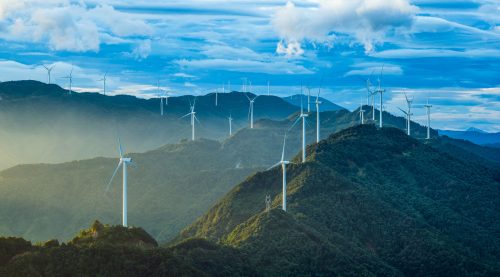
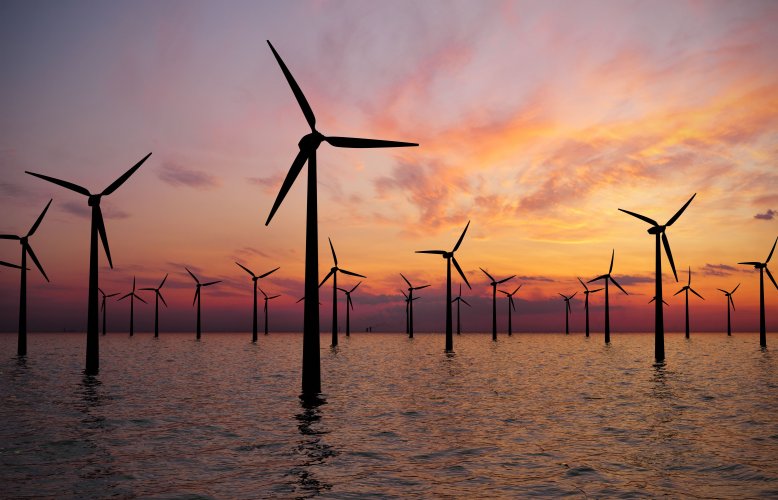
Thus, Germany, the Netherlands, Belgium and Denmark plan to build four artificial islands for the production of electricity and green hydrogen. They have pledged to install at least 65 GW of offshore wind capacity in the North Sea by 2030 and 150 GW by 2050.
The announcement came after the EU increased its renewable energy targets and introduced new rules that will speed up permitting for measures aimed at ending the region's dependence on Russian gas and oil.
Offshore wind farms have so far been developed using separate radial connections to the shore. Multi-purpose interconnectors (MPIs) and meshed maritime networks will allow power to be sent to where it is most needed and reduce transmission costs.
Krieger's Flak maritime interconnector between Denmark and Germany has proven the concept, but large multinational concepts face significant regulatory and construction challenges, industry experts said.
The UK is also following a similar path as the rapid deployment of offshore wind increases the risks of onshore congestion.
The country will need to export electricity to meet the government's target of 50 GW of offshore wind by 2030, and offshore interconnectors could be installed in the North, Irish and Celtic seas.
The Krieger's Flak interconnector provides 400 MW of bidirectional capacity between Vattenfall's Krieger's Flak wind farm in Denmark and the EnBW Baltic 1 and 2 wind farms in German waters. The interconnector increases the export potential from Denmark to Germany, where electricity demand is greater, and provides greater system flexibility.
“The Krieger's Flak project required a number of technical innovations and advanced controls and was funded by the European Energy Recovery Program (EEPR). 50Hertz has incorporated a new master controller for power flows, and this concept can be used for future projects to further improve efficiency,” Quick said.
According to him, the project, which was completed within the budget and has been operating since June 2021, fulfills its goals and shows that "the idea works."
"Europe's rush to implement renewable energy sources may distract attention from offshore grid planning, but it may also attract the attention of authorities," writes Reuters
The article noted that the rapid synchronization of the Ukrainian and Moldovan energy grids with the EU after Russia's invasion of Ukraine showed how European countries can speed up joint projects.
Earlier, EcoPolitic wrote, that 4 EU countries agreed on increase in wind energy capacity in the North Sea.
As EcoPolitic previously reported, European producers of green steel call for 2030 to create at least 31 GW renewable energy capacity to support the transition to low-carbon steel.