Climate negotiations at the international climate conference COP31 ended in failure as the EU and other countries rejected the final deal proposed by the event's presidency, Turkey and Australia. They said the deal was too weak to advance the fight against global warming.
This was reported by Reuters.
The failed talks showed how difficult it is now for governments to take decisive climate action. This is especially true at a time when the consequences of climate change are becoming increasingly severe, with more frequent heatwaves, wildfires, floods and severe storms, while wars and economic problems are diverting governments' attention from these issues.
The longest, but fruitless
This UN climate conference became the longest in history: after two weeks of the summit, the host countries organised an additional two-day session. However, an agreement was never reached.
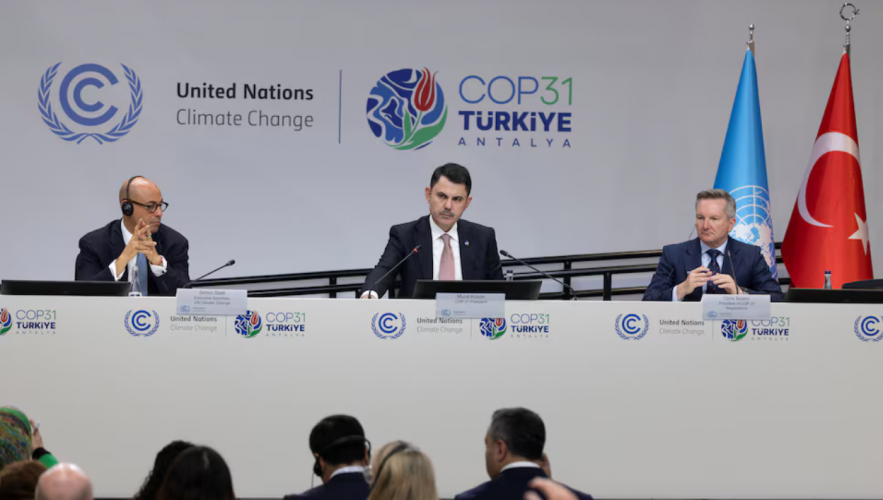
"There is nothing to be done. We did everything we could," the conference president from Turkey, Murat Kurum, said at the closing plenary session.
He noted that he would not propose any new text.
Australia's head of negotiations at COP31, Chris Bowen, called the outcome "very disappointing". He noted that disagreements over fossil fuels and climate finance stood in the way of reaching a deal.
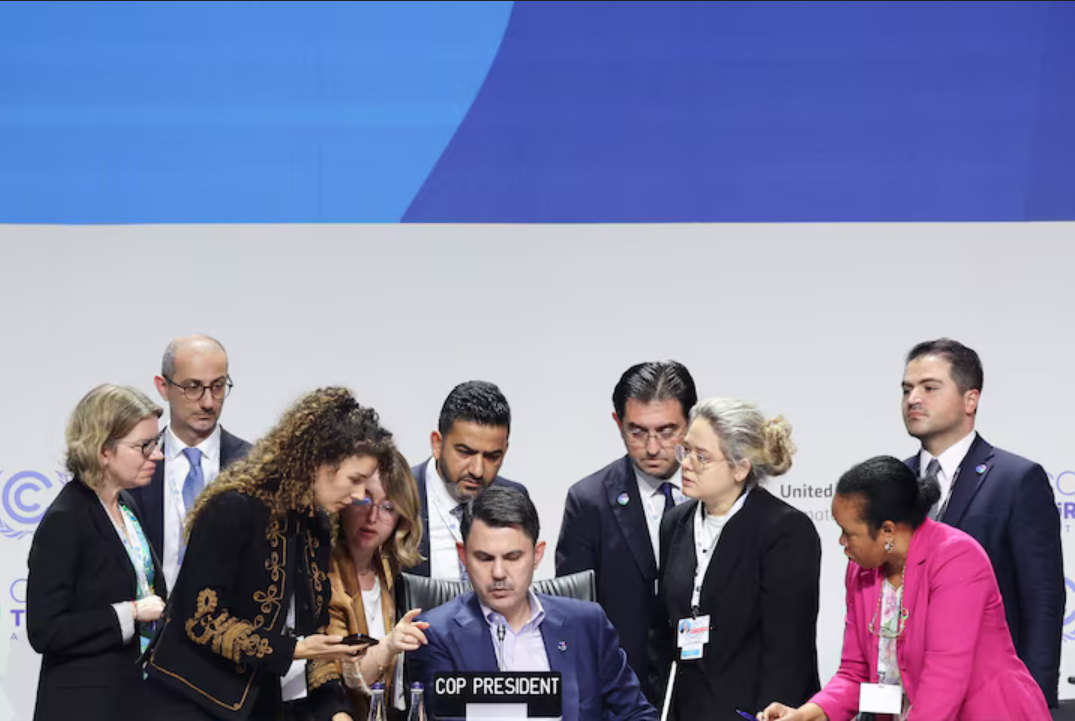
Photo: REUTERS/Murad Sezer
This is the first time since 2009 that the countries taking part in UN climate negotiations have failed to adopt an agreement supported by all parties.
Although many recent Conference of the Parties (COP) summits have been accompanied by a tense atmosphere, analysts believe they sent important signals for business investment and gave impetus to progress in renewable energy and electric vehicle technologies.
Not a single mention of fossil fuels
Ireland's Minister for the Environment Darragh O'Brien said the European Union could not support the proposed deal, in part because it made no mention of fossil fuels, which scientists say remain the cause of global warming.
"It is unacceptable that we have a climate law that makes no mention of fossil fuels or of transitioning away from them," he said.
According to observers present at the summit, Saudi Arabia and other major oil-producing countries traditionally became the defenders of these fuels. They stated that fossil fuels would play an important role in the economy in the near future, and therefore lobbied to exclude any mention of them from the text of the deal.
The rejected deal acknowledged the projected overshoot of the planet's temperature and called for accelerating the development of carbon removal technologies to eventually reverse this trend. It was these provisions that the oil-producing countries persistently sought to add to the text.
Scientists argue that removing carbon from the atmosphere, combined with sharp emission cuts, is vital to avoid the worst consequences of climate change. But critics of the proposed deal expressed concern that the wording on carbon removal would be used as a pretext for continued oil production.
At the closing plenary session of the summit, a representative of the Saudi delegation said he was surprised by the resistance to what he considered a concrete solution to the problem of global warming.
Uncertainty over finance once again
Another traditional point of contention was the amount of money that developed countries commit to provide to developing countries for climate projects and for tackling the consequences of climate change.
Developing countries criticised the deal because the document did not provide sufficient funding to help them adapt to global warming. The deal envisaged tripling such finance, but did not specify from what baseline.
The electrification proposal was also criticised
The proposed version of the deal also contained a target proposed by Turkey to increase the share of electricity in global final energy consumption from the current 23% to 35% by 2035.
Supporters of this commitment argued that it could help reduce greenhouse gas emissions by accelerating the phase-out of cars, stoves and other fuel-powered equipment. However, critics noted that it could increase additional costs for poor countries without offering a clear pathway away from fossil fuels.
Reactions of participating countries
Li Gao, China's Vice Minister of Ecology and Environment and head of the country's delegation, expressed disappointment that states had failed to reach consensus on the framework decision.
"This is very important. Since consensus could not be reached on the framework decision, we have essentially missed out on many things that numerous developing countries are striving for," he said.
Head of negotiations Chris Bowen, for his part, noted that many positive things had happened at this Conference of the Parties:
"There were many events about clean energy. Many commitments were made – for example, more than 90 countries signed the electrification pledge. And all of this is good work and a great cause."
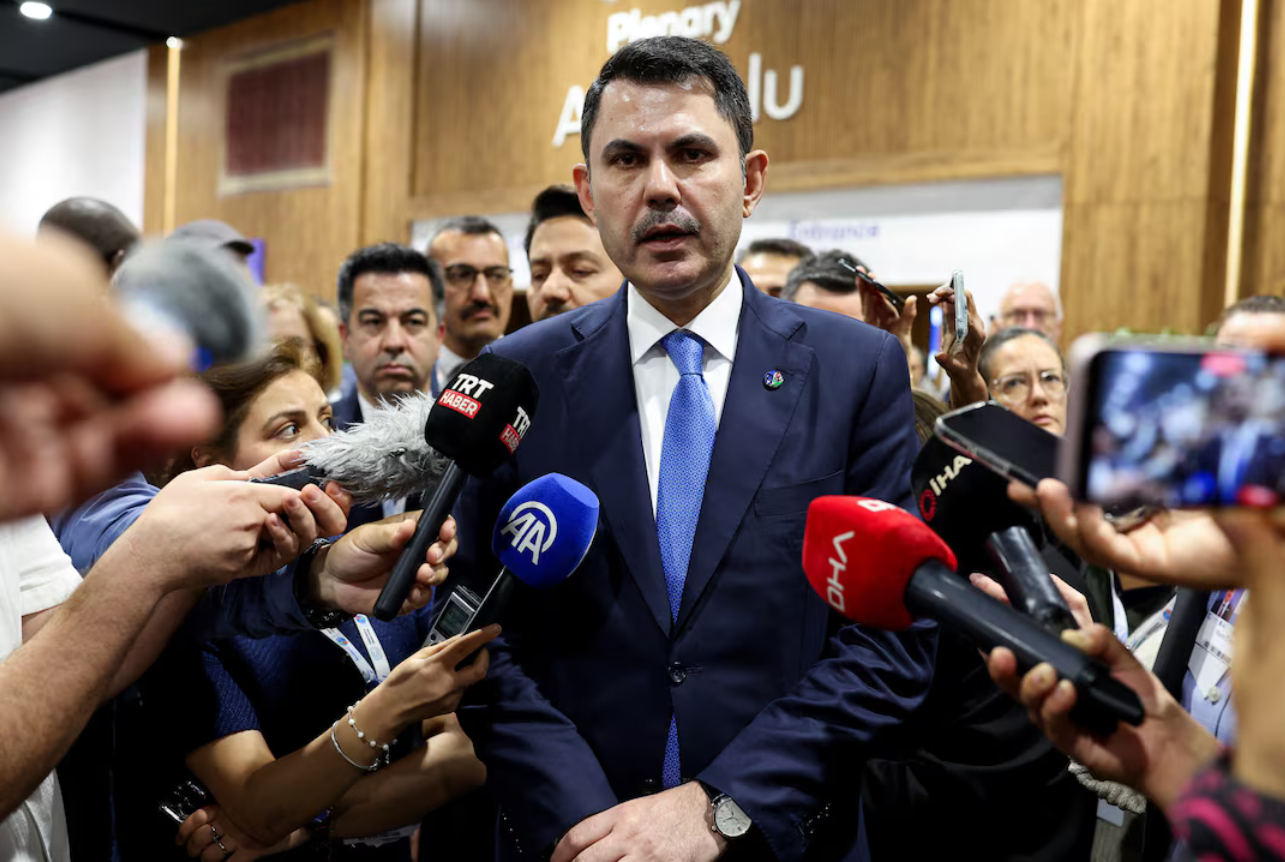
Photo: REUTERS/Kaan Soyturk
However, he acknowledged that this is not enough when it comes to climate action and expressed his disappointment that no agreement had been reached.
Representatives of the Kenyan delegation stressed that the decision does not once mention the special needs and circumstances of Africa, while "it rightly refers to the least developed countries and small island states".
"Those who have led in emissions must also lead in providing support. We ask our partners to provide the finance that will make this ambition a reality. Kenya, together with the African Group, seeks to make COP32 an African conference – a conference that delivers real results," they said.
Representatives of the Philippines also stressed the need for financial support:
"Climate finance must be fully mobilised to ensure the necessary scale and speed of action on mitigation, adaptation, technology transfer, capacity building and loss and damage. A goal without means is a promise without a path to achieve it."
The delegation of Vanuatu, a small island state in the Pacific Ocean, was even more categorical. Its representatives said that this text of the deal does not meet the requirements of international law, scientific requirements, or the urgent needs of their vulnerable communities.
"It is unacceptable that this decision does not mention fossil fuels, the main driver of the climate crisis. Consensus must never be reached at the expense of the survival of our people, our sovereignty and future generations," the representatives of Vanuatu stressed.
Representatives of the European Union also spoke harshly and categorically. In their view, the submitted drafts of the deal do not even begin to address the climate emergency facing the world.
"We will not support a cover decision or an Antalya pact that does not even mention fossil fuels, the main driver of climate change, we will not agree to negotiations that take us backwards, and we will not agree to a Conference of the Parties (COP) that whitewashes fossil fuels with 'green' rhetoric," the EU delegates stated.
Meanwhile, Russia's representative Sergei Kononuchenko predictably came to the defence of fossil fuels. He said that if the supply of oil and gas declines faster than demand, this will lead not to emission reductions, but to shortages, price shocks, a switch to more polluting fuels and energy poverty.
"That is why we cannot agree to any wording on fossil fuels," he said.
Recently, EcoPolitic reported that after 9 days of negotiations at the UN Climate Change Conference COP31, the participating countries still had quite a lot of disagreements on the use of fossil fuels, financing for developing countries and adaptation to climate change. As we can see, the additional days did not help reach a consensus.