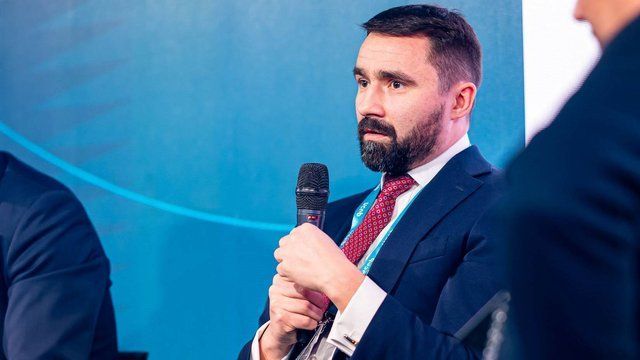
European standards for decarbonization of industry threaten the forced closure of some steel assets during EU accession. Europe itself can prevent large-scale deindustrialization if it financially supports the eco-modernization of Ukraine's industry, as it previously supported its own steel enterprises.
This was stated by Olexander Vodoviz, head of the office of the CEO of Metinvest, at "Dialogues with NV," according to Interfax Ukraine.
Support for European business
European companies received up to €1 billion to reduce emissions at their assets. However, according to Vodoviz, this was not enough—some companies still closed.
For example, the steel plant in the Slovak city of Košice received about €900 million for decarbonization, the Galati plant in Romania received €800 million, and Polish steel industry assets received approximately €500-600 million.
The Dunaferr steel plant in Hungary received €700 million in support at one point, but this did not save it from bankruptcy.
"And Ukrainian factories are being told to decarbonize too. But how? No one is giving anything, because it's not a market-driven issue. We now have a choice: either we close part of our business because we don't have the funds to decarbonize, or we wait for some funds or a postponement of decarbonization," said Oleksandr Vodoviz.
Unequal conditions
The Ukrainian steel industry is at a competitive disadvantage compared to its European counterpart. It's not just about the lack of support for decarbonization. According to the Metinvest rep, the full-scale war is making things way worse. Specifically, the constant attacks on energy infrastructure. Because of this, they have to stop equipment that can't be turned off at all according to technical recommendations.
"We are telling Europeans: we agree to your terms, but give us some leeway, give us some preferences. Europe's position is this: if we give you that, then Indonesia, Egypt, and other countries with local conflicts will come to us. And they will say, give us some relief too," Vodoviz explained.
The CBAM factor
Since the beginning of the year, the European Union has implemented the Carbon Border Adjustment Mechanism (CBAM). However, there is still uncertainty for businesses regarding the final amount of this tax. At the moment, Metinvest is forced to pay about €50 per ton of carbon.
According to Alexander Vodoviz, none of the importers to the EU or European businesses themselves know what bill the bloc will present them with at the end of the year. He emphasizes that the EU has not yet provided clear explanations as to how much businesses will have to pay. The figures will be known after verification, audit, and calculation. Therefore, companies are already forced to stop steel deliveries to Europe.
EcoPolitics reported that the Emissions Trading System (EU ETS) is currently in an uncertain position. Businesses are calling for its reform due to the high cost of carbon and electricity.
In Ukraine, large steel and oil and gas companies are the leaders in paying environmental taxes.