On December 11, during the forum “Ukraine at COP29: Achievements, Challenges, Prospects”, the main elements of the updated long-term Low Carbon Development Strategy (LT-LEDS) until 2050 were presented to the Ukrainian public.
This was reported by the Ministry of Environmental Protection and Natural Resources of Ukraine.
The ministry said that such a presentation was previously made at the 29th UN Climate Change Conference (COP29). Deputy Minister of Environmental Protection and Natural Resources of Ukraine Viktoriia Kireeva said that many conference participants, including Kurt Vandenberghe, head of the European Commission's Directorate-General for Climate Change, were impressed by the ambition of Ukraine's NDC.
“But we know what we are doing, and we understand what result we want to achieve and how to achieve it. We have engaged the best scientists and have clear calculations that confirm the realism of our plan,” the official said.
The updated Strategy was developed by the Institute for Economics and Forecasting of the National Academy of Sciences of Ukraine. In addition to its own specialists, it involved more than 20 national and international experts with the support of the United Nations Development Program (UNDP) as part of the global Climate Promise initiative.
The Ministry of Environment said that the new version of the NSDS takes into account the challenges posed by the war and defines new approaches to restoring Ukraine's economy and infrastructure. It also includes more relevant policies, measures and tools to ensure a “green” economic recovery.
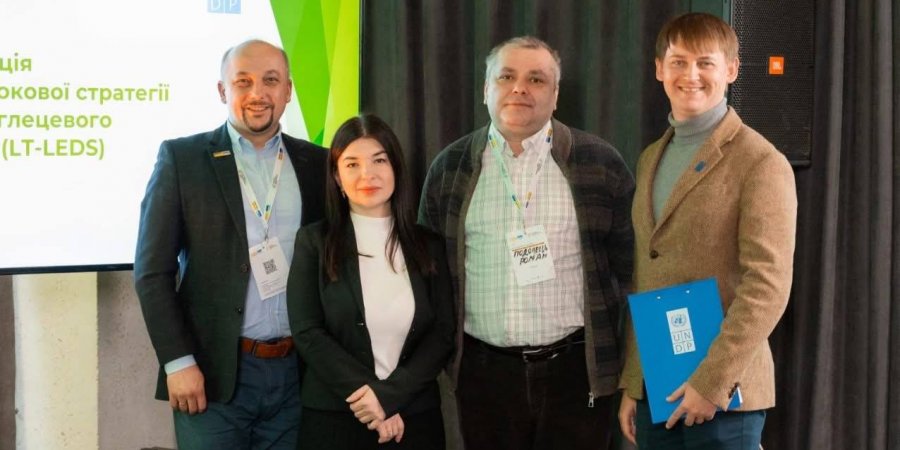
Scientists Oleksandr Dyachuk and Roman Podolets presented the results of modeling ways to decarbonize and achieve climate neutrality of the Ukrainian economy.
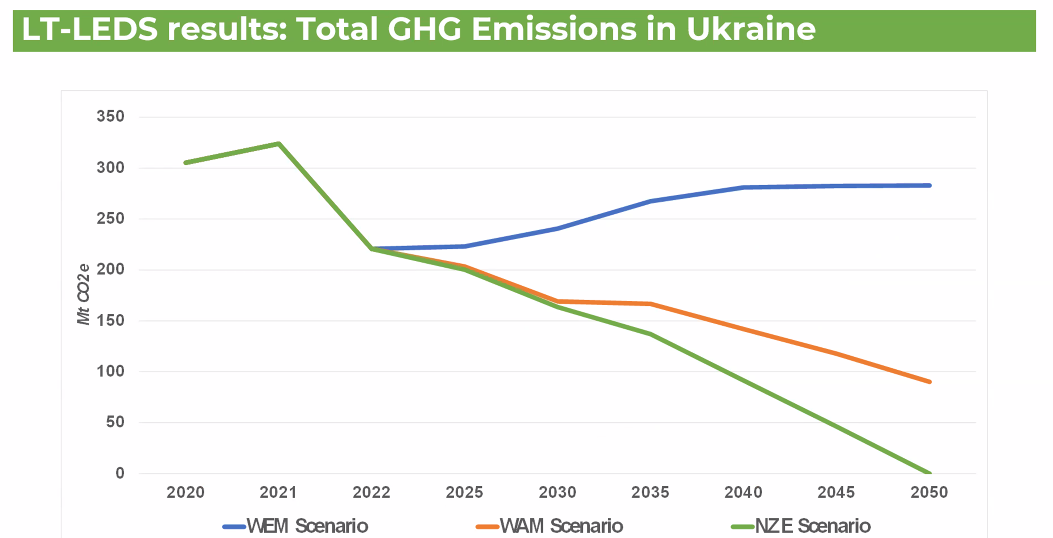
Three scenarios were modeled:
- WEM (With Existing Measures) (updated scenario of the National Energy and Climate Plan – NECP).
- WAM (With Additional Measures) (updated NECP scenario).
- NZE (Net Zero Emissions) scenario (new scenario).
The scientists visualized the reduction of greenhouse gas emissions in Ukraine by 2050 under these three scenarios using graphs:
After consultations with national and international experts, the updated strategy will be submitted to the Secretariat of the United Nations Framework Convention on Climate Change.
“This will be another step towards Ukraine's integration into the international climate space and fulfillment of its obligations under the Paris Agreement,” the ministry said.
Back in June 2021, EcoPolitic reported that the Ministry of Ecology had started working on a law on the Low-Carbon Development Strategy of Ukraine until 2050.