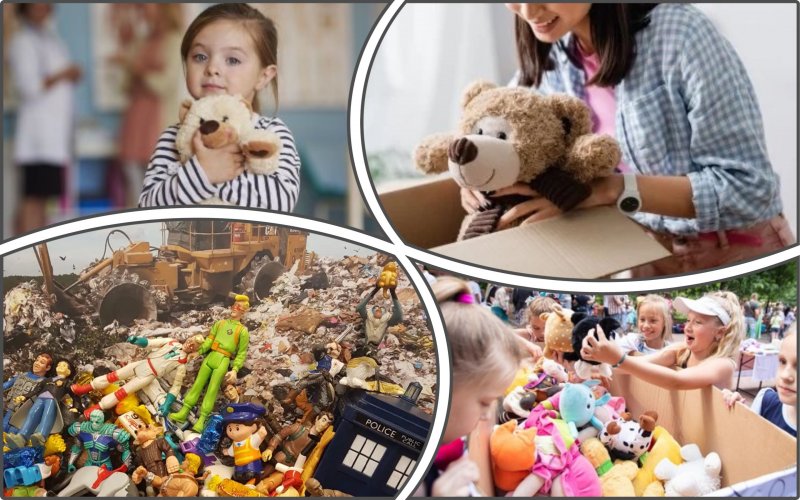
Ukrainians have been urged to share children's toys, as reuse helps to generate less waste and conserve natural resources.
Both new and used toys in good condition can be exchanged on the Circle of Toys project platform, the Goofy Center for Waste Management reports on Facebook.
It is noted that on the platform, you can become both a recipient and a donor of a toy, find out what kind of toy a child dreams of and send it.
The platform explains that the project aims to help children in need of support get their dream toys for free. In particular, these are low-income families, large families, etc.
"The toy industry uses the most plastic in the world. According to Yale University, approximately 80% of toys end up in the trash every year, polluting the environment. Sharing toys means taking care of the future of our planet," said Circle of Toys.
Earlier, EcoPolitic wrote, that in Kharkiv Oblast, eco-activists have launched a project with the deployment of to villages and small communities in the region. Unnecessary clothes, shoes, toys, building materials, as well as secondary raw materials for recycling can be returned to the ecohub for reuse.
As EcoPolitic previously reported, Ukrainians were urged not to throw away unnecessary clothes and to give them a new life, in particular through recycling, upcycling and free-cycling.