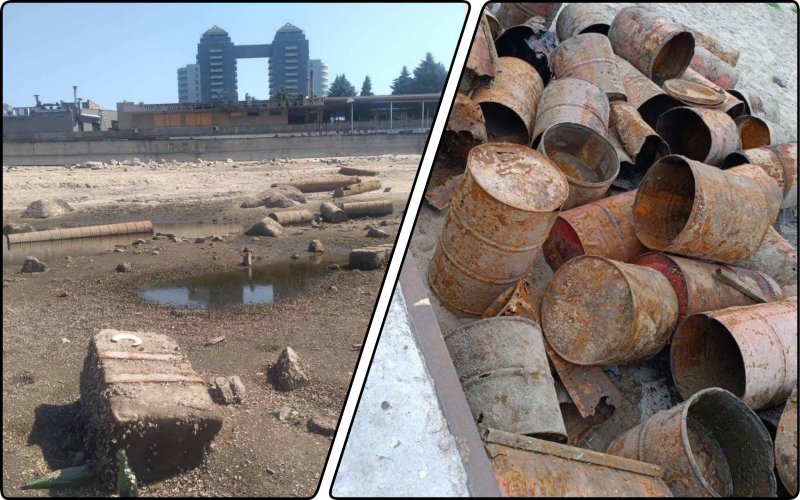
Dozens of rusty barrels were removed from the bottom of the shallow Dnieper in Zaporizhzhia. Photo

Dozens of rusty barrels were removed from the bottom of the shallow Dnieper in Zaporizhzhia. Photo facebook.com/profile.php?id=100090890791058
Katerina Belousova

The barrels were removed according to the protocol order of the head of the city

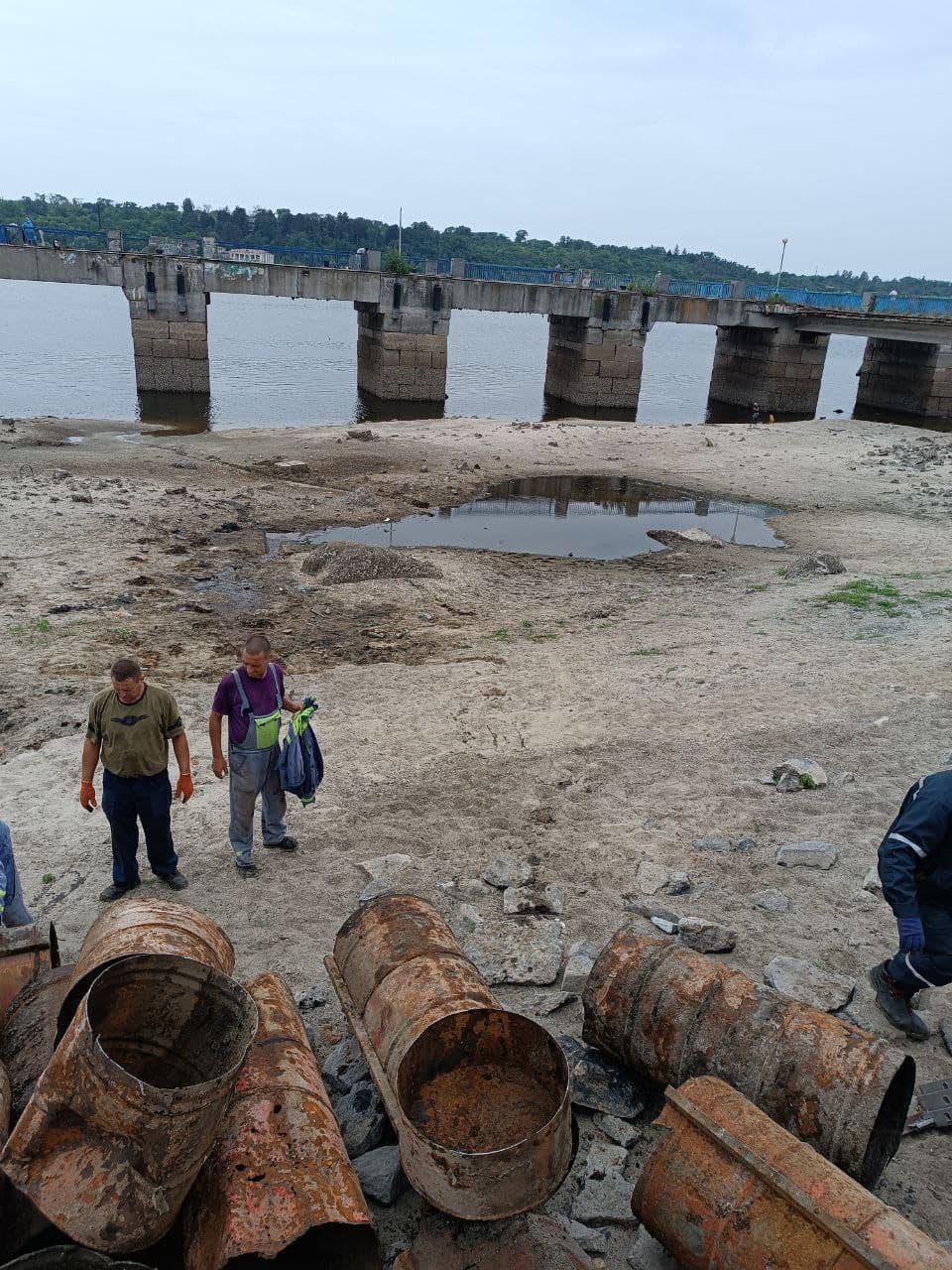
In Zaporizhzhia, about 40 rusty barrels were removed from the bottom of the shallow Dnipro River.

The barrels lay at the bottom of the river for many years and ended up on dry land due to a decrease in the water level in the Dnieper due to the Russians undermining the Kakhovskaya HPP, the Department of Municipal Management of Zaporizhzhia reports on Facebook.
facebook.com/profile.php?id=100090890791058

The barrels were removed according to the protocol order of the head of the city.
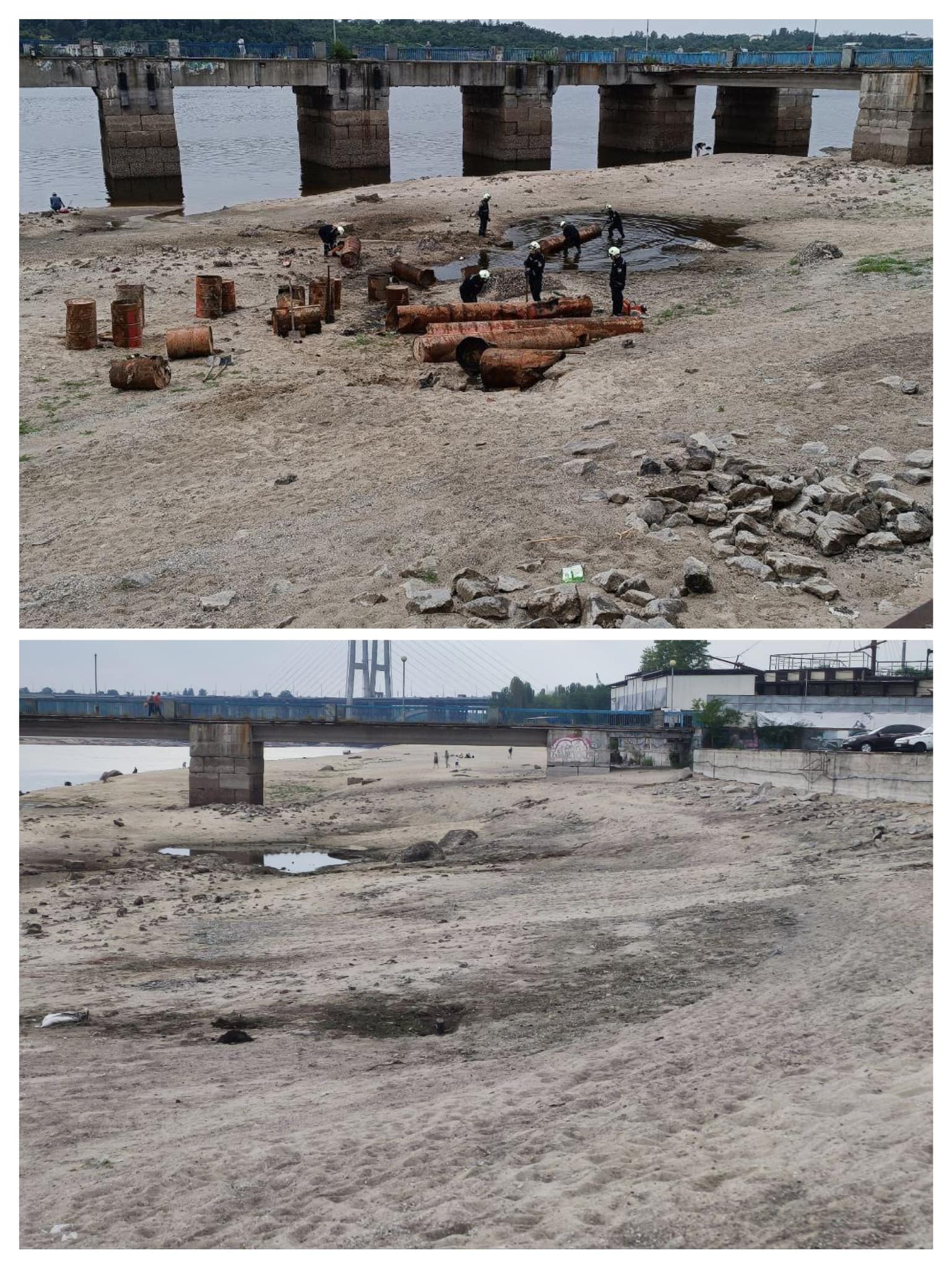
It is noted that it was possible to do this thanks to the joint efforts of utility workers from KP "Titan", KP "Vodokanal", concern "City Thermal Networks", KSVARS "Cobra".
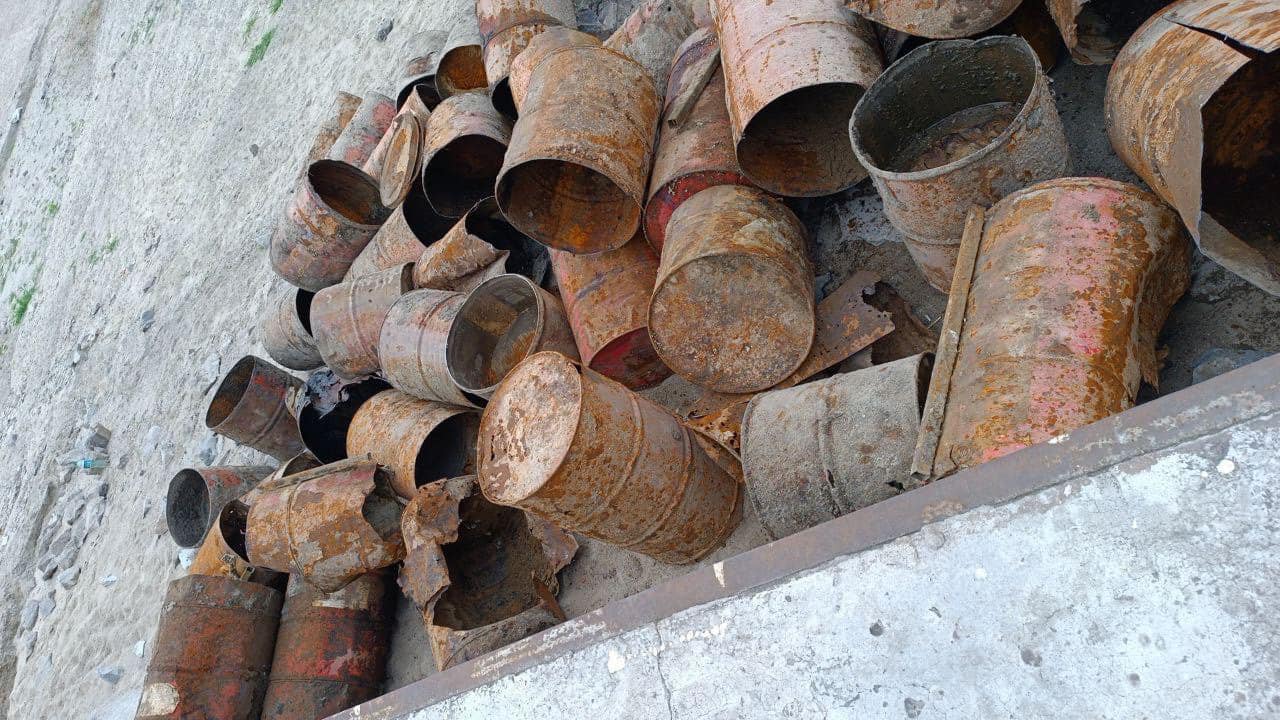
"Only together we will make our city better," the message emphasized.

Earlier, EcoPolitic wrote, that in Zaporizhzhia eco-activists removed 8 cubic meters of garbage, including tires, plastic, tin and glass bottles, construction and household waste, from the washed-up shoreline of the Dnipro River on the island of Khortytsy. In the eco-action "Let's save the Dnipro together!" about 100 people took part.

As EcoPolitic previously reported, in Zaporizhzhia, after the Russians blew up the Kakhovskaya HPP, water disappeared from the Dnipro Reservoir, which is in the area of ​​the Dniprovskaya HPP. The bottom of the reservoir is almost completely covered with islands on which people walk.


Related
How the eco-bus will operate in Lviv, Poltava, and Khmelnytskyi in April

Residents can dispose of hazardous waste free of charge

In the EU, only 48% of the half-ton of waste generated by each European was recycled

In 20 of the 27 EU countries, the amount of waste per person has increased

The Danube region in Odesa Oblast is at risk of desertification

The cause is large-scale hydraulic engineering intervention, exacerbated by climate change

The community of Zaporizhzhia is fighting to save a public park from the construction of a shopping mall. The authorities are making the process more difficult

For an industrial city, green spaces provide protection against pollution and overheating, yet the authorities are gradually reducing their size