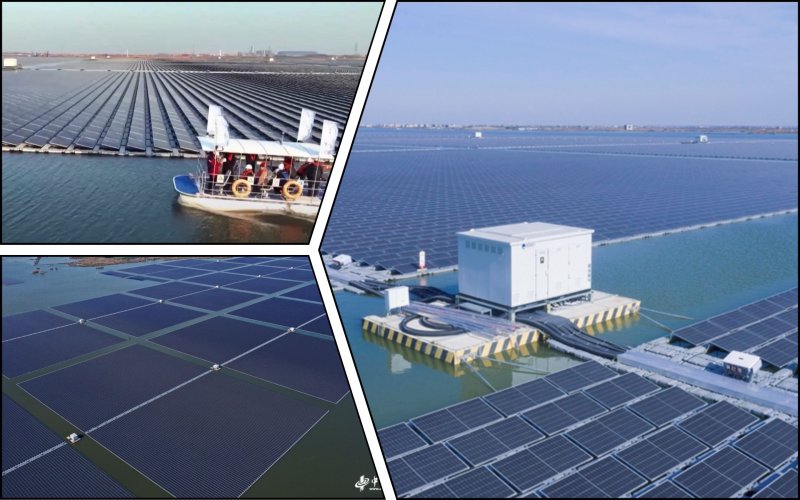
In China, the country's largest floating solar power plant with a capacity of 650 MW was launched in the city of Fuyang on the flooded territory of a former coal mining site.
The SPP can simultaneously meet the daily energy needs of 700,000 people and reduce water evaporation from the quarry, CGTN reports.
It is noted that the Anhui Fuyang Southern Wind-solar-storage Base solar power plant is located on a reservoir of 867 hectares and consists of 1.2 million photovoltaic modules.
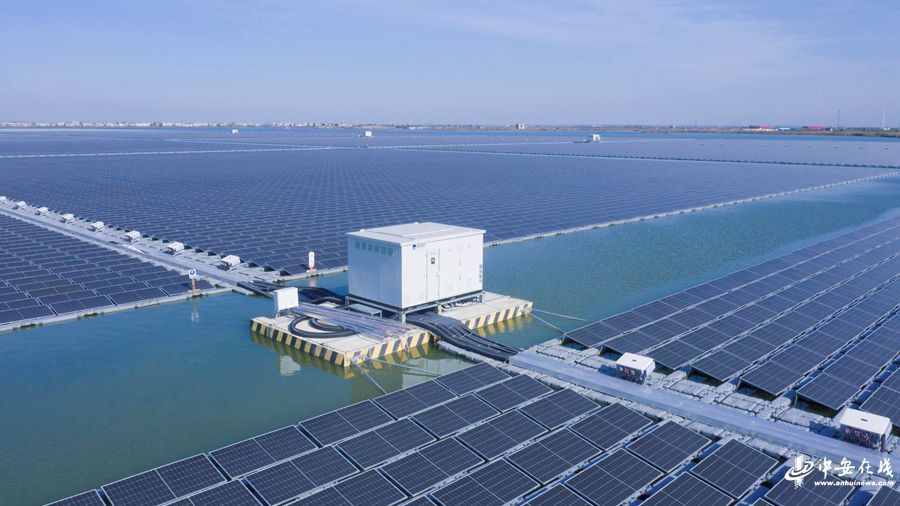
"The new floating photovoltaic plant makes full use of the idle water surface in the mine subsidence zones to reduce evaporation, prevent the growth of microorganisms in the water, achieve water purification and long-term protection of the aquatic environment," the material says.
Average annual electricity production is expected to reach 700 million kWh, equivalent to saving 220,000 tons of coal per year and avoiding 580,000 tons of carbon dioxide emissions.
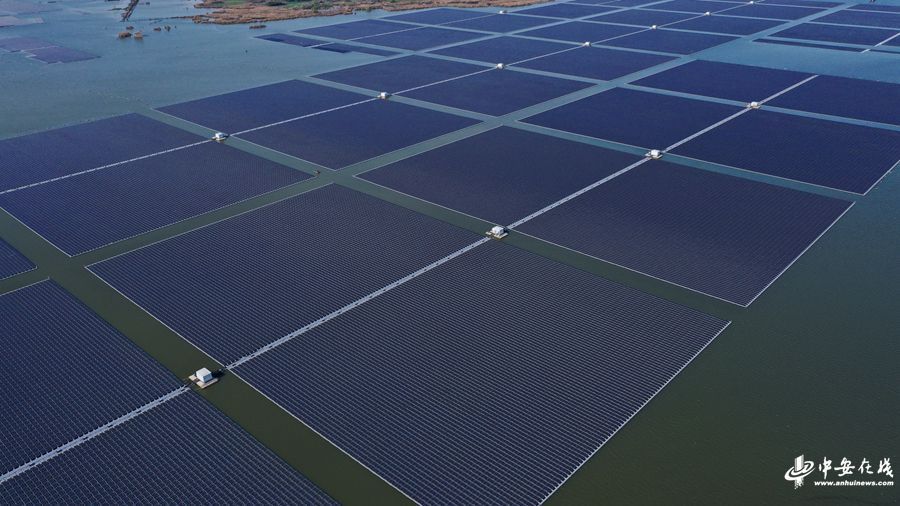
The material said that the Fuyang base project is the first series of national large-scale projects that integrate photovoltaic, wind energy, storage capacity and subsidence zone management.
CGTN emphasized that the entire project consists of a SPP, a wind farm with a capacity of 550 MW and a storage capacity of 300 MW/600 MWh.
Earlier, EcoPolitic wrote, that in China, the world's largest solar power plant Huadian Tianjin Haijing with 1000 MW was launched. The SPP is located on the reservoir of a salt deposit, and the project covers integrated salt extraction, electricity production and fishing.
As EcoPolitic previously reported, a team of European scientists discovered that the installation of floating solar power plants in local reservoirs could fully provide energy to 6,256 cities in 124 countries of the world. This will also save 106 cubic kilometers of water per year from evaporation.