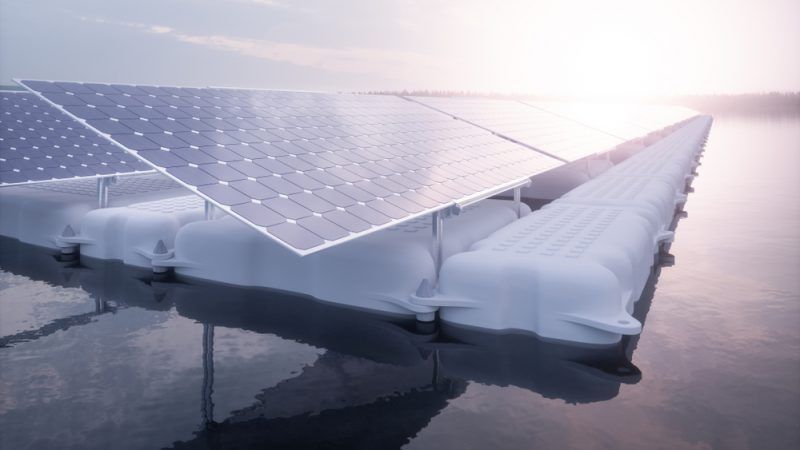
A team of European scientists found that the installation of floating solar power plants in local reservoirs could fully provide energy to 6,256 cities in 124 countries of the world.
Such stations will also save 106 cubic kilometers of water per year from evaporation, which is equal to the needs of 300 million people, according to Nature Sustainability.
It is noted that in order to achieve such a result, it is necessary to cover about 30% of reservoirs with solar stations. However, when installing each station, it is necessary to conduct additional research. After all, if there are too many floating SPPs, the amount of oxygen in the reservoir will decrease, and the plants will receive less light.
The researchers analyzed 114,555 reservoirs around the world, including in 154 megacities.
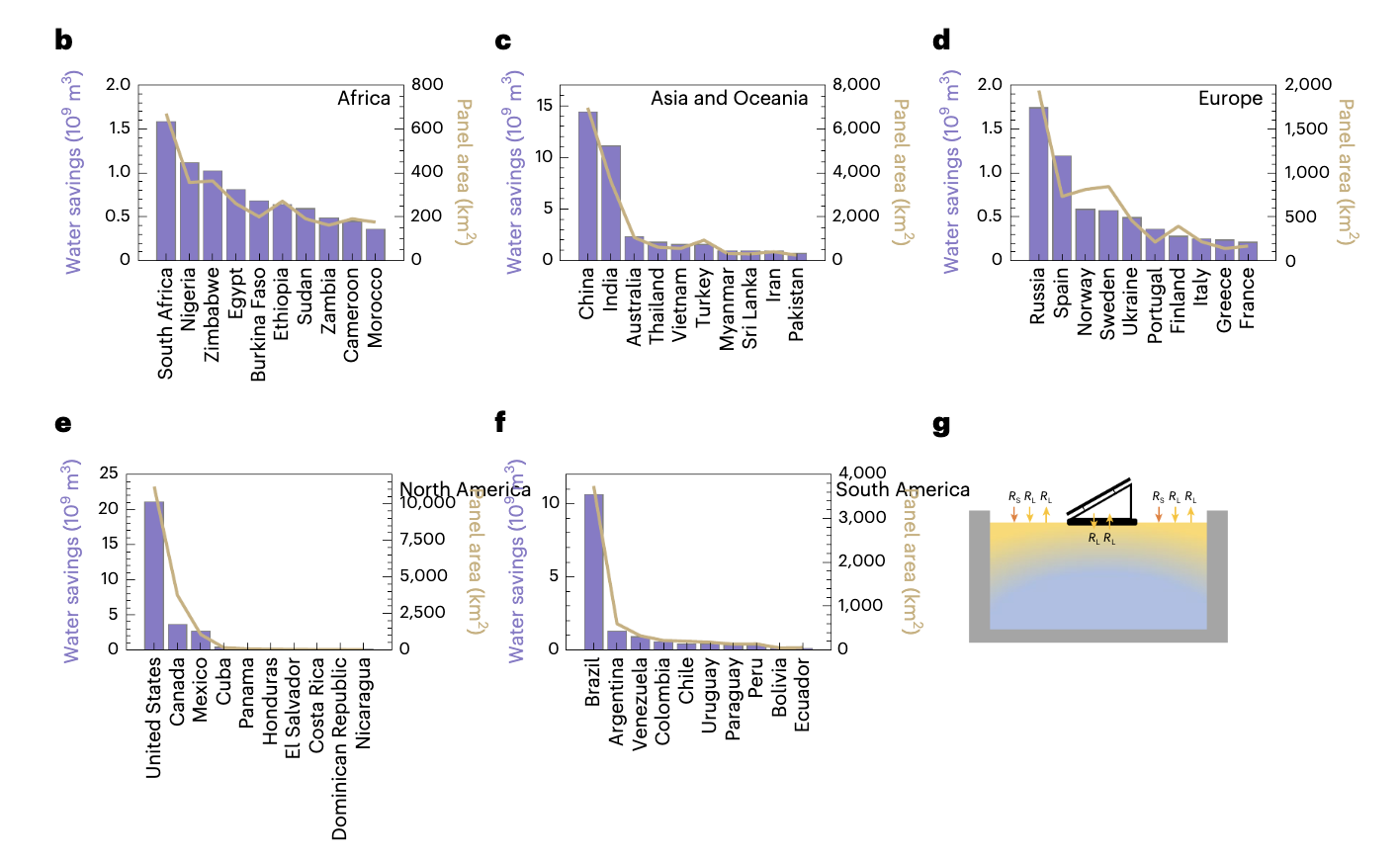
Estimated global water savings from FPV development with 30% reservoir coverage (not exceeding 30 km2).
They emphasized that floating SPPs also solve the problem of competition between energy production and food production, because they do not need to be placed on land. The construction of such stations on artificial reservoirs, rather than on natural ones, can be less harmful to the environment.
Earlier, EcoPolitic wrote, that Japan plans to build the first marine floating solar power plant with a capacity of 88 kW in Tokyo Bay as part of the ESG Tokyo Bay project. The city wants to create a unique energy model that will eventually make the metropolis completely energy independent.
As EcoPolitic previously reported, the US Army has launched a large Floating Solar Panel Floatovoltics (FPV) at the country's largest domestic military base in North Carolina.